What is CO2 Laser?
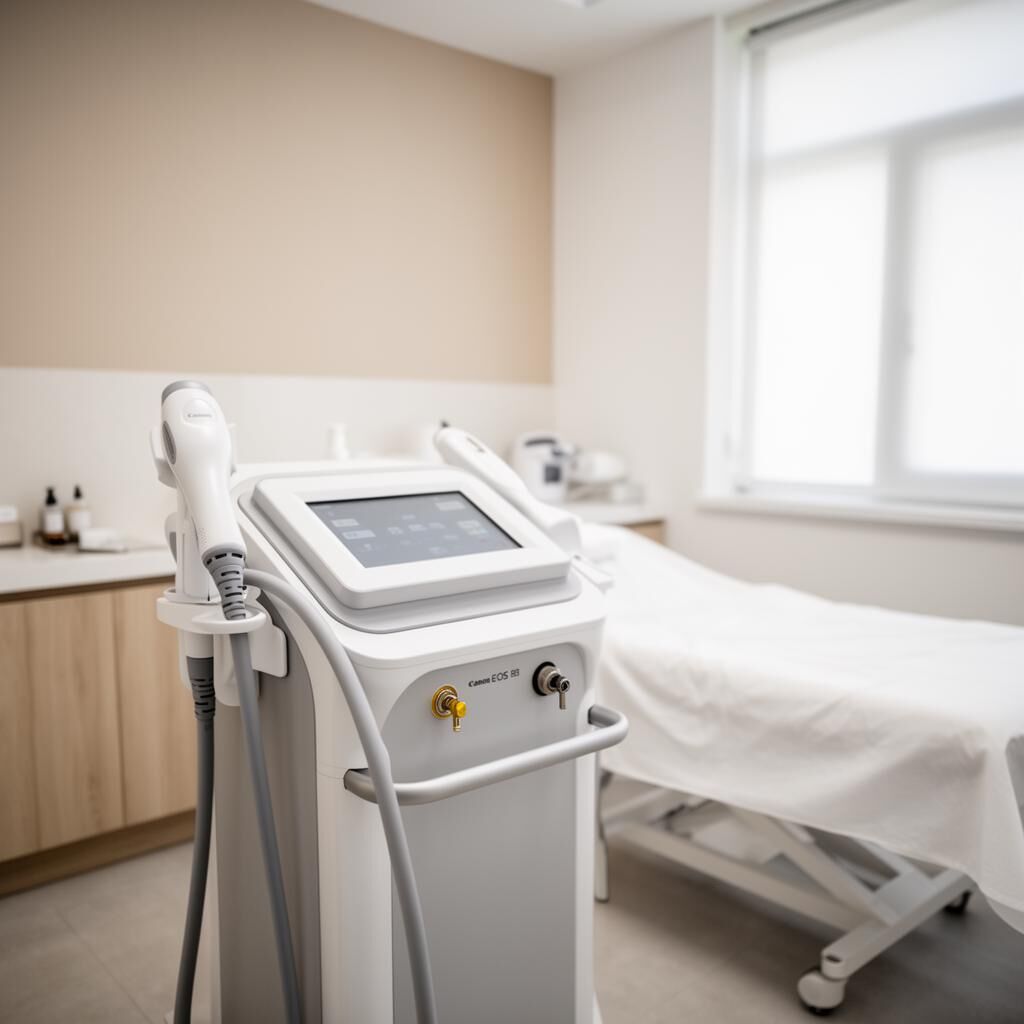
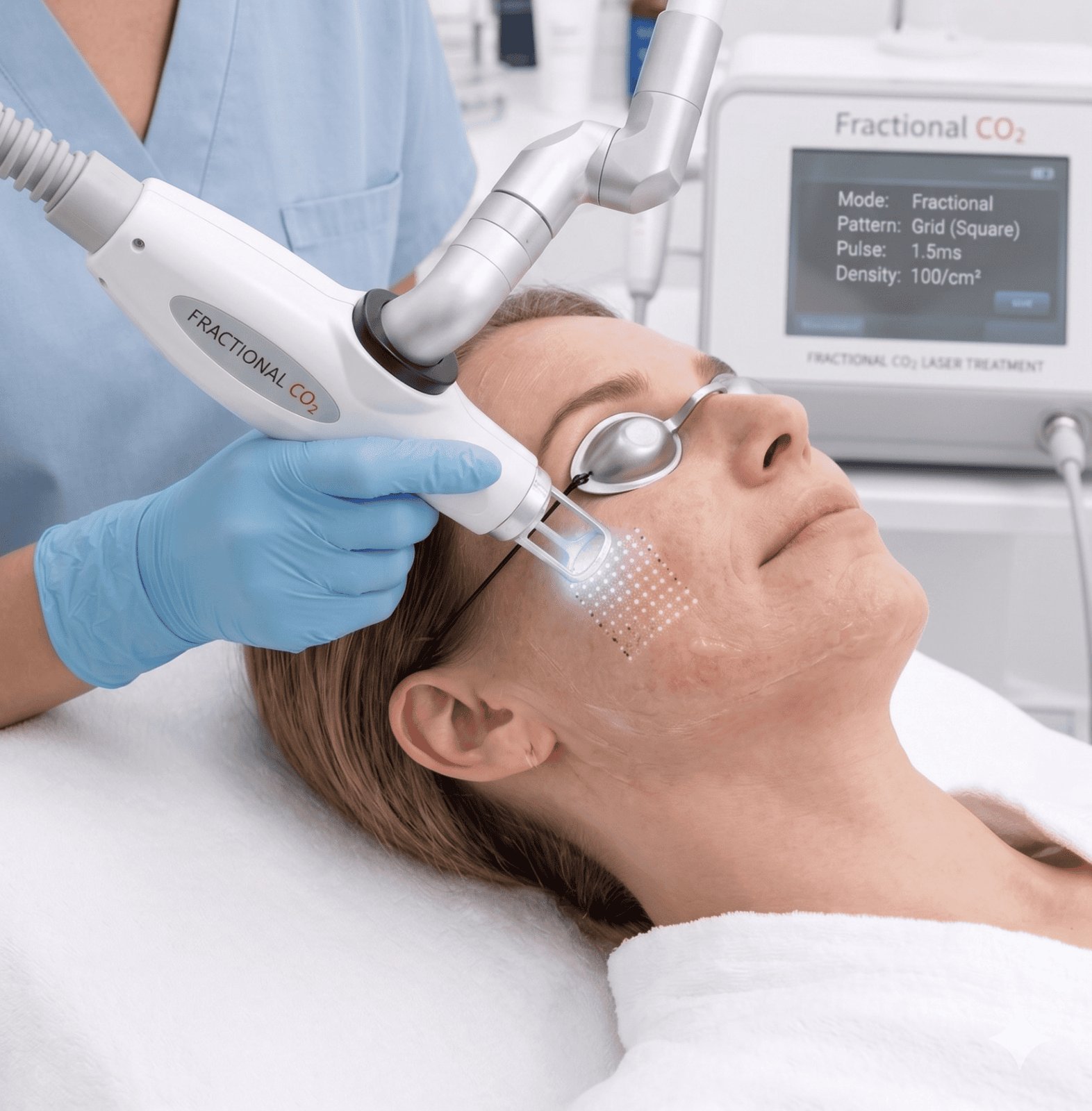
A fractional CO2 laser creates micro-channels in the skin that trigger deep collagen remodelling and renewed skin surface.
CO2 laser treatment in Dubai is often combined with treatments such as PRP facial treatments in Dubai, microneedling in Dubai, or hydrafacials in Dubai to optimize results and achieve comprehensive skin rejuvenation.
Benefits
- Smooths acne scars and surgical scars
- Reduces wrinkles and fine lines
- Improves skin tone and texture
- Tightens and firms loose skin
- Stimulates deep collagen remodelling
- Reduces sun damage and pigmentation
- Refines pores and surface irregularities
Concerns we treat
Ideal candidates
Patients in Dubai ready for transformative skin resurfacing with structured downtime — ideal for treating deep acne scars, advanced photoaging, wrinkles, stretch marks and significant textural concerns.
The treatment process
- 1Doctor-led skin assessment and treatment planning
- 2Numbing applied for 60 minutes for comfort
- 3Treatment with fractional CO2 device tailored to your skin
- 4Cooling and soothing post-care plan
- 5Aftercare guidance and follow-up review
5–7 days of redness, light flaking and sensitivity.
A doctor-led clinic in Dubai Healthcare City
At Silk Clinics in Dubai Healthcare City, every treatment is doctor-led, clinically supervised and tailored to your skin, anatomy and goals. We combine advanced technology, premium products and a refined patient experience — guided by our promise: Safety First. Beauty Always.
Meet our teamMedical conditions CO2 Laser can address
Our doctors recommend CO2 Laser for the following patient concerns. Click any condition to learn more about how we approach it at Silk Clinics in Dubai Healthcare City.
CO2 Laser Treatment in Dubai – Why it's so popular
CO2 laser treatment in Dubai is one of the most effective solutions for skin resurfacing, acne scars, fine lines, and pigmentation. As individuals age or experience skin damage due to the sun or environmental factors, CO2 laser therapy offers a powerful, non-invasive option to restore youthful skin and improve overall skin texture.
At Silk Clinics Dubai, CO2 laser treatment uses fractional laser technology to target deeper layers of the skin, stimulating collagen production and removing damaged skin layers. This results in smoother, tighter, and more even-toned skin with minimal downtime.
Patients in Dubai often combine CO2 laser treatments with other rejuvenating procedures, such as chemical peels in Dubai, PRP facial treatments in Dubai, microneedling in Dubai, or hydrafacials in Dubai, to optimize results and achieve comprehensive skin rejuvenation.
CO2 laser treatment in Dubai is also widely used as a long-term solution for reducing skin imperfections and improving skin texture, and is one of the most powerful options within our wider skin resurfacing treatments in Dubai. At Silk Clinics Dubai, our medical professionals customize each treatment based on your skin type and concerns, ensuring optimal results while maintaining the highest standards of safety and comfort.
What does CO2 Laser Treatment do?
CO2 laser treatment is a fractional resurfacing procedure that uses carbon dioxide laser beams to target and remove the outer layers of damaged skin. By promoting collagen production and cell renewal, CO2 laser treatment improves the skin's texture, elasticity, and overall appearance.
This treatment is effective for addressing acne scars, fine lines, sun damage, and skin laxity. CO2 laser therapy is popular in Dubai for its ability to deliver significant results with minimal downtime, making it a go-to treatment for individuals seeking smooth, youthful skin.
CO2 laser treatment can be combined with other skin rejuvenating treatments such as PRP facial treatments in Dubai or microneedling in Dubai to further enhance skin resurfacing and collagen stimulation.
Wavelength, fluence & melanin — how CO₂ laser is dosed
The fractional CO₂ laser emits light at a 10,600 nm wavelength, which is preferentially absorbed by water in skin tissue rather than by melanin. That selectivity is the reason the device can ablate microcolumns of epidermis and papillary dermis without disproportionate risk to pigment cells — but only when fluence (energy delivered per square centimetre) and pulse density are matched to the patient's Fitzpatrick type.
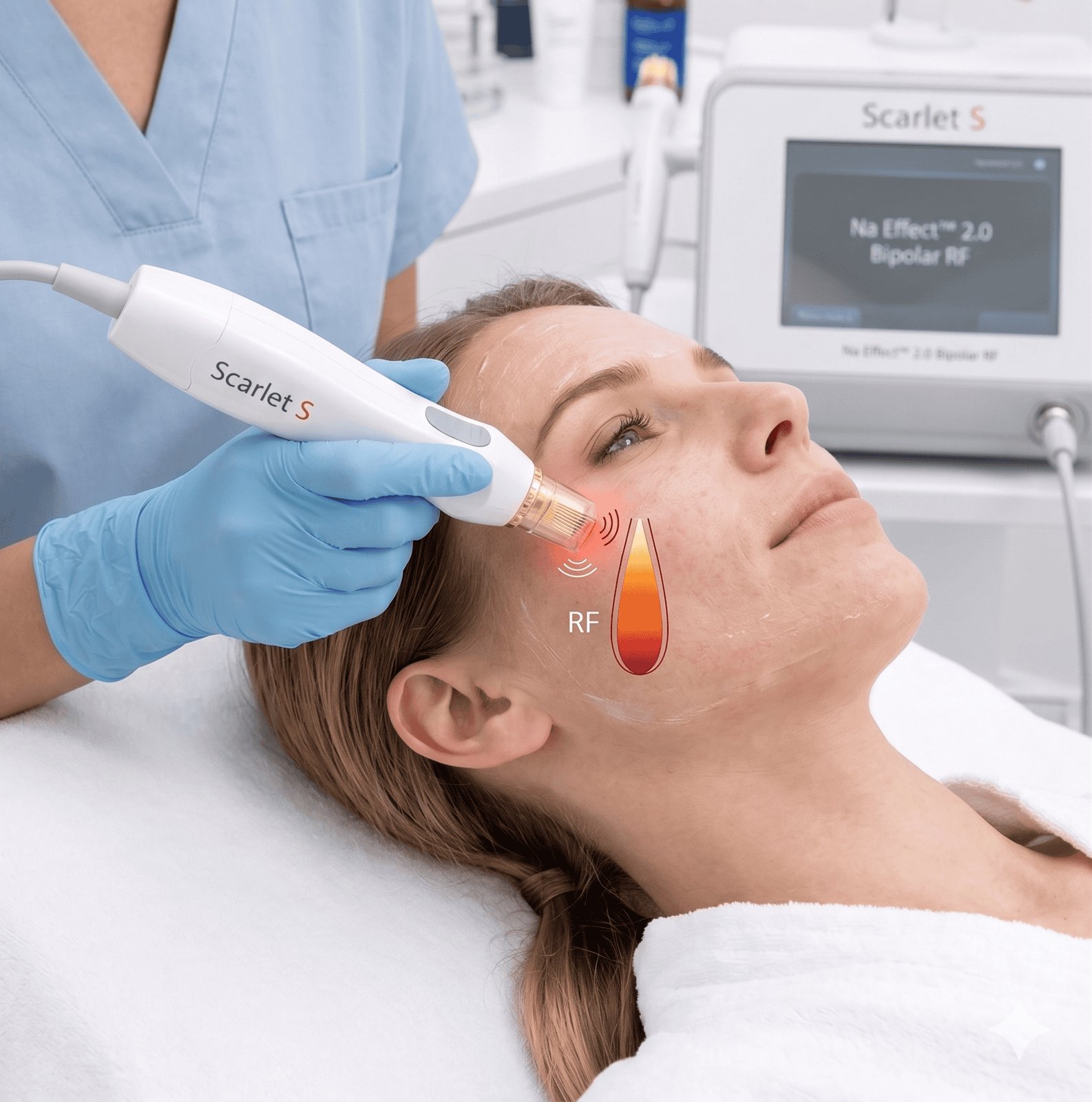
Higher melanin content (Fitzpatrick IV–VI) does not disqualify a patient from CO₂ resurfacing, but it does require a more conservative fluence, wider treatment intervals and strict UV avoidance to reduce the risk of post-inflammatory hyperpigmentation. Where pigment risk is significant, our doctors may recommend Scarlet S RF microneedling first.
Downtime is fluence-dependent: light fractional passes may resolve in 3–5 days, while deeper fluence settings used for scar revision typically involve 7–10 days of visible re-epithelialisation.
CO₂ laser vs the alternatives — how our doctors choose in Dubai
Patients researching resurfacing in Dubai are usually choosing between four options, and the decision is driven by scar morphology, Fitzpatrick type and how much downtime the diary allows. Fractional CO₂ delivers the most surface change per session but asks for 5–7 days of visible healing. Scarlet S RF microneedling works through insulated needles in the dermis with far less pigment risk and 1–2 days of downtime, which makes it the safer first pass on Fitzpatrick V–VI. Medical chemical peels address surface tone, congestion and superficial texture but do not remodel atrophic scars. Subcision with PRP is the only one of the four that mechanically releases the fibrous tethers under rolling scars.
In practice these are sequenced, not ranked. A typical doctor-led acne-scar plan in Dubai releases tethered rolling scars with subcision first, builds dermal collagen with Scarlet S RF or exosome-supported sessions, and finishes residual boxcar and ice-pick texture with fractional CO₂ once the pigment risk has been assessed. Our full reasoning is set out in the subcision + PRP vs CO₂ laser comparison and the CO₂ vs RF microneedling guide.
For photoaging rather than scarring, the comparison shifts. Crepey texture, fine static lines and enlarged pores respond well to fractional CO₂, while movement lines need Botox and lost structural volume needs dermal fillers. Resurfacing improves skin quality; it does not replace volume, and any clinic suggesting otherwise is over-promising.
CO₂ laser cost in Dubai — what actually changes the price
There is no single CO₂ laser price in Dubai because the variables are clinical, not commercial. Treatment area is the largest factor — full face, face and neck, décolleté, hands, or a localised scar patch each carry very different session times. Depth is the second: a light refresher pass at conservative fluence is a different procedure from deep scar-revision settings that require extended numbing, longer aftercare support and a longer interval before the next session.
The third variable is the protocol around the laser. Many patients add exosome therapy or PRP/PRF immediately after the pass to support epithelialisation and reduce the window of redness, and some need a pigment-preparation phase before treatment if they have active hyperpigmentation. Number of sessions matters too: many concerns are addressed in a small course spaced 6–8 weeks apart rather than a single visit.
At Silk Clinics you receive a written, itemised quote at consultation covering the pass itself, numbing, aftercare products and the review appointment, so there is no per-visit surprise. If CO₂ is not the right tool for your skin type, we will say so and quote the alternative instead — a candidacy assessment with our laser team is the honest starting point.
What to expect week by week after CO₂ laser
Days 1–3 are the intense phase: heat, tightness, marked redness and a sandpaper texture as the micro-columns begin to close. Cooling, bland occlusive moisturiser and strict sun avoidance are the whole job in this window; Dubai's UV load makes indoor recovery genuinely easier than an outdoor one.
Days 3–7 bring flaking and peeling. This is re-epithelialisation and should not be picked, exfoliated or accelerated with actives. Most patients are comfortable with mineral SPF and light makeup somewhere between day 5 and day 7, depending on the fluence used.
Weeks 2–6 show the first real texture change as new epidermis matures and pinkness settles. Collagen remodelling then continues quietly for several months, which is why the review appointment at 8–12 weeks matters more than the mirror at week two. Patients maintaining that gain typically add skin boosters or HydraFacial between resurfacing courses and stay on daily SPF 50.
Expected results
Results from CO2 Laser vary between patients. Your doctor at Silk Clinics Dubai discusses the realistic outcome you can expect — based on your skin type, anatomy and treatment history — at consultation. 5–7 days of redness, light flaking and sensitivity.
Recovery timeline
- ImmediatelyRedness and mild warmth at the treated area, similar to mild sunburn.
- Day 1–3Avoid sun exposure, hot showers, sauna and exfoliants. Use SPF 50 daily.
- Day 5–10Skin returns to its baseline; progressive results become visible.
- Week 4+Clinical review and next session planned per protocol.
A course of sessions is usually recommended, spaced 4–8 weeks apart, with maintenance sessions afterwards as advised by your doctor.
A course of multiple sessions, spaced as advised by your doctor, is usually required to reach the planned outcome.
Suitable candidate
- Adults seeking co2 laser for acne scars and surgical scars, sun damage and photoaging, wrinkles and fine lines
- Patients in good general health with realistic expectations
- Patients who can attend a doctor-led consultation before treatment
Not suitable for
- Pregnancy or breastfeeding
- Active skin infection or open wound in the treatment area
- Recent sunburn or active dermatitis
- Known allergy to any product used during the treatment
- Certain medical conditions or medications — disclosed at consultation
Risks & side effects
Every medical procedure carries some risk. We discuss these fully at consultation so you can decide with confidence.
- Temporary redness, mild swelling or tenderness at the treatment area
- Small bruising in some patients, usually resolving within a few days
- Rare allergic reaction to topical products used during treatment
- Results vary between patients and depend on skin type, age and overall health
What Silk Clinics doctors commonly recommend with CO2 laser
For patients with atrophic acne scars we rarely use CO2 laser as a standalone. We typically pair it with subcision + PRP first to release tethered rolling scars, then finish surface texture with fractional CO2 — the approach we describe in our acne-scar guide.
Immediately post-laser we usually add exosome therapy or PRP/PRF to accelerate epithelialisation, shorten redness and reduce the risk of post-inflammatory pigmentation — particularly for Middle Eastern and South Asian skin tones common in Dubai.
For maintenance we recommend annual CO2 top-ups combined with skin boosters and diligent SPF 50. A candidacy assessment with our laser team confirms whether CO2, Scarlet S RF or a combination is safest for your Fitzpatrick type.