Quick answer
Subcision with PRP is the gold-standard treatment for rolling acne scars — it mechanically releases the fibrous bands tethering scar floors to deeper tissue, with PRP supporting healing. Fractional CO2 laser is the most powerful surface-resurfacing tool, best for boxcar scars, mixed textural change and overall skin quality. Most significant acne-scar plans combine both rather than choosing — anchored on subcision and finished with CO2 or RF microneedling.
Last reviewed on byDr Ahmad Sadeqyar&Noemi
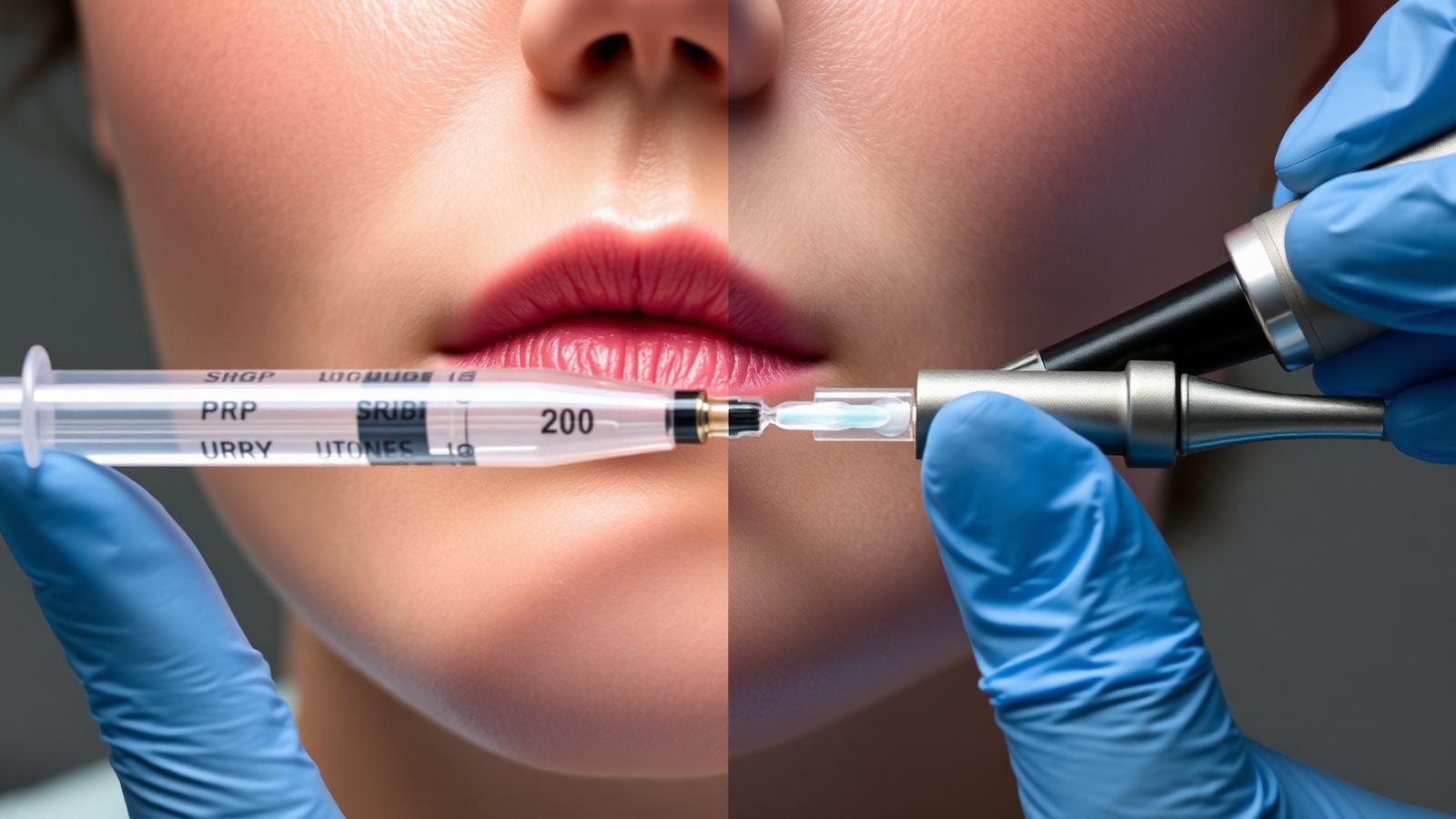
Subcision + PRP vs Fractional CO2 Laser — side-by-side
| Feature | Subcision + PRP | Fractional CO2 Laser |
|---|---|---|
| Mechanism | Mechanical release of fibrous scar bands + PRP for healing | Ablative fractional resurfacing of skin surface |
| Best scar type | Rolling scars (tethered) | Boxcar scars, mixed textural change, photoageing |
| Skin-type safety | Safe across Fitzpatrick I–VI | Best on I–III; cautious on IV; case-by-case on V–VI |
| Downtime | 24–72 hours bruising and swelling | 7–14 days visible recovery |
| Sessions | 2–4, spaced 4–6 weeks | 1–3, spaced 3–6 months |
| Pain | Local numbing; deep pressure sensation | Topical numbing; heat sensation; mild next-day discomfort |
| Result direction | Lift and release of valley-like scars | Smoothing of surface texture and edges |
| Per-session cost | Lower | Higher |
| Role in combination plans | Anchor / first step | Resurfacing / finishing step |
Acne scars are a hierarchy problem. The right treatment depends on the type of scar (rolling, boxcar, icepick), its depth, and the skin tone you bring to the table. Two of the most clinically effective tools for moderate-to-severe acne scarring are subcision combined with PRP, and fractional CO2 laser. They work differently, treat different scar morphologies, and ask very different things of your downtime. This is a doctor-led comparison so patients researching acne-scar treatment in Dubai can decide well.
We cover what each treatment actually does, which scars each is best for, how they compare on the practical variables, whether they combine (they do — and that is often the best protocol), and how clinicians at Silk Clinics in Dubai Healthcare City build acne-scar plans.
What is subcision with PRP?
Subcision with PRP is a two-step procedure. A fine specialised needle is passed under each tethered scar to mechanically release the fibrous bands pulling the scar floor down to the underlying tissue. Platelet-rich plasma (PRP) is then injected into the released space to support healing and stimulate new collagen, preventing the scar from re-tethering.
Subcision is the gold-standard treatment for rolling scars — the wide, shallow, valley-like scars that change with facial expression and lighting. CO2 laser alone is far less effective on rolling scars because the problem is mechanical tethering below the skin, not surface texture.
What is CO2 laser for acne scars?
Fractional CO2 laser is the most powerful resurfacing tool in routine clinical use. For acne scars it works by vaporising microscopic columns of skin to drive a strong wound-healing and collagen-remodeling response that smooths surface irregularities.
CO2 is exceptional for boxcar scars with defined edges, mixed textural change, sun-damaged scar fields and ongoing skin-quality improvement. It is less effective alone for deeply tethered rolling scars and for narrow icepick scars (where punch techniques are sometimes the better tool).
How clinicians decide in Dubai
Most patients with significant acne scarring have a mix of scar types — and the best results come from layered protocols rather than picking one tool. A typical Silk Clinics plan for moderate-to-severe scarring starts with subcision plus PRP to release rolling scars, followed weeks later by fractional CO2 to resurface the remaining boxcar and textural change. Microneedling RF is often the third tool in the protocol, especially on darker skin types where CO2 needs to be used cautiously.
Dubai's demographic — Fitzpatrick III–VI is common — makes this decision particularly nuanced. Subcision may be suitable across a wide range of skin types when performed correctly after an individual clinical assessment. CO2 needs more careful planning on darker skin. This is why combination protocols anchored around subcision are often the default starting point.
Can these treatments be combined?
Yes — and combination is usually the best protocol for moderate-to-severe acne scarring. A typical Silk Clinics plan begins with subcision plus PRP to release tethered rolling scars (the structural problem), followed weeks later by fractional CO2 to resurface the remaining boxcar and textural change. Microneedling RF often replaces or supplements CO2 in darker skin types. Treatments are spaced — never combined in the same session — and the order is chosen based on which scar type is dominant.
Clinician perspective
What do Silk Clinics clinicians commonly recommend?
For patients with rolling scars (the most common type), Silk Clinics clinicians anchor the plan on subcision with PRP — it addresses the underlying tethering that no surface treatment can resolve. CO2 is added later to refine surface texture and finish the result, with placement dependent on skin type. For patients on Fitzpatrick V–VI we often substitute microneedling RF for CO2 to reduce pigmentation risk. The right protocol is built around your scar map and your skin — not from a one-size-fits-all package.
Who may not be suitable?
- Active acne flares — control acne first, then treat scars.
- Active herpes outbreak or skin infection in the treatment area.
- Bleeding disorders or current anticoagulant therapy without medical clearance (especially for subcision and PRP).
- Recent isotretinoin (Roaccutane) — typically wait six months before resurfacing.
- Pregnancy or breastfeeding.
- History of keloid scarring — case-by-case caution.
- Inability to commit to strict post-procedure sun protection (CO2 especially).
Suitability is always confirmed at consultation — this list is general guidance, not medical advice.
In-depth: how each treatment works
Why surface resurfacing alone fails on rolling scars
Where CO2 genuinely shines
How combination plans are sequenced
The role of microneedling RF in this conversation
Key takeaways
- Rolling scars need subcision; boxcar scars and texture need CO2.
- Most significant scarring is mixed — combination protocols outperform either alone.
- Subcision is safer across all skin types; CO2 needs more planning on darker tones.
- Subcision downtime is short (24–72 h); CO2 downtime is real (7–14 days).
- Active acne is controlled before structural scar work begins.
- Realistic expectation is meaningful improvement, not erasure — set with you at consultation. Results vary depending on the type, depth and age of the scars, the treatment selected and individual response.
Related conditions
Personalized Skin Plan
Not sure if Subcision PRP vs CO2 laser acne scars Dubai is right for you?
Answer 9 quick questions and get a doctor-designed pathway — with realistic timelines, downtime and session counts for your skin.
Browse the category
Explore all Skin Treatments in DubaiAdvanced skin treatments in Dubai engineered to renew, brighten and resurface — from Hydrafacial and chemical peels to PRP, exosomes and Scarlet S microneedling RF.
Treatments mentioned in this guide
Book a consultation
Considering Subcision PRP vs CO2 laser acne scars in Dubai?
Our DHA-licensed doctors at Dubai Healthcare City will assess your concern and build a personalised, transparent plan — no obligation, no pressure.
Frequently asked questions
Which is better for rolling acne scars?
Which is better for boxcar and icepick scars?
How many sessions will I need?
View more frequently asked questions (7)
Which has more downtime?
Is subcision safe on darker skin types?
Will subcision alone smooth the surface fully?
What's the long-term result?
Should I treat active acne first?
Is this cheaper than just doing CO2?
Which one should I start with?
About the author
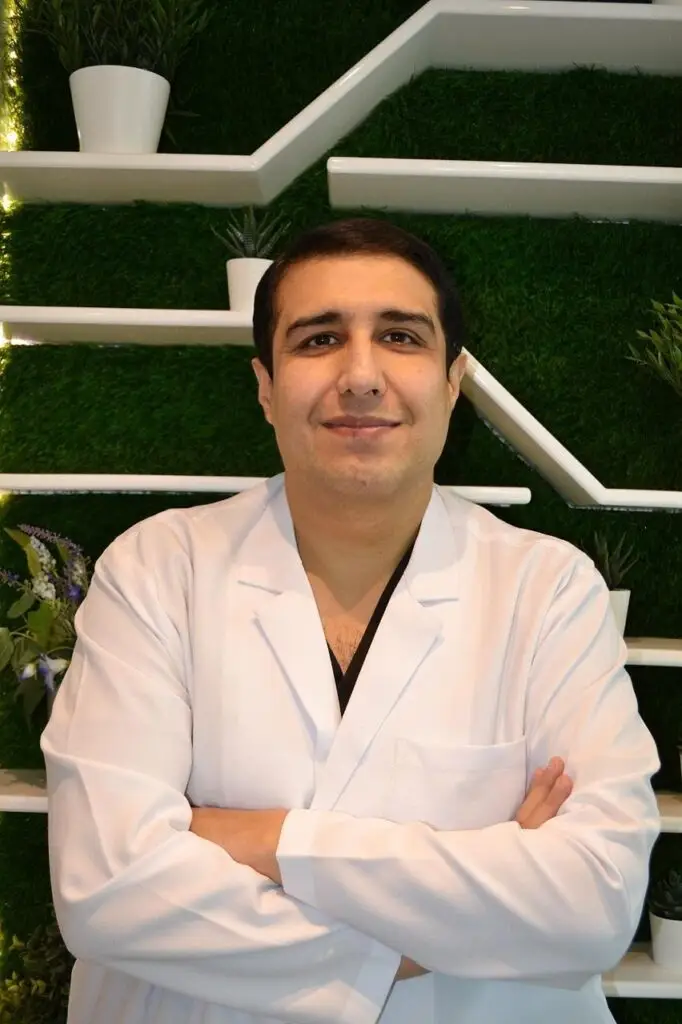
Medical Director — Aesthetic & Regenerative Medicine
Leading Silk Clinics with years of experience in aesthetic medicine, Dr Ahmad Sadeqyar oversees clinical excellence across all departments and personally treats complex aesthetic cases.
- MD — Aesthetic Medicine
- Advanced Diploma in Regenerative Therapy
- Member, IMCAS
Medically reviewed by Noemi — Head Nurse, Laser Treatments & Aesthetics.