Quick answer
In the decision between PRP vs Exosomes Hair Loss Dubai specialists note that PRP uses autologous growth factors from your blood, while exosomes deliver concentrated, lab-derived signaling proteins directly to follicles. Individual suitability depends on your specific hair thinning stage, biological response, and goals established during a clinical consultation.
Last reviewed on byDr Ahmad Sadeqyar&Noemi
PRP for Hair Loss vs Exosome Hair Therapy — side-by-side
| Feature | PRP for Hair Loss | Exosome Hair Therapy |
|---|---|---|
| Source | Your own blood (autologous) | Lab-derived, typically from mesenchymal stem cells |
| Active components | Platelet growth factors (PDGF, TGF-β, VEGF, EGF, IGF) | Curated cargo of growth factors, peptides, mRNA, microRNA |
| Signalling intensity | Moderate — depends on your platelet quality | High — standardised batch-to-batch |
| Delivery | Fine intradermal scalp injections | Topical after microneedling, or direct injection |
| Sessions needed | 4–6 monthly, then maintenance | 3–4 sessions every 4–6 weeks, then maintenance |
| Downtime | Minimal — hours of mild redness/tenderness | Minimal — hours of mild redness/swelling |
| Time to visible result | 3–6 months | Often visible by 2–4 months |
| Evidence base | Largest of any regenerative hair injectable | Newer, rapidly growing literature |
| Cost per session | Lower | Higher |
| Best for | Early-to-moderate pattern loss, postpartum shedding, autologous-only preference | PRP plateaus, more advanced thinning, older patients, fewer-visit preference |
Hair thinning is one of the most common reasons patients walk into our clinic in Dubai Healthcare City, and the conversation almost always lands on the same question: should I do PRP or exosomes? Both sit at the heart of modern, non-surgical regenerative hair restoration, both are evidence-supported, and both can produce genuinely impressive results — but they are biologically different treatments that suit different patients, stages of hair loss and budgets. This is a balanced, doctor-led 2026 comparison written specifically for patients in Dubai who are weighing PRP against exosomes for hair loss.
Hair thinning in men and women is rising globally, and in Dubai the combination of hard water, sun exposure, chronic stress, long working weeks, frequent travel, postpartum hormonal shifts and underlying nutritional or thyroid issues makes it particularly common. The good news is that regenerative hair restoration — using the body's own signalling machinery to wake up dormant follicles rather than transplanting hair — has matured significantly. PRP hair treatment in Dubai and exosome hair therapy in Dubai are now the two most-requested regenerative options at Silk Clinics. By the end of this article you will understand what each treatment actually is, where each one wins, expected timelines, costs, side effects, who is and isn't a candidate, and how our clinicians decide between them.
What Is PRP for Hair Loss?
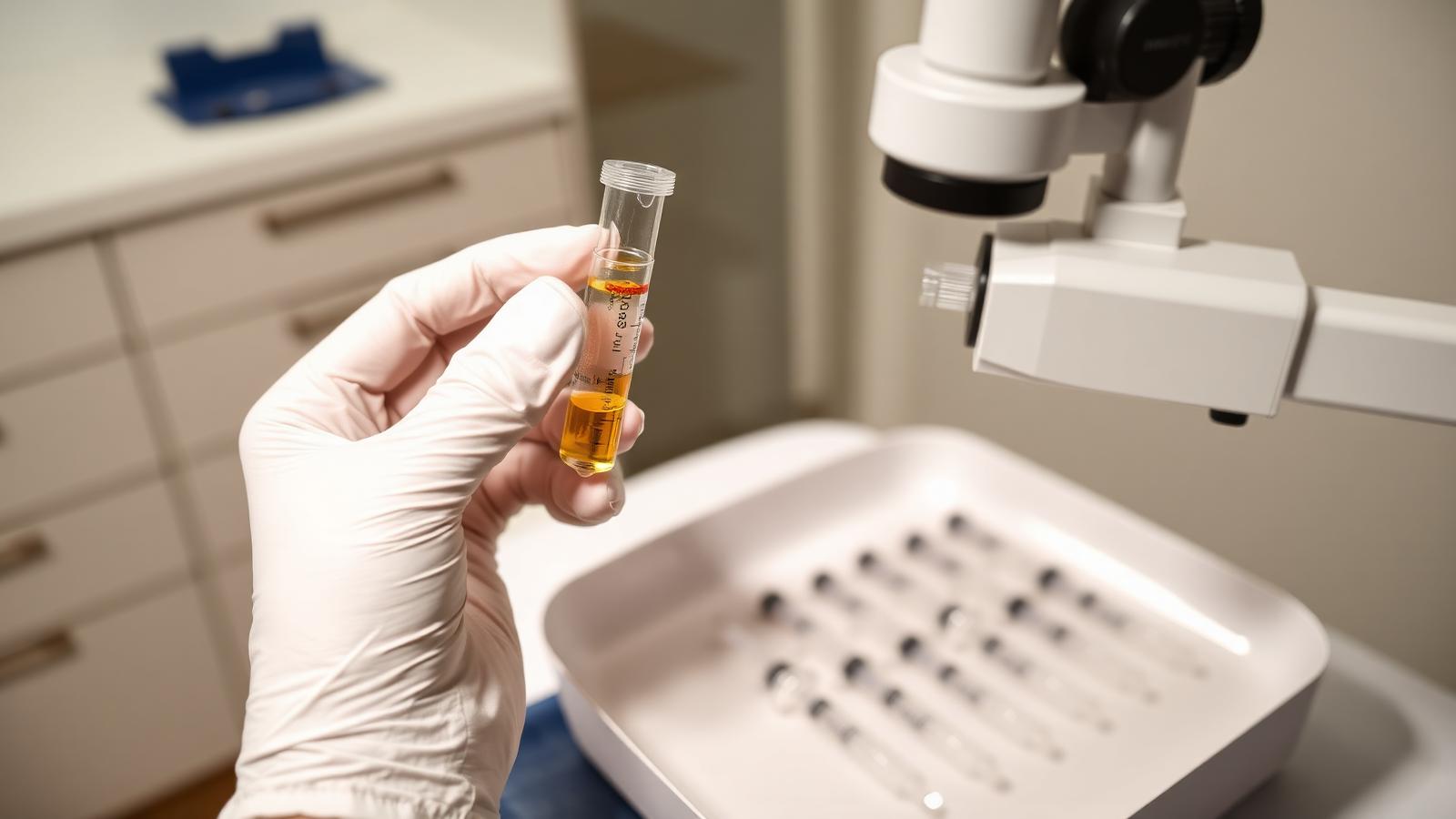
PRP stands for Platelet-Rich Plasma. It is prepared from your own blood: a small sample (typically 15–30 ml) is drawn from your arm, spun in a medical-grade centrifuge that separates plasma, platelets and red cells, and the platelet-rich fraction is harvested. Platelets are packed with growth factors — PDGF, TGF-β, VEGF, EGF, IGF — that signal repair, new blood vessel formation and follicular stimulation when injected into the scalp.
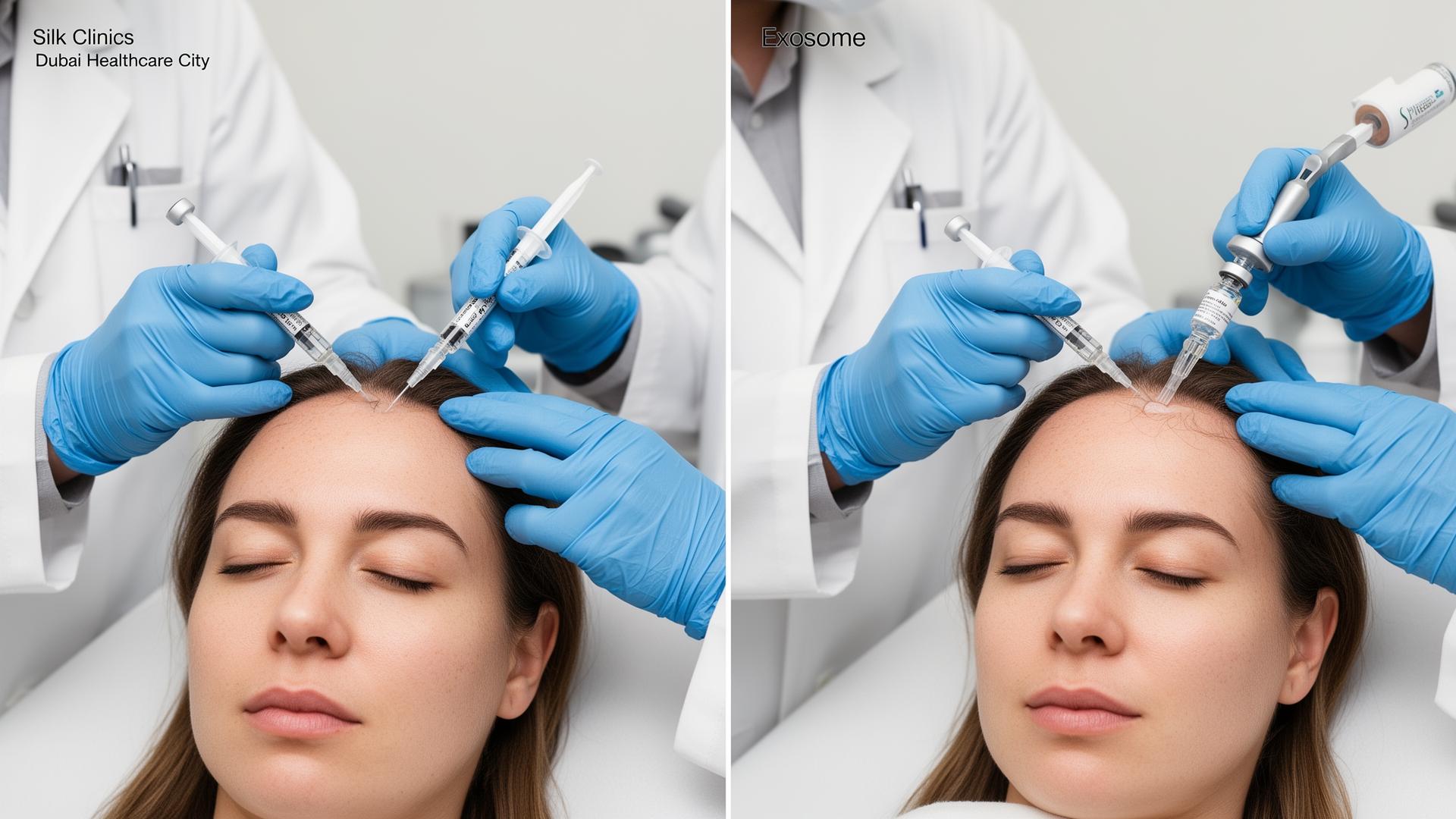
PRP for hair loss in Dubai is delivered as a series of fine intradermal scalp injections covering the thinning area. The treatment is performed under topical anaesthetic, takes about 45–60 minutes including blood draw and processing, and has essentially no social downtime. The standard protocol is four to six monthly sessions, followed by maintenance every three to six months.
The ideal PRP candidate is a patient with early-to-moderate androgenetic alopecia (male or female pattern hair loss), diffuse thinning or post-stress shedding, who still has visible miniaturised hairs in the thinning area — meaning the follicles are alive and can be stimulated. PRP is fully autologous (your own biology, nothing added), has the largest evidence base of any regenerative hair injectable, and is generally the most cost-effective starting point.
FAQ — How many PRP sessions are needed? Most patients need four to six sessions spaced four weeks apart to see meaningful change, followed by maintenance every three to six months. Stopping after one or two sessions is the single most common reason patients say PRP 'didn't work' — the protocol is a course, not a single visit.
What Are Exosomes for Hair Loss?
Exosomes are nanoscale extracellular vesicles — cell-derived signalling packages — released by cells (most commonly mesenchymal stem cells in commercial preparations) carrying a concentrated, curated cargo of growth factors, peptides, mRNA and microRNA. They are not stem cells themselves; they are the instructions stem cells use to tell surrounding tissue how to regenerate. For the scalp, that signalling cargo tells follicles to lengthen their growth (anagen) phase, increases blood supply, and reduces the inflammatory signalling that drives miniaturisation.
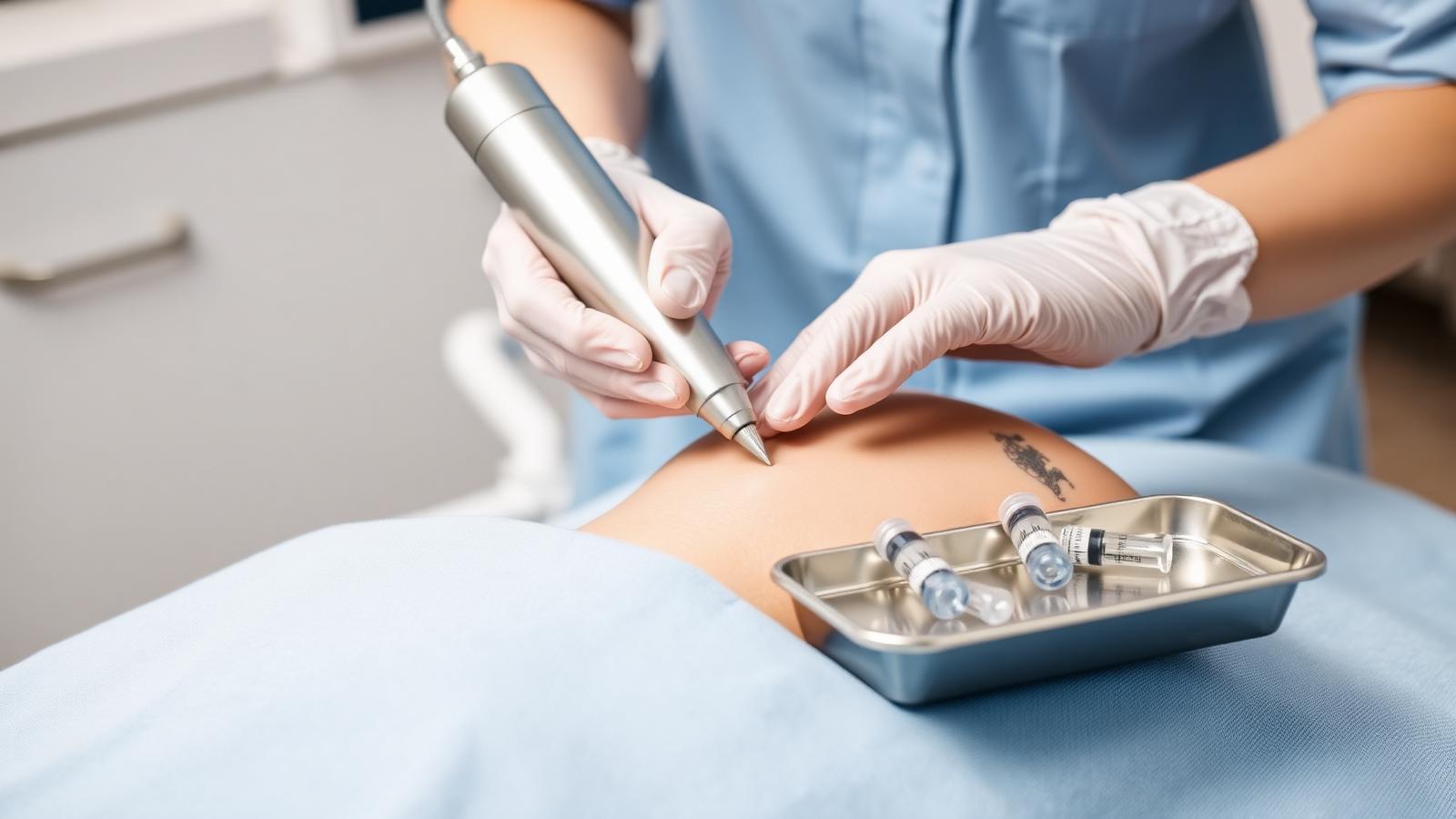
Exosome hair therapy in Dubai is typically delivered topically immediately after creating micro-channels in the scalp with microneedling, so the vesicles can reach the dermal papilla where follicles actually live. Some protocols use direct intradermal injection. The session takes about 45 minutes, has minimal downtime (some redness for a few hours) and is generally completed in three to four sessions spaced four to six weeks apart, with maintenance every six to twelve months — usually fewer total visits than PRP.
Because the cargo is manufactured under controlled conditions and standardised batch-to-batch, the signalling intensity does not depend on your platelet quality. That makes exosomes particularly useful for patients whose biology limits PRP — older patients, patients on certain medications, patients with anaemia, or patients who have plateaued on PRP.
FAQ — Are exosomes the same as stem cells? No. Exosomes are the signalling vesicles that cells release to communicate; they contain no nucleus, no cellular machinery and cannot replicate. They carry the regenerative instructions without the regulatory and safety complexity of injecting whole cells. Stem cell therapy and exosome therapy are biologically and regulatorily different categories.
How PRP and Exosomes Work Differently
Both treatments end with the same goal — waking up follicles and lengthening the growth phase — but the route is different. PRP relies on platelet-derived growth factors, with potency tied to your own biology. Exosomes deliver a standardised, more intense signalling package manufactured under controlled conditions.
Benefits of PRP for Hair Loss
PRP's strengths are well documented. It is fully autologous, with no foreign material introduced into the body. It is supported by multiple meta-analyses for early-to-moderate androgenetic alopecia. It is generally the most cost-effective regenerative hair option per session. It carries an exceptional safety profile because the active material comes from the patient. And it can be combined safely with mesotherapy and biotin scalp support, growth factor hair treatments and topical or oral medical therapy.
The classic PRP win is the patient in their twenties, thirties or forties with early diffuse thinning or early pattern hair loss who still has miniaturised hairs and good general health. In that group, a properly executed PRP course often visibly thickens hair within three to six months.
Benefits of Exosomes for Hair Loss
Exosomes bring three practical advantages. First, the signalling cargo is concentrated and standardised — meaning every session delivers a consistent regenerative dose regardless of the patient's platelet biology. Second, the treatment course is usually shorter (three to four sessions versus four to six for PRP) and many patients perceive earlier visible change. Third, exosomes appear to dampen scalp inflammation more aggressively than PRP, which can be useful in patients whose hair loss has an inflammatory component (chronic telogen effluvium, post-COVID shedding, certain forms of alopecia areata under specialist supervision).
The classic exosome win is the patient who has plateaued on a good PRP course, the older patient with reduced platelet potency, the patient who wants fewer visits, or the patient with more advanced thinning where a stronger regenerative push is justified.
PRP vs Exosomes: Which Is Better for Male Pattern Baldness?
For early-stage male pattern hair loss (Norwood 2–3, mostly temple recession and early crown thinning) with visible miniaturised hairs, PRP is the rational starting point: well-evidenced, autologous, cost-effective, and a good test of how your biology responds. Most men in this group do well on a four-to-six-session PRP course alongside medical therapy.
For moderate male pattern loss (Norwood 3–4 with visible crown involvement), either treatment can work, but exosomes — or a combined PRP-plus-exosome protocol — often produces a stronger and faster response. The biological signal needs to be louder when the follicles are further along miniaturisation.
For advanced thinning (Norwood 5+ with significant bald areas where follicles may no longer be present), no injectable will grow hair where follicles have died. Realistic regenerative goals here are to protect what remains and thicken bordering hair; surgical hair transplantation is the right conversation for restoring lost density, with PRP or exosomes used to support graft survival and surrounding native hair.
Maintenance for men, regardless of which treatment is chosen first, is non-negotiable: pattern hair loss is progressive, and stopping treatment entirely will see thinning resume.
PRP vs Exosomes for Women With Hair Thinning
Female hair loss is more often diffuse than patterned, and the underlying drivers are commonly hormonal (postpartum, perimenopause, thyroid, PCOS), nutritional (iron, ferritin, vitamin D, B12) or stress-related rather than purely androgenetic. The first step in women is always to identify and correct underlying drivers — regenerative scalp therapy alone will not outrun an untreated iron deficiency or thyroid imbalance.
With the underlying drivers being addressed, PRP is an excellent first-line regenerative choice for postpartum shedding, mild diffuse thinning and early female-pattern hair loss. The autologous nature is appreciated by many women who prefer not to introduce foreign signalling material, especially around pregnancy planning (PRP is paused during pregnancy and breastfeeding regardless).
Exosomes are particularly useful in women with perimenopausal diffuse thinning, women who have not responded adequately to PRP, women with chronic telogen effluvium where inflammation plays a role, and women who want a shorter, more intensive course. Many of our female patients in Dubai follow a layered protocol: PRP as the structural backbone, with exosomes brought in for specific phases of the year.
Can PRP and Exosomes Be Combined?
Yes — and in advanced or stubborn cases, combination protocols often outperform either treatment alone. PRP and exosomes target overlapping but non-identical regenerative pathways, so stacking them produces a broader signalling response. Typical Silk Clinics combination strategies include alternating PRP and exosome sessions across a six-month course, anchoring with PRP and adding an exosome session every few visits as an 'intensifier', or pairing PRP injections with a biotin and amino acid mesotherapy layer for nutrient delivery.
Combination is not the right answer for every patient — it adds cost and is not justified in mild, early cases that will respond well to PRP alone. The decision is made at consultation based on hair loss stage, response to prior treatment, age, biology and goals.
Expected Results and Timeline
Both treatments work on the follicular cycle, not on the calendar — the hair you can see today was decided three to six months ago, so visible change always lags the treatment itself. The pattern is similar between PRP and exosomes, but exosomes typically produce visible change a little earlier.
Patients who stop after one or two sessions, or who skip maintenance, will not see the durable result the protocol is designed to deliver. Regenerative hair restoration is a structured course, not a single visit.
Risks and Side Effects
Both PRP and exosomes have excellent safety profiles when performed by trained clinicians in a regulated medical setting. Side effects are usually mild and self-limiting.
PRP side effects: temporary scalp redness for a few hours, mild tenderness or tightness for 24–48 hours, occasional pinpoint bruising at injection sites, and very rarely a transient headache. Because the material is your own blood, there is no risk of allergy to the active component.
Exosome side effects: temporary scalp redness, mild swelling and warmth for a few hours, occasional itching as the regenerative signal activates, and (rarely) a short flare of shedding in the first two to four weeks as miniaturised hairs are pushed out to make room for new growth. This 'regenerative shed' is a positive sign, not a treatment failure.
Candidate considerations that increase risk for either treatment: active scalp infection, bleeding disorders or current anticoagulant therapy without medical clearance (especially for PRP), pregnancy or breastfeeding, active cancer treatment, and significant uncontrolled medical conditions. Every patient is screened at consultation.
Who Is a Good Candidate?
You are likely a good candidate for PRP, exosomes or both if you:
- Have early-to-moderate hair thinning with visible miniaturised hairs (the follicles are still alive)
- Are in general good health, not pregnant or breastfeeding, and not on anticoagulants without clearance
- Have addressed (or are addressing) underlying drivers — iron, thyroid, vitamin D, hormonal balance, scalp health
- Are prepared to commit to a structured course (not just one session) and to maintenance
- Have realistic expectations: regenerative therapy thickens, strengthens and protects existing hair and reactivates dormant follicles — it does not grow hair where follicles have died
- Are open to combining scalp therapy with appropriate medical treatment, wellness optimisation or broader hair loss treatment in Dubai
You may not be a good candidate, or need further evaluation first, if you have: complete baldness in the target area (no follicles to stimulate), an active scalp infection, an untreated underlying medical driver of hair loss, are pregnant or breastfeeding, are on systemic chemotherapy or recent immunosuppression, or have unrealistic density expectations that no injectable can meet.
PRP vs Exosomes: Final Verdict
There is no universal winner. The honest, balanced summary is this:
PRP is an excellent entry-level regenerative treatment for hair loss in Dubai — fully autologous, well-evidenced, cost-effective and a good test of how your biology responds. It is our most common first-line recommendation for early-to-moderate male and female pattern hair loss, postpartum shedding and early diffuse thinning.
Exosomes are the more advanced regenerative option — a standardised, more intense signalling cargo delivered in fewer sessions, particularly useful for PRP plateaus, older patients, more advanced thinning, inflammatory components and patients who want shorter treatment courses.
Combination protocols layering PRP and exosomes — sometimes alongside scalp mesotherapy with biotin or growth factor hair treatments — often provide the strongest practical approach for moderate to advanced cases or for patients who want the most thorough regenerative response.
At Silk Clinics in Dubai Healthcare City, our doctors will not push a single product or protocol on you. The right answer depends on your hair loss stage, your biology, your goals and your budget — decided together at consultation, with realistic expectations from the start.
Can these treatments be combined?
Yes — and for moderate-to-advanced hair loss, combination protocols often outperform either treatment alone. PRP and exosomes target overlapping but non-identical regenerative pathways, so stacking them produces a broader signalling response. Typical combination strategies at Silk Clinics include alternating PRP and exosome sessions across a six-month course, anchoring with PRP and adding exosome 'intensifier' sessions every few visits, or pairing scalp injectables with {{mesotherapy-biotin-hair-dubai|biotin and amino acid mesotherapy}} for nutrient delivery. Combination is not justified for every patient — it adds cost and is unnecessary in mild, early cases that respond well to PRP alone.
Clinician perspective
What do Silk Clinics clinicians commonly recommend?
Most Silk Clinics hair patients begin with PRP — it is well-evidenced, fully autologous, cost-effective and tells us how responsive your biology is. We move to exosomes (or add them alongside PRP) when patients plateau, when the thinning is more advanced, when patient factors (age, medications, anaemia) reduce platelet potency, or when fewer visits matter. Before either treatment, we identify and correct underlying drivers — iron, thyroid, vitamin D, hormonal status, scalp health — because regenerative therapy alone cannot outrun an untreated medical driver of hair loss.
Who may not be suitable?
- Active scalp infection, severe inflammatory scalp condition or open wounds in the treatment area.
- Bleeding disorders or current anticoagulant therapy without medical clearance (particularly for PRP).
- Pregnancy or breastfeeding.
- Active cancer treatment or recent systemic chemotherapy.
- Complete baldness in the target area — no follicles to stimulate; surgical options should be discussed.
- Untreated underlying drivers (severe iron deficiency, uncontrolled thyroid disease) — these are corrected first, as explained in our guide to [medical conditions affecting skin and hair](/blog/medical-conditions-affecting-skin-hair).
Suitability is always confirmed at consultation — this list is general guidance, not medical advice.
In-depth: how each treatment works
How PRP is prepared for hair and why preparation matters
How exosome preparations differ between brands
PRP and PRF — what's the difference?
Why scalp inflammation matters more than most patients realise
Cost framing and how to think about value
What about medical therapy alongside PRP and exosomes?
Key takeaways
- PRP = autologous, well-evidenced, cost-effective — best first-line for early-to-moderate hair loss.
- Exosomes = standardised, more intense signal, fewer sessions — best for plateaus, advanced thinning and older patients.
- Both work on the follicular cycle: visible change is gradual (3–6 months), maintenance is essential.
- Combination protocols often provide the strongest approach in moderate-to-advanced cases.
- Neither injectable grows hair where follicles have died — advanced bald areas need a surgical conversation.
- Identifying and correcting underlying drivers (iron, thyroid, hormones) is always part of the plan.
- Choice depends on hair loss stage, biology, goals and budget — decided at doctor-led consultation.
Related conditions
Personalized Skin Plan
Not sure if PRP vs Exosomes Hair Loss Dubai is right for you?
Answer 9 quick questions and get a doctor-designed pathway — with realistic timelines, downtime and session counts for your skin.
Browse the category
Explore all Hair Treatments in DubaiMedically-led hair restoration in Dubai using PRP, exosomes, growth factors and mesotherapy — clinically structured programs for thinning, shedding and early hair loss.
Treatments mentioned in this guide
Book a consultation
Considering PRP vs Exosomes Hair Loss in Dubai?
Our DHA-licensed doctors at Dubai Healthcare City will assess your concern and build a personalised, transparent plan — no obligation, no pressure.
Frequently asked questions
Which is better for hair loss in Dubai — PRP or exosomes?
How many PRP sessions are needed for hair loss?
How many exosome sessions are needed for hair?
View more frequently asked questions (9)
Are exosomes the same as stem cells?
Do PRP or exosomes work for advanced male pattern baldness?
Are PRP and exosomes safe for women?
Can PRP and exosomes be combined?
How much do PRP and exosomes cost in Dubai?
Is there downtime after PRP or exosome hair treatment?
When will I see results from PRP or exosomes for hair?
Are exosomes approved and safe to use in Dubai?
Do I need a dermatologist or doctor consultation before treatment?
About the author
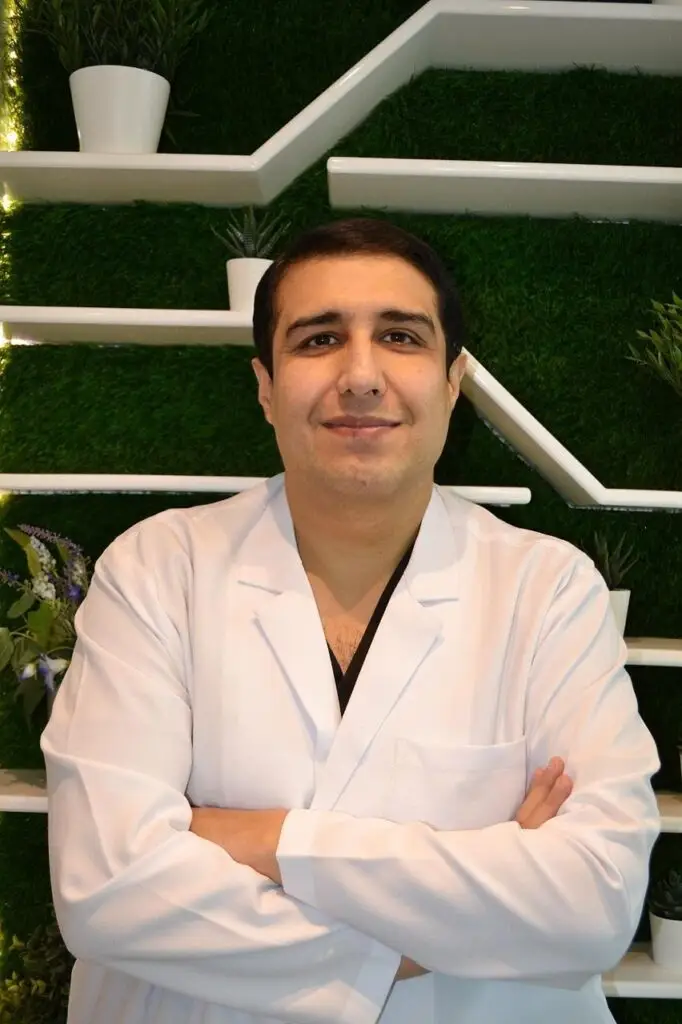
Medical Director — Aesthetic & Regenerative Medicine
Leading Silk Clinics with years of experience in aesthetic medicine, Dr Ahmad Sadeqyar oversees clinical excellence across all departments and personally treats complex aesthetic cases.
- MD — Aesthetic Medicine
- Advanced Diploma in Regenerative Therapy
- Member, IMCAS
Medically reviewed by Noemi — Head Nurse, Laser Treatments & Aesthetics.