Quick answer
PRP is your own blood-derived growth-factor concentrate — fully autologous, with the largest evidence base of any regenerative injectable, and excellent for hair loss and gradual skin rejuvenation. Exosomes are manufactured, standardised signalling packages with a more intense regenerative cargo, often producing faster visible results in fewer sessions but at higher per-session cost. The right choice depends on your goals, biology and budget, not on one being inherently 'better'.
Last reviewed on byDr Ahmad Sadeqyar&Noemi
PRP / PRF vs Exosome Therapy — side-by-side
| Feature | PRP / PRF | Exosome Therapy |
|---|---|---|
| Source | Your own blood (autologous) | Lab-prepared, typically from mesenchymal stem cells |
| Active components | Growth factors (PDGF, TGF-β, VEGF, EGF) from platelets | Curated cargo of growth factors, peptides, mRNA, microRNA |
| Potency consistency | Varies with your platelet quality, age, health, meds | Standardised batch-to-batch |
| Delivery | Injected or microneedled into target area | Topical immediately after microneedling / RF / laser |
| Sessions (skin) | Typically 3, spaced 4–6 weeks | Often 1–3, layered with microneedling/RF |
| Sessions (hair) | 4–6 monthly, then maintenance | 3–4 sessions, 4–6 weeks apart |
| Downtime | 24–48 h swelling / pinpoint bruising | Driven by the delivery procedure (24–72 h) |
| Evidence base | Largest of any regenerative injectable | Newer, rapidly growing literature |
| Cost (per session) | Lower | Higher |
| Best for | Hair loss, gradual rejuvenation, autologous-only preference | Faster visible skin change, acne scars, post-laser healing, PRP plateaus |
PRP and exosome therapy are two of the most-discussed regenerative treatments in aesthetic medicine. They share a goal — stimulating the body's own repair machinery to improve skin quality, scarring and hair density — but they are biologically distinct, use different source materials, and behave differently in clinical practice. This is a balanced, doctor-led comparison written for patients researching their options in Dubai.
We cover what each treatment actually is, where the evidence is strongest, how they compare on practical variables, whether they can be combined, and how clinicians at Silk Clinics in Dubai Healthcare City decide which to recommend.
What is PRP?
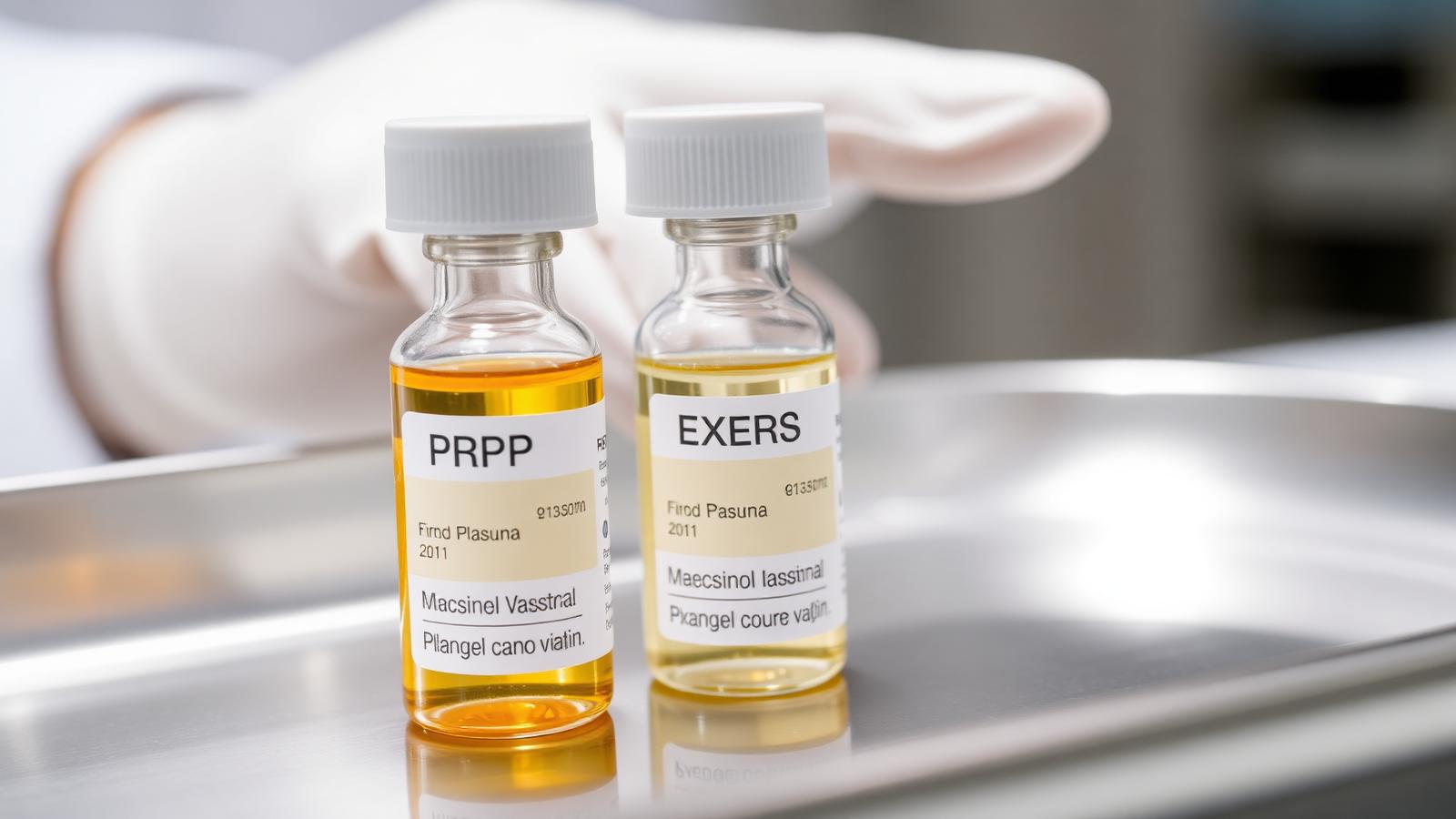
Platelet-rich plasma (PRP) is prepared from your own blood. A small sample is drawn, spun in a centrifuge, and the platelet-rich fraction is separated. Platelets are packed with growth factors — PDGF, TGF-β, VEGF and others — that signal repair, angiogenesis and collagen production. The concentrated plasma is then re-injected or microneedled into the target tissue.
PRP has decades of clinical use, the largest evidence base of any 'regenerative' injectable, and is fully autologous (your own biology, nothing added). The trade-off: potency depends on your own platelet quality, which varies with age, health, medications and lifestyle.
What is exosome therapy?
Exosomes are nanoscale extracellular vesicles released by cells (most commonly mesenchymal stem cells in commercial preparations) carrying a curated cargo of growth factors, peptides, mRNA and microRNA. They are not stem cells themselves — they are the signalling packages stem cells use to instruct surrounding tissue.
In aesthetic practice, exosomes are delivered topically immediately after a micro-channel-creating procedure (microneedling, RF microneedling or fractional laser) so the vesicles can reach the dermis. The cargo is standardised batch-to-batch, which removes the patient-to-patient variability of PRP.
Where each one wins
For skin quality, tone and fine textural change, both can deliver. PRP shines when patients want a fully autologous treatment with an established safety record; exosomes shine when consistency, intensity of the regenerative signal and faster perceived results matter more.
For hair restoration, PRP has the longer track record and is supported by multiple meta-analyses for early-stage androgenetic alopecia. Hair exosomes are newer but increasingly used in patients who have plateaued on PRP, want fewer sessions, or have lower-quality platelets.
For acne scars and post-procedure healing acceleration, exosomes layered after RF microneedling or fractional laser have become a popular protocol in Dubai because the regenerative signal is consistent and intense without adding downtime.
Can these treatments be combined?
Yes — and in clinically thoughtful protocols they are often combined. PRP and exosomes target overlapping but non-identical regenerative pathways, so layering them can produce a stronger remodeling response than either alone. A common Silk Clinics protocol uses PRP injections for hair restoration alongside exosome sessions every few visits for patients who want intensified response; for acne scars, exosomes are often layered after a microneedling RF or fractional CO2 session, with PRP injected separately in subsequent visits.
Clinician perspective
What do Silk Clinics clinicians commonly recommend?
Most Silk Clinics patients start with PRP — it is well-evidenced, fully autologous, cost-effective, and tells us how responsive your biology is. Exosomes are recommended first when consistency of the regenerative signal matters more than autologous origin (acne-scar patients layering with RF microneedling), when PRP has plateaued, or when patient factors (age, medications, anaemia) reduce platelet potency. There is no universal winner — the right choice is the one matched to your indication, your biology and your budget.
Who may not be suitable?
- Active skin infection, severe acne flare or herpes outbreak in the treatment area.
- Bleeding disorders or current anticoagulant therapy without medical clearance (especially for PRP).
- Pregnancy or breastfeeding.
- Current chemotherapy or active cancer treatment.
- Significant uncontrolled medical conditions — full clearance is required first.
Suitability is always confirmed at consultation — this list is general guidance, not medical advice.
In-depth: how each treatment works
How PRP is prepared and why preparation matters
How exosome preparations differ between brands
PRP and exosomes in hair restoration
Cost framing and how to think about value
Key takeaways
- PRP is autologous and well-evidenced; exosomes are standardised and more intense per session.
- PRP is the established choice for early-stage hair loss; exosomes are increasingly used for plateaus.
- Exosomes typically produce faster visible skin change; PRP builds gradually across the course.
- Per-session cost is higher for exosomes; total course cost may converge depending on indication.
- Combination protocols are common and often outperform either treatment alone.
- Source quality and traceability of exosome preparations matter — always confirmed at consultation.
Related conditions
Personalized Skin Plan
Not sure if PRP vs exosomes Dubai is right for you?
Answer 9 quick questions and get a doctor-designed pathway — with realistic timelines, downtime and session counts for your skin.
Related reading
- Regenerative aesthetics is one of the fastest-moving areas in USA-inspired facial aesthetics trends in Dubai.
Browse the category
Explore all Skin Treatments in DubaiAdvanced skin treatments in Dubai engineered to renew, brighten and resurface — from Hydrafacial and chemical peels to PRP, exosomes and Scarlet S microneedling RF.
Treatments mentioned in this guide
Book a consultation
Considering PRP vs exosomes in Dubai?
Our DHA-licensed doctors at Dubai Healthcare City will assess your concern and build a personalised, transparent plan — no obligation, no pressure.
Frequently asked questions
Are exosomes better than PRP?
Are exosomes safe and approved in Dubai?
How many sessions of each will I need?
View more frequently asked questions (6)
Can PRP and exosomes be used together?
Which is better for hair loss?
Is there downtime?
Are exosomes more expensive than PRP?
Which one will give faster visible results?
Are exosomes derived from human cells?
About the author
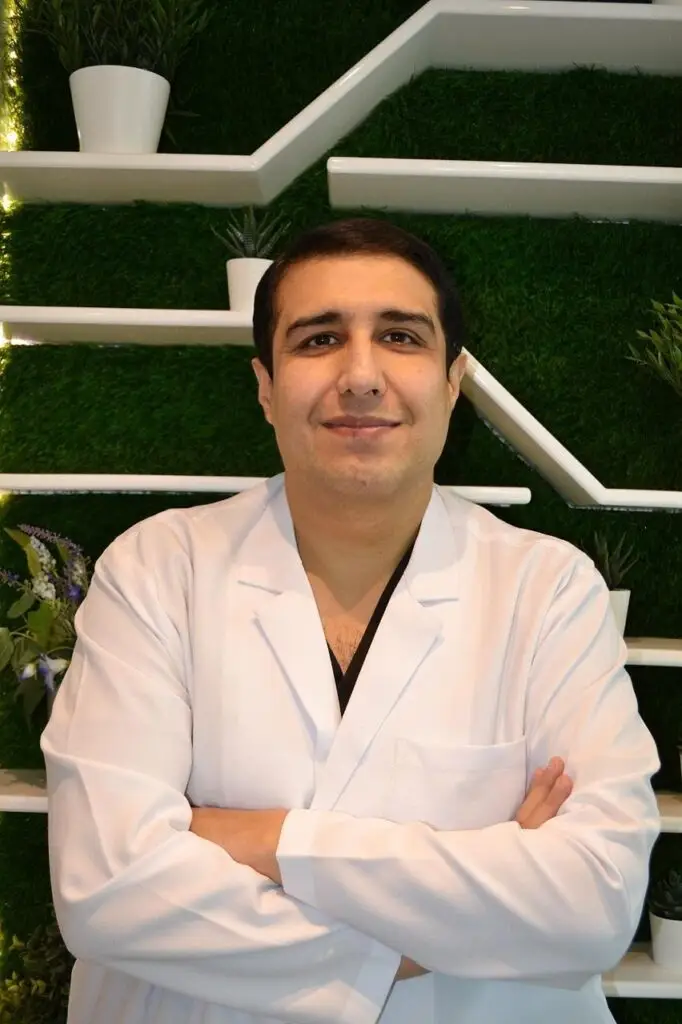
Medical Director — Aesthetic & Regenerative Medicine
Leading Silk Clinics with years of experience in aesthetic medicine, Dr Ahmad Sadeqyar oversees clinical excellence across all departments and personally treats complex aesthetic cases.
- MD — Aesthetic Medicine
- Advanced Diploma in Regenerative Therapy
- Member, IMCAS
Medically reviewed by Noemi — Head Nurse, Laser Treatments & Aesthetics.