What is Peptide-Based Regenerative Protocols?
Peptides are short chains of amino acids that act as cellular messengers. Depending on the sequence, they can signal fibroblasts to produce collagen and elastin, support wound repair, calm inflammatory signalling, or relax the fine muscular contraction behind expression lines. Protocols combine selected peptide classes with a delivery method that gets them past the skin barrier.
Peptides are routinely combined with exosome therapy in Dubai, salmon DNA PDRN, PRP facial treatments and microneedling RF — see all regenerative treatments in Dubai.
Benefits
- Stimulates collagen and elastin production
- Improves skin firmness, tone and resilience
- Strengthens the skin barrier
- Accelerates recovery after laser or microneedling
- Supports scalp and hair quality programmes
- Well tolerated by sensitive skin — no downtime
Concerns we treat
Ideal candidates
Patients in Dubai who want a science-driven, low-irritation route to better skin quality — including those with sensitive skin who cannot tolerate retinoids and acids.
The treatment process
- 1Doctor consultation, skin analysis and protocol selection
- 2Baseline photography for objective comparison
- 3Cleanse and topical numbing where microchannel delivery is used
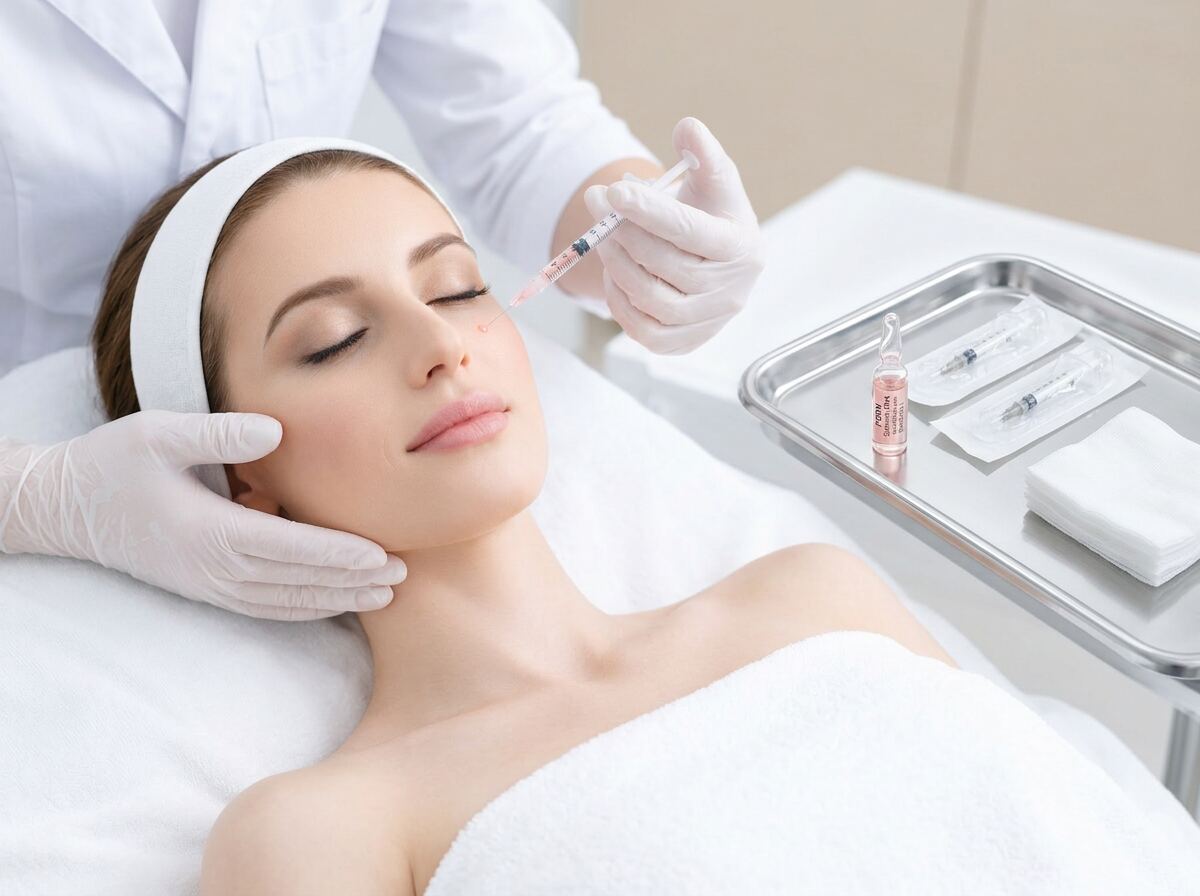
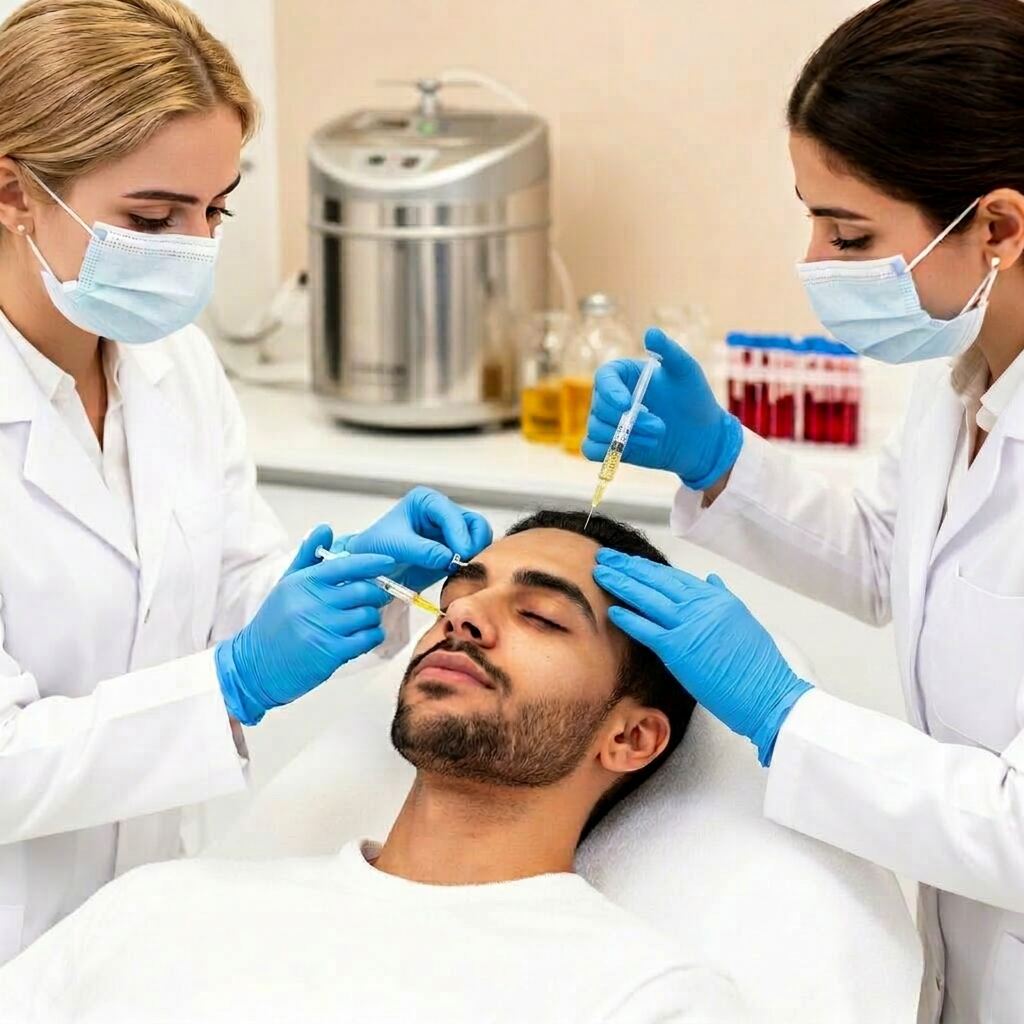
- 4Peptide delivery via microneedling channels, mesotherapy or medical topical layering
- 5Home peptide regimen and review at 6–12 weeks
None to minimal — light redness for a few hours with microchannel delivery.
A doctor-led clinic in Dubai Healthcare City
At Silk Clinics in Dubai Healthcare City, every treatment is doctor-led, clinically supervised and tailored to your skin, anatomy and goals. We combine advanced technology, premium products and a refined patient experience — guided by our promise: Safety First. Beauty Always.
Meet our teamPeptides — signalling, not just nourishing
Most skincare works by supplying raw material or removing surface cells. Peptides work differently: they are messengers. A signal peptide such as palmitoyl pentapeptide effectively tells fibroblasts that repair is needed, prompting them to build collagen and elastin as they would after injury — without causing the injury.
That distinction matters for sensitive skin. In Dubai our doctors see a large group of patients whose barrier cannot tolerate retinoids or acid regimens, particularly with year-round sun exposure and constant air conditioning. Peptides deliver collagen support to these patients without the irritation cycle.
Delivery is the practical limitation. Many peptides are too large to cross an intact stratum corneum efficiently, which is why clinical protocols pair them with microchannel delivery through microneedling or with fine mesotherapy injection rather than relying on topical application alone.
Peptides are also our default post-procedure layer: after CO2 laser or microneedling RF, they support repair and reduce inflammatory downtime while amplifying the collagen response the procedure already triggered.
The main peptide classes used in clinic
Signal peptides instruct fibroblasts to increase collagen and elastin synthesis and are the backbone of most skin-quality protocols. Carrier peptides, notably copper peptides, deliver trace elements essential to the enzymes involved in wound healing and collagen cross-linking.
Enzyme-inhibiting peptides slow the breakdown of existing collagen, while neurotransmitter-inhibiting peptides mildly reduce the muscular micro-contractions that etch expression lines — a far gentler effect than injectables, and complementary rather than equivalent.
Protocols are built from these classes according to the goal: firmness and elasticity, barrier repair, post-procedure recovery, or scalp and follicle support in hair treatment plans.
Peptides, exosomes and PDRN — how they differ
Exosomes deliver a complex package of signals including growth factors and RNA, and produce the broadest regenerative effect. PDRN is particularly strong on repair and anti-inflammatory action.
Peptides are more targeted and more predictable: you choose the sequence for the effect you want. They are also the most practical for continuous use, because they can be maintained at home between clinic sessions.
In practice these are not competing options. A typical Silk Clinics plan uses exosomes or PDRN to drive change during a course, with peptides applied in clinic and at home to sustain the signal in between.
Getting the most from a peptide protocol
Consistency outperforms intensity. Peptide results are cumulative and depend on repeated signalling, so a completed course plus daily home use produces markedly better outcomes than occasional sessions.
Protect the investment with daily broad-spectrum SPF 50. UV exposure activates the enzymes that degrade collagen, which directly opposes what the protocol is building — a particularly relevant point in Dubai.
Layering matters at home: apply peptide serums to clean skin before heavier creams, and avoid using them in the same routine step as strong acids, which can destabilise some formulations. Your doctor will map the exact routine at consultation.
Expected results
Smoother, better-hydrated skin within 2–3 weeks, visible improvement in tone and firmness at 4–6 weeks, and full collagen-driven results at around 3 months.
Recovery timeline
- Day 0Light redness with microchannel delivery; none with topical protocols.
- Day 1Skin looks plump and hydrated; makeup and normal routine resume.
- Week 2–3Improved smoothness, hydration and barrier comfort.
- Week 4–6Visible improvement in tone, firmness and fine lines.
- Month 3New collagen matures; results reviewed against baseline photography.
Maintenance every 2–3 months, supported by a daily peptide home regimen.
Protocols generally involve an initial series of sessions followed by review and maintenance.
Suitable candidate
- Early ageing and skin-quality concerns
- Sensitive skin that cannot tolerate retinoids or acids
- Patients recovering from laser, microneedling or CO2 resurfacing
- Patients wanting maintenance between stronger regenerative treatments
Not suitable for
- Active skin infection, inflamed acne or open wounds in the area
- Known allergy to a peptide formulation component
- Patients expecting volume restoration — that requires fillers or biostimulators
- Pregnancy and breastfeeding, unless cleared by your treating doctor
Risks & side effects
Every medical procedure carries some risk. We discuss these fully at consultation so you can decide with confidence.
- Transient redness after microchannel or injectable delivery
- Mild tenderness or tightness for a few hours
- Occasional pinpoint bruising with mesotherapy delivery
- Rare irritation or sensitivity to a formulation component
- Results are gradual and cumulative — a single session produces limited change
Combination treatments
Peptide-Based Regenerative Protocols works well alongside the following treatments. Your doctor will recommend the right combination at consultation.
What Silk Clinics doctors commonly recommend
For skin-quality and early ageing concerns, our doctors typically recommend 4 peptide sessions with microchannel delivery every 3 weeks, plus a daily home peptide serum and SPF 50.
After CO2 laser or microneedling RF, peptides are added during the recovery window to support repair and reduce inflammatory downtime.
For sensitive or reactive skin, peptides are usually the preferred first active, introduced within a calming programme before any stronger treatment is considered.