Quick answer
Composite bonding is a directly placed resin treatment — conservative, affordable, usually reversible, typically lasts 5–7 years. Porcelain veneers are lab-made shells — more durable, more stain-resistant, typically last 10–15+ years but require minor enamel removal and are more expensive. Choose bonding for small focused changes; choose veneers for full smile design or where long-term durability matters most.
Last reviewed on byDr Karishma Mayer&Dr Ahmad Sadeqyar
Composite Bonding vs Porcelain Veneers — side-by-side
| Feature | Composite Bonding | Porcelain Veneers |
|---|---|---|
| Material | Tooth-coloured resin (composite) | Porcelain / lithium disilicate |
| Fabrication | Sculpted directly in clinic | Custom-made in dental laboratory |
| Tooth preparation | Usually none | Minimal — outer enamel only |
| Appointments | Single visit | 2–3 visits over 1–2 weeks |
| Durability | 5–7 years (polish/refresh extends) | 10–15+ years |
| Stain resistance | Moderate — needs regular polishing | High — porcelain is highly stain-resistant |
| Reversibility | Usually reversible | Partially reversible at best |
| Cost | More affordable | Higher per tooth |
| Best for | Small chips, gap closure, edge refinement | Full smile design, durable transformation |
Composite bonding and porcelain veneers are the two most common cosmetic dentistry options for improving the front teeth. They overlap in their goals — better colour, better shape, better symmetry — but they differ significantly in technique, materials, durability and cost. This is a doctor-led comparison so patients researching cosmetic dentistry in Dubai can make an informed choice.
We explain what each treatment is, where each is the right tool, how they compare on the variables that actually matter to patients, and how prosthodontists at Silk Clinics in Dubai Healthcare City decide between them.
What is composite bonding?
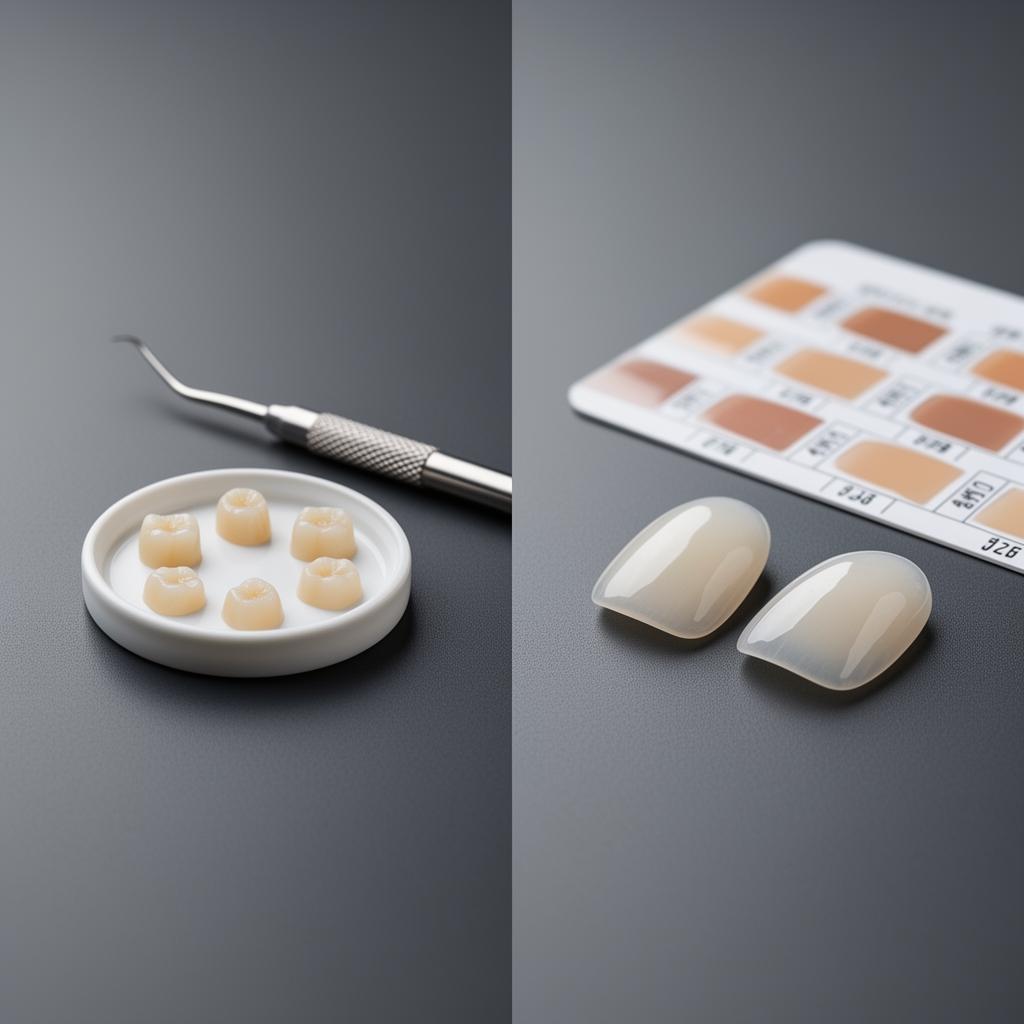
Composite bonding is a directly placed cosmetic dental treatment. A tooth-coloured resin (composite) is applied to the front of the tooth in layers, sculpted by hand by the dentist, cured with light and polished to a natural finish. The treatment is usually completed in a single visit with no anaesthesia, and little or no natural tooth preparation is required.
Bonding is the most conservative cosmetic dentistry option. It is the right tool for small chips, minor gap closure, edge refinement, single-tooth discolouration and modest shape improvements. It is also the most affordable cosmetic dentistry option.
What are porcelain veneers?
Porcelain veneers are thin custom-made shells fabricated in a dental laboratory and bonded to the front of teeth. They require minimal preparation of the outer enamel and are typically delivered across two or three appointments: consultation and digital scanning, preparation and temporary fitting, then final try-in and bonding.
Veneers are the gold standard for full smile design, durable cosmetic transformation and stain-resistant long-term results. Porcelain typically lasts 10–15+ years, picks up significantly less stain than composite over time, and is more biocompatible with gum tissue.
How they compare on the variables that matter
Durability: porcelain veneers typically last 10–15+ years; composite bonding typically lasts 5–7 years. Bonding can usually be polished and refreshed rather than fully replaced, which extends its useful life.
Stain resistance: porcelain is highly stain-resistant; composite is more porous and picks up stain from coffee, tea, red wine, smoking and curry. Regular polishing visits help maintain composite.
Tooth preparation: composite bonding usually requires no preparation; porcelain veneers require minimal enamel reduction. Both are conservative compared to crowns.
Reversibility: composite bonding is usually reversible (the natural tooth is preserved); porcelain veneers are partially reversible at best because some enamel is removed.
Appointments: bonding is typically a single visit; veneers require 2–3 visits over 1–2 weeks.
Cost: composite bonding is typically significantly more affordable than porcelain veneers per tooth. This makes bonding an attractive entry point for cosmetic dentistry.
Aesthetic outcome: both can look beautiful in skilled hands. Porcelain has a slight edge in light translucency and long-term appearance; composite is more forgiving and adjustable but requires more maintenance to keep looking fresh.
How Silk Clinics prosthodontists decide
Our default approach is conservation. We start by asking what the smallest possible intervention is that would deliver the result the patient wants. If composite bonding can achieve the goal — small chips, minor gaps, edge refinement, single-tooth discolouration — we will recommend it. If the goal is a full smile design, durable long-term colour and shape transformation, or refining multiple teeth at once, veneers are usually the better tool.
Many patients choose bonding as their first cosmetic dentistry step, then upgrade to veneers years later if they want greater durability or stain resistance. This is a perfectly reasonable progression — and one of the advantages of starting conservatively.
We also use crowns when teeth are structurally compromised rather than just cosmetically suboptimal — that decision is made on tooth health, not aesthetic preference. The full conservation hierarchy is: polish → whitening → bonding → veneers → crowns. We step up only when we need to.
Cost considerations and long-term value in Dubai
Composite bonding is meaningfully more affordable than porcelain veneers per tooth, which makes it an attractive entry point for cosmetic dentistry — especially for patients addressing one or two specific concerns rather than redesigning a whole smile. Porcelain veneers cost more per tooth up front but typically last 10–15+ years, while composite typically needs meaningful refresh at 5–7 years. Over a 10-year horizon, the maintenance-adjusted cost gap between the two options is often smaller than headline pricing suggests. We provide a transparent, itemised quote at consultation so the comparison is real, not marketing.
Timeline and appointments — what to expect
Composite bonding is typically completed in a single visit, without local anaesthesia in most cases, with the dentist sculpting the resin directly onto the tooth. Porcelain veneers require two to three appointments over one to two weeks: consultation and digital scanning, minimal preparation and temporary placement, then final try-in and bonding. Where the case is part of a wider Hollywood smile design, a wax-up and mock-up phase is often added so the patient sees and approves the design before commitment.
Maintenance — the honest long-term picture
Composite bonding needs regular professional polishing visits every 6–12 months to manage stain pickup, and occasional touch-ups where an edge has chipped or worn. Porcelain veneers need standard 6-monthly hygiene appointments and, for any patient with clenching or grinding habits, lifelong night-guard wear to protect the ceramic from lateral forces. Neither option is 'maintenance-free' — but the two profiles are different, and honest patients plan for the maintenance that goes with their choice.
When bonding is genuinely the better answer
There are cases where bonding is not just the cheaper option — it is the correct option. A young patient with a single chipped front tooth after sport. A patient closing one small midline gap. A single peg-shaped lateral incisor being brought into normal proportion. A conservative test-drive before committing to a full smile design. In these situations, defaulting to porcelain veneers is over-treatment. Our job is to say so honestly, even if it means quoting a smaller treatment plan.
When veneers are genuinely the better answer
Equally, there are cases where composite bonding is not the right tool. Full smile redesign across 8–10 teeth. Patients with high staining exposure (heavy coffee or red-wine intake, smokers) who want long-term stability. Patients who explicitly value long-term durability and stain resistance over the lowest possible up-front cost. Cases where the shape change required is at the upper end of what composite can predictably deliver without becoming bulky at the gum margin. In these situations, veneers are the honest recommendation. For a wider view of how bonding, veneers and crowns fit together in a single plan, our veneers vs crowns comparison is a useful companion read.
Can these treatments be combined?
Yes — bonding and veneers can be combined within a single smile design when different teeth need different levels of intervention. Careful shade matching is required so the materials look seamless together. More commonly, patients progress from bonding to veneers years later as their priorities or budget change.
Clinician perspective
What do Silk Clinics clinicians commonly recommend?
At Silk Clinics Dubai, our default approach is conservation. The hierarchy we follow is polish → whitening → bonding → veneers → crowns, stepping up only when we need to. Composite bonding is the right tool for small focused cosmetic changes; porcelain veneers are the right tool for full smile design and long-term durability. Honest consultation means recommending the smallest intervention that delivers the patient's goal, not the most expensive one that fits.
Who may not be suitable?
- Active gum disease, untreated decay or oral infection — must be treated first.
- Severe bruxism without a night-guard plan — both bonding and veneers are at risk of chipping.
- Heavy staining habits (heavy smoking, daily red wine) — bonding will stain rapidly; veneers are more forgiving.
- Unrealistic expectations of full transformation from bonding when veneers are the appropriate tool.
- Pregnancy — elective cosmetic dentistry is usually deferred until after delivery.
Suitability is always confirmed at consultation — this list is general guidance, not medical advice.
In-depth: how each treatment works
When bonding outperforms veneers
When veneers outperform bonding
Maintenance — the honest comparison
Starting conservatively, upgrading later
Key takeaways
- Bonding is the most conservative cosmetic dentistry option.
- Veneers are the gold standard for durable full smile design.
- Bonding lasts 5–7 years; veneers last 10–15+ years.
- Bonding is significantly more affordable than veneers.
- Bonding is usually reversible; veneers are not fully reversible.
- Conservation-first thinking: choose the smallest intervention that delivers the goal.
Personalized Skin Plan
Not sure if Composite bonding vs veneers Dubai is right for you?
Answer 9 quick questions and get a doctor-designed pathway — with realistic timelines, downtime and session counts for your skin.
Browse the category
Explore all Dental Treatments in DubaiCosmetic and general dentistry in Dubai Healthcare City — veneers, Hollywood Smile, whitening, clear aligners and full-mouth dental care delivered by experienced specialists.
Treatments mentioned in this guide
Book a consultation
Considering Composite bonding vs veneers in Dubai?
Our DHA-licensed doctors at Dubai Healthcare City will assess your concern and build a personalised, transparent plan — no obligation, no pressure.
Frequently asked questions
Is composite bonding cheaper than veneers in Dubai?
Do composite bondings look as good as veneers?
How long do composite bondings last in Dubai?
View more frequently asked questions (6)
Can I have bonding now and veneers later?
Is composite bonding reversible?
Which is better for closing gaps?
Will my bonding stain?
Are veneers worth the extra cost?
Can both be combined in the same smile?
About the author

Prosthodontist — Veneers, Crowns & Smile Design
A specialist in prosthodontics, Dr Karishma Mayer leads complex smile design, veneers and full-mouth rehabilitations.
- BDS
- MDS — Prosthodontics
- Smile Design Certified
Medically reviewed by Dr Ahmad Sadeqyar — Medical Director, Aesthetic & Regenerative Medicine.