
Quick answer: Persistent facial redness is either vascular (rosacea, telangiectasia, flushing) or barrier-related (over-exfoliation, irritant dermatitis, product overload) — and the two are treated in opposite directions. Vascular redness responds to trigger control plus vascular-targeted treatment; barrier redness gets worse with any device and needs three to six weeks of simplification first. In Dubai, heat and air-conditioning turn mild reactivity into chronic redness faster than in most climates.
[!TIP] This article is part of the Silk Clinics Skin Type & Skin Tone Treatment Guide — the cornerstone hub that maps every treatment on this page to your skin type and Fitzpatrick tone (I–VI).
Rosacea versus a damaged barrier
| Feature | Rosacea | Barrier damage |
|---|---|---|
| Onset | Gradual, often after age 30 | Follows a new product or aggressive routine |
| Pattern | Central face — cheeks, nose, chin | Wherever the irritant was applied |
| Triggers | Heat, sun, spice, alcohol, stress | Actives, scrubs, over-cleansing |
| Features | Flushing, papules, visible vessels | Stinging, tightness, flaking |
| Response to rest | Persists | Improves within 2–4 weeks |
Getting this distinction right is the whole consultation. Patients frequently arrive having been sold a course of laser for what is, in reality, a barrier that has been stripped by three acids and a retinoid used simultaneously.
Phase one — calm and simplify (weeks 0–6)
We reduce the routine to a gentle non-foaming cleanser, a barrier-repair moisturiser containing ceramides, and a mineral SPF 50. All acids, retinoids, scrubs and cleansing devices stop. Where inflammation is prominent, medical anti-inflammatory therapy is prescribed, and in selected patients we support recovery with targeted anti-inflammatory protocols.
In-clinic, the only treatments appropriate in this phase are hydrating and reparative: a gentle Hydrafacial on a low-abrasion setting, or polynucleotide (PDRN) therapy, which is particularly useful for restoring tolerance in chronically reactive skin.
Phase two — treat the vascular component
Once the skin tolerates its routine again, persistent vessels and background erythema can be treated. Vascular laser treatment targets dilated capillaries directly and is the most effective option for visible telangiectasia around the nose and cheeks. Diffuse background redness often responds to gentle laser skin rejuvenation over a course of sessions.
Papulopustular rosacea — the bumps that are often mistaken for acne — is a medical problem first. Devices are used only after the inflammatory component is controlled, otherwise flares are almost guaranteed.
Phase three — build resilience
Reactive skin relapses when the barrier stays thin. Skin boosters and Profhilo improve dermal hydration and, in our clinical experience, reduce flare frequency in patients who previously reacted to almost everything. This phase is about maintaining tolerance, not chasing further change.
Flushing that is triggered by emotion or stress rather than temperature deserves its own mention, because patients often feel it is not a "real" medical trigger and leave it out of the history. It is, and it responds to the same principle as any other trigger: recognise the pattern, reduce the exposure where possible, and treat the vascular consequences once the skin is calm.
Dubai-specific trigger control
- Air-conditioning: keep a humidifier in the bedroom; AC air is a major driver of transepidermal water loss.
- Heat, not just sun: the drive from a hot car park to an office triggers flushing independently of UV. Cool the car before getting in and use window film.
- Steam rooms, saunas and hot yoga: frequent triggers; substitute during a flare.
- Sunscreen choice: mineral filters are usually better tolerated than chemical filters on reactive skin.
- Cleansing after the gym: sweat left on the skin in humidity worsens both rosacea and acne.
What to avoid
Aggressive scrubs, high-strength peels, at-home microneedling, and stacking multiple actives. If your skin stings on application of a basic moisturiser, that is a clinical sign to stop everything and rebuild, not to add another product.
The four rosacea subtypes, and why the label changes the plan
Rosacea is not one presentation. Erythematotelangiectatic rosacea is dominated by flushing and visible vessels with little in the way of bumps; papulopustular rosacea produces inflammatory papules and pustules that are routinely mistaken for adult acne; phymatous rosacea involves tissue thickening, most often of the nose, and needs a different specialist pathway entirely; ocular rosacea causes gritty, dry, inflamed eyes and is missed in a striking number of patients because nobody asks about it.
The subtype dictates the order of treatment. Vascular-dominant presentations respond best to trigger control followed by vascular-targeted laser. Papulopustular disease needs medical anti-inflammatory therapy first, because lasering inflamed skin reliably provokes a flare. Any patient reporting persistent eye grittiness alongside facial redness is referred for an ophthalmological opinion rather than treated topically and hoped for.
Building a tolerance ladder instead of a routine
Reactive skin does not need a longer routine; it needs a slower one. We rebuild in defined steps rather than layering products at once: two to four weeks on cleanser, ceramide moisturiser and mineral SPF alone; then a single tolerated repair active introduced at low frequency; then, only if the skin remains calm for a fortnight, a second. Each addition is held for at least two weeks before anything else changes, so if a reaction occurs the culprit is unambiguous. Patients who add three products in one week and flare learn nothing except that their skin is "sensitive".
Patch testing on the inner forearm or behind the ear before facial application is worth the two days it costs. So is keeping a short trigger diary during a flare — most patients discover a pattern (heat exposure, a specific alcohol, sleep debt, or a particular sunscreen filter) within three weeks, and trigger avoidance consistently outperforms any product change.
Common mistakes we correct most often
- Treating rosacea as acne. Benzoyl peroxide and strong acids on rosacea-prone skin usually worsen redness and burning.
- Booking laser during a flare. Vascular treatment belongs in a calm phase; during a flare it aggravates the inflammation it is meant to settle.
- Over-cleansing. Twice-daily gentle cleansing is enough; foaming cleansers and cleansing brushes strip the barrier.
- Hot water and hot showers on the face. A consistent, easily fixed flushing trigger in this climate.
- Assuming redness will settle on its own. Untreated background erythema tends to become fixed over years as vessels remodel.
- Chasing a zero-redness result. The realistic goal is long, comfortable periods with minimal visible redness — control, not cure.
What rosacea and redness treatment costs in Dubai
The calming and barrier-repair phase is inexpensive by design — it is mostly the removal of products rather than the addition of them, plus medical therapy where indicated. Cost enters with the vascular phase: visible telangiectasia typically needs two to four vascular laser sessions, and diffuse background erythema a longer course. Because rosacea is a chronic condition, we quote both the initial course and a realistic annual maintenance figure at consultation, so the long-term commitment is clear before you start rather than after.
References
- National Rosacea Society — Standard classification and pathophysiology of rosacea.
- American Academy of Dermatology Association — Rosacea: diagnosis and treatment.
- British Association of Dermatologists — Rosacea patient information leaflet.
- Two AM et al. Rosacea: epidemiology, pathogenesis and clinical features. J Am Acad Dermatol (PubMed).
- Del Rosso JQ. The role of skin barrier repair in sensitive skin and rosacea. J Clin Aesthet Dermatol (PubMed).
Related reading and next step
Check which devices are safest for reactive skin and each Fitzpatrick tone in the Skin Type & Skin Tone Treatment Guide, or read our clinical page on rosacea. Book a consultation at Silk Clinics, Dubai Healthcare City for a barrier and vascular assessment.
Medically reviewed by Dr Suzanne Haddad, Aesthetic Doctor, and Dr Ahmad Sadeqyar, Medical Director, Silk Clinics Dubai Healthcare City. Last reviewed 26 July 2026. This article is general medical information and does not replace an individual consultation.
Personalized Skin Plan
Not sure if rosacea treatment Dubai is right for you?
Answer 9 quick questions and get a doctor-designed pathway — with realistic timelines, downtime and session counts for your skin.
Browse the category
Explore all Laser Treatments in DubaiPremium laser treatments in Dubai using advanced FDA-cleared platforms for hair removal, pigmentation, skin rejuvenation, vascular concerns and resurfacing.
Treatments mentioned in this guide
Book a consultation
Considering rosacea treatment in Dubai?
Our DHA-licensed doctors at Dubai Healthcare City will assess your concern and build a personalised, transparent plan — no obligation, no pressure.
Frequently asked questions
Can rosacea be cured?
Is laser safe for rosacea?
Why is my skin more reactive in Dubai?
View more frequently asked questions (3)
How do I know if my redness is barrier damage rather than rosacea?
Can I use retinol if I have rosacea?
Do facials help sensitive skin?
About the author
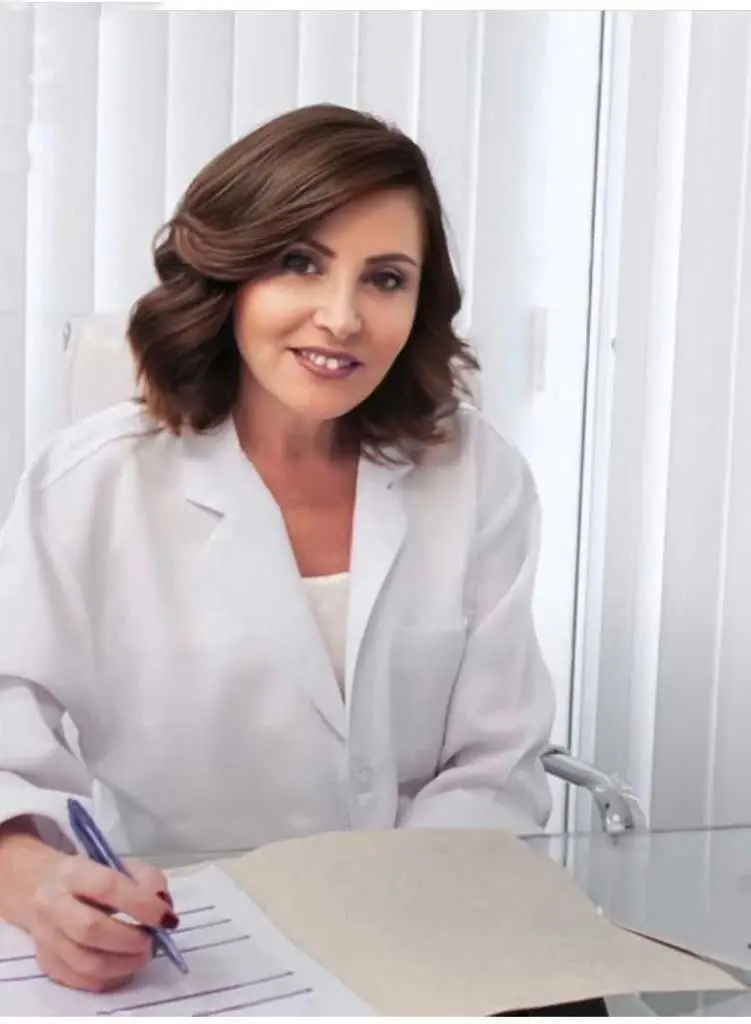
Aesthetic Doctor — Injectables & Skin
Specialising in natural-result injectables and advanced skin treatments, Dr Suzanne Haddad is known for her refined eye for facial harmony.
- MD
- Advanced Certification in Facial Injectables
- Member, AMWC
Medically reviewed by Dr Ahmad Sadeqyar — Medical Director, Aesthetic & Regenerative Medicine.