Quick answer: Acne and acne scarring are two separate clinical problems and must be treated in order. Active inflammatory acne is controlled first — resurfacing inflamed skin drives post-inflammatory pigmentation and can deepen scarring. Once the skin has been stable for roughly three months, scars are treated according to type: rolling scars respond to subcision, boxcar scars to fractional resurfacing, and ice-pick scars to focal techniques. Most patients need a combination, not a single device.
[!TIP] This article is part of the Silk Clinics Skin Type & Skin Tone Treatment Guide — the cornerstone hub that maps every treatment on this page to your skin type and Fitzpatrick tone (I–VI).
Stage one: control the active acne
Before any scar work, we stage the acne — comedonal, inflammatory papulopustular, or nodulocystic — and identify aggravating factors that are common in Dubai: occlusive sunscreen layered under makeup in heat, dairy and high-glycaemic diets, hormonal patterns (PCOS is under-diagnosed), stress cortisol and long gym/humidity exposure without cleansing.
In-clinic support during this phase is deliberately gentle: Hydrafacial with salicylic booster for congestion, and superficial chemical peels to reduce follicular plugging. Where the acne is moderate to severe, medical therapy is the mainstay and devices are supportive only. See our clinical page on active acne treatment for the medical pathway.
Stage two: identify the scar type
| Scar type | What it looks like | Best-responding modality |
|---|---|---|
| Rolling | Broad, shallow, wave-like depressions with soft edges | Subcision with PRP |
| Boxcar | Sharp-edged, round or oval craters | Fractional CO₂ laser or RF microneedling |
| Ice pick | Narrow, deep, needle-like pits | Focal (TCA CROSS) techniques, then resurfacing |
| Atrophic mixed | Combination of the above | Staged combination protocol |
| Post-inflammatory erythema/pigment | Flat red or brown marks, no texture change | Topicals, peels, vascular or brightening treatment |
The last row matters: a large share of patients who ask for scar laser actually have flat marks, not scars. Flat discoloration does not need resurfacing and will fade with a far cheaper, far gentler plan.
The combination protocols we use
Rolling scars — subcision first
Tethered rolling scars will not lift with resurfacing alone because the problem is a fibrous band pulling the skin down. Subcision releases those bands mechanically; adding PRP into the released plane supports remodelling and reduces bruising duration. Typically 2–3 sessions, 4–6 weeks apart.
Boxcar and mixed atrophic scars — controlled resurfacing
Scarlet S RF microneedling delivers energy below the surface with minimal epidermal disruption, which makes it our preferred first device in Fitzpatrick IV–VI. Fractional CO₂ laser produces the strongest single-session remodelling and is ideal where downtime is acceptable and the tone risk is managed with proper preparation.
Regenerative support
Exosome therapy and PRF applied immediately after microneedling or laser shorten the inflammatory phase and improve comfort in the first 72 hours. They are adjuncts that improve the quality of healing — they do not replace the mechanical or thermal work.
What results are realistic
Well-selected combination protocols may meaningfully improve the appearance, depth and shadowing of scars over an extended treatment course. Results vary according to scar type, severity, skin type and individual response. Complete erasure is not a clinical outcome anyone should promise. Photographs taken in identical, standardised lighting are the only honest way to judge progress — which is why we photograph every case at baseline and at each review.
Downtime, by modality
- Subcision with PRP: bruising 5–10 days, swelling 2–3 days.
- RF microneedling: redness 24–72 hours, grid marks up to 48 hours.
- Fractional CO₂: 5–7 days of peeling and redness, longer residual pinkness in lighter tones.
- Peels: 0–4 days depending on depth.
Aftercare that protects the result
Strict sun avoidance and SPF 50 for at least four weeks after any resurfacing, no active acids until the barrier is fully recovered, no gym or steam for 48–72 hours after energy-based treatment, and clean pillowcases and phone screens throughout the active-acne phase.
Adult acne: why it is not the same condition as teenage acne
A large share of our acne caseload is women between 25 and 45, and the pattern is distinct: inflammatory lesions concentrated along the jawline, chin and neck, often flaring in a predictable premenstrual window, on skin that is simultaneously dehydrated and sensitised from years of anti-acne products. Treating adult acne with the drying, high-strength regimens designed for adolescent sebaceous skin usually fails, because it damages the barrier and adds redness and post-inflammatory pigmentation to the original problem.
We screen for the drivers that matter in this group — polycystic ovary syndrome, thyroid dysfunction, high-dose whey or biotin supplementation, occlusive make-up worn through long air-conditioned days, and significant stress load. Where a hormonal driver is likely, blood work and a medical referral come before any device. Devices manage the skin; they do not manage endocrinology.
Truncal acne and body scarring
Back, chest and shoulder acne is common in Dubai given year-round heat, gym frequency and prolonged sweating, and it is under-treated because patients assume nothing can be done. It can be, but the sequencing is stricter: the surface area is larger, the skin is thicker, and healing is slower than on the face, so resurfacing is staged in zones. Practical measures matter more here than anywhere else — showering promptly after training, avoiding occlusive body oils, and switching to breathable fabrics during the summer months.
Common mistakes we correct most often
- Treating scars while the acne is still active. New inflammatory lesions during a resurfacing course produce fresh pigmentation and can create new scars.
- Buying a laser package before the scars have been mapped. Rolling, boxcar and ice-pick scars respond to different techniques; one device for all scar types under-delivers on at least one of them.
- Over-drying the skin. A stripped barrier increases inflammation and slows recovery between sessions.
- Picking and extracting at home. The single most reliable way to convert a temporary spot into a permanent scar.
- Judging results at four weeks. Collagen remodelling after subcision or fractional resurfacing continues for six to twelve months; the four-week photograph is not the outcome.
- Stopping maintenance acne therapy once clear. Relapse restarts the scarring cycle.
What acne and scar treatment costs in Dubai
Active acne management is generally the lower-cost phase — medical therapy plus periodic gentle in-clinic support. Scar revision is the significant investment, because it is a staged course rather than a single procedure, and honest planning assumes three to six sessions across one or two modalities over six to twelve months. At consultation we provide a written cost estimate for the whole staged plan, not a per-session price, and we will tell you plainly when a cheaper, gentler pathway (topical care for flat marks) will achieve what you actually want.
References
- American Academy of Dermatology Association — Guidelines of care for the management of acne vulgaris.
- American Society for Dermatologic Surgery — Acne scar treatment consensus recommendations.
- Alster TS, Li MKY. Microneedling of scars: a large prospective study. Plast Reconstr Surg (PubMed).
- Goodman GJ, Baron JA. Postacne scarring — a qualitative global scarring grading system. Dermatol Surg (PubMed).
- British Association of Dermatologists — Isotretinoin patient information leaflet.
Related reading and next step
Cross-check which device suits your Fitzpatrick tone in the Skin Type & Skin Tone Treatment Guide, or read our clinical page on acne scars. Book an assessment at Silk Clinics, Dubai Healthcare City and we will stage your acne and map your scar types before recommending a protocol.
Medically reviewed by Dr Suzanne Haddad, Aesthetic Doctor, and Dr Ahmad Sadeqyar, Medical Director, Silk Clinics Dubai Healthcare City. Last reviewed 26 July 2026. This article is general medical information and does not replace an individual consultation.
Personalized Skin Plan
Not sure if acne scar treatment Dubai is right for you?
Answer 9 quick questions and get a doctor-designed pathway — with realistic timelines, downtime and session counts for your skin.
Browse the category
Explore all Skin Treatments in DubaiAdvanced skin treatments in Dubai engineered to renew, brighten and resurface — from Hydrafacial and chemical peels to PRP, exosomes and Scarlet S microneedling RF.
Treatments mentioned in this guide
Book a consultation
Considering acne scar treatment in Dubai?
Our DHA-licensed doctors at Dubai Healthcare City will assess your concern and build a personalised, transparent plan — no obligation, no pressure.
Frequently asked questions
Can I treat acne scars while I still have active breakouts?
How many sessions do acne scars need?
Is CO₂ laser safe for brown skin?
View more frequently asked questions (3)
Do acne scars come back?
What is the difference between a scar and a red or brown mark?
Does PRP alone fix acne scars?
About the author
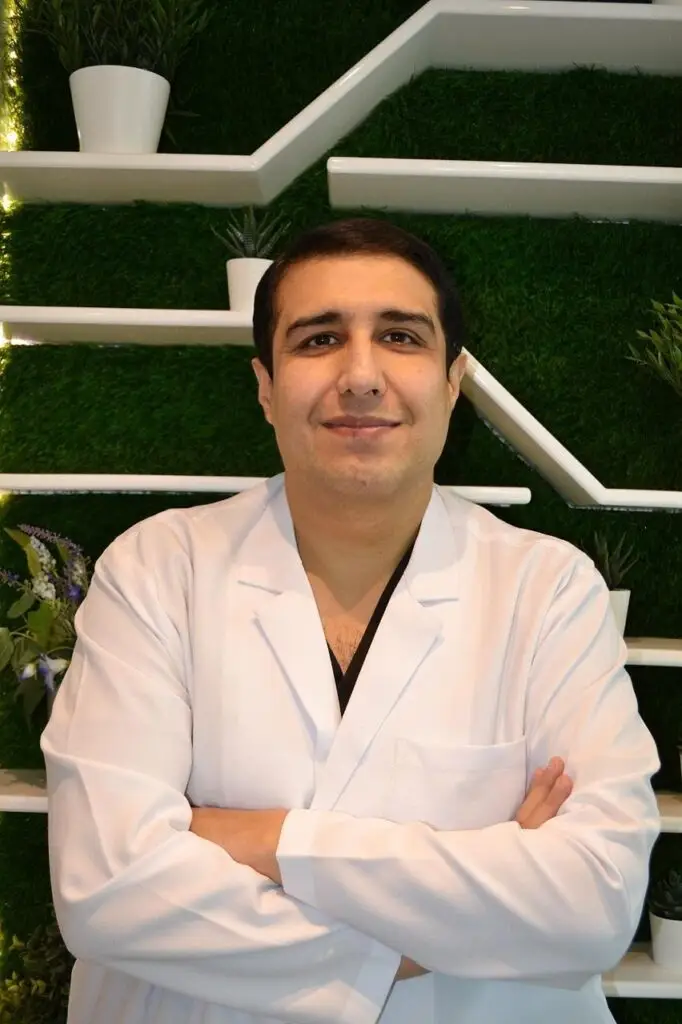
Medical Director — Aesthetic & Regenerative Medicine
Leading Silk Clinics with years of experience in aesthetic medicine, Dr Ahmad Sadeqyar oversees clinical excellence across all departments and personally treats complex aesthetic cases.
- MD — Aesthetic Medicine
- Advanced Diploma in Regenerative Therapy
- Member, IMCAS
Medically reviewed by Dr Suzanne Haddad — Aesthetic Doctor, Injectables & Skin.