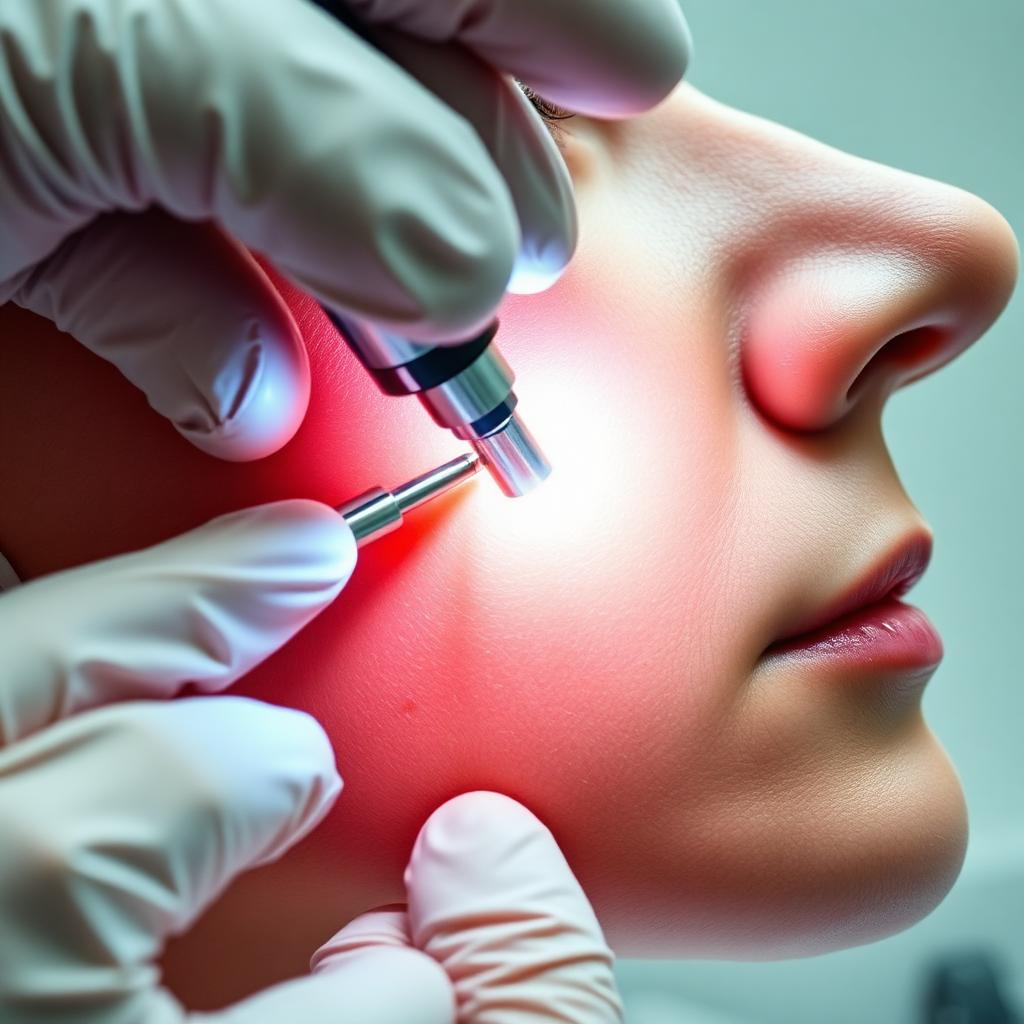
Quick answer: You cannot change the anatomical size of a pore, but you can substantially change how visible it is. Pore visibility is driven by three modifiable factors — sebum volume, follicular plugging and the collagen support around the pore opening. Treatments that address all three (regular deep cleansing, controlled exfoliation and collagen induction) reduce visible pore size by a meaningful margin; toners and pore strips do not.
[!TIP] This article is part of the Silk Clinics Skin Type & Skin Tone Treatment Guide — the cornerstone hub that maps every treatment on this page to your skin type and Fitzpatrick tone (I–VI).
Why pores look larger in Dubai
Heat increases sebum production measurably — sebaceous output rises with skin surface temperature. Add high humidity from May to September, sunscreen reapplied over makeup, and gym sessions without prompt cleansing, and the follicle stays loaded with oil and debris for longer. A stretched, chronically full follicle looks wider even though its anatomy has not changed.
The second factor is structural. As dermal collagen around the follicular opening thins with age and UV exposure, the pore loses its support and appears elongated — typically a teardrop shape on the cheeks rather than a round dot.
The treatment ladder
| Level | Treatment | What it addresses | Frequency |
|---|---|---|---|
| Maintenance | Hydrafacial | Sebum, plugging, congestion | Every 4–6 weeks |
| Surface refinement | Microdermabrasion, superficial peels | Dead cell build-up, rough texture | Every 3–4 weeks in a course |
| Structural | RF microneedling | Collagen support around the pore | 3–4 sessions, 4–6 weeks apart |
| Resurfacing | Fractional CO₂ laser | Deep texture, scarring, photodamage | 1–3 sessions |
| Support | Skin boosters | Hydration, dermal quality | Course, then maintenance |
For most patients with genuinely enlarged pores and no scarring, the highest-value combination is a Hydrafacial course for oil and congestion control layered with a short course of RF microneedling for collagen support. That pairing addresses both the load inside the follicle and the structure around it.
What does not work
Pore strips remove the superficial plug and leave the follicle open and inflamed. Alcohol-heavy toners strip the barrier and trigger rebound oiliness. Cold water and ice do nothing lasting. Aggressive scrubbing worsens texture by inflaming the skin and, in richer Fitzpatrick tones, adds post-inflammatory pigmentation on top.
Make-up and sunscreen choices that keep pores clear
Product texture matters more than product marketing in this climate. Heavy cream foundations and silicone-rich primers worn through a long air-conditioned day sit in the follicle and are a recurring, easily missed cause of congestion in patients who otherwise do everything right. Lightweight, non-comedogenic fluid formulations, a mineral or fluid sunscreen rather than a rich cream, and a genuine double cleanse on days make-up is worn will visibly reduce congestion within a few weeks — often more than adding another active. If you wear make-up daily, plan a deep-cleansing treatment cadence around that rather than treating it as an occasional extra.
The daily routine that supports in-clinic work
A gentle gel cleanser twice daily and immediately after exercise, a niacinamide serum for sebum regulation, a retinoid at night if tolerated (built up slowly), a lightweight non-comedogenic moisturiser — dehydrated oily skin over-produces oil — and SPF 50 every morning. Blotting papers, not powder layering, during the day.
Realistic expectations
Progress here is slow, steady and easy to under-estimate, so it is worth photographing at baseline and at each review rather than relying on how your skin looked in the mirror this morning.
Expect a visible reduction in pore prominence at around 6–8 weeks into a combined plan, with the structural improvement from collagen induction peaking at three months. Photographic comparison in standardised lighting is essential, because pore appearance varies dramatically with lighting angle — which is also why phone-camera close-ups are a poor measure of progress.
Three different pore problems that look identical in the mirror
Patients describe all of them as "large pores", but they behave differently. Sebaceous filaments are the greyish dots most visible on the nose — normal, universal, refilling within days of any extraction, and not a disease to be cured. Genuinely dilated pores are round or teardrop-shaped openings on the cheeks and nose, widened by sebum load and by loss of the collagen collar around the follicle. Atrophic textural change — early boxcar scarring from past acne — reads as "rough texture" but is a scar problem and needs scar-directed treatment rather than pore care.
Separating these three at the consultation is what prevents wasted money. Sebaceous filaments need maintenance cleansing and nothing more. Dilated pores need sebum control plus collagen induction. Textural scarring needs resurfacing. A single package sold for "pores" that ignores the distinction will underperform on at least one of them.
Oil control that works in a humid climate
Sebaceous output rises with skin surface temperature, so the same routine that holds up in a temperate winter fails in a Dubai August. Practical adjustments that measurably help: cleanse within thirty minutes of finishing exercise rather than at home two hours later; use a niacinamide serum consistently rather than intermittently, since its effect on sebum regulation is cumulative; choose a fluid or gel sunscreen over a cream in the summer months and reapply with a blotting step rather than layering powder; and avoid heavy silicone-rich primers, which trap sebum in the follicle through a long air-conditioned day.
For patients whose oil production is genuinely high year-round, in-clinic sebum-regulating options and, in selected cases, low-dose medical therapy prescribed after assessment are more effective than any change of cleanser. Skincare manages a moderate oil load; it does not override a strong genetic one.
Common mistakes we correct most often
- Pore strips and squeezing. Both stretch the follicular opening and leave it inflamed and more visible.
- Alcohol-heavy toners. Short-term matte finish, rebound oiliness, damaged barrier.
- Skipping moisturiser because the skin is oily. Dehydrated oily skin compensates by producing more sebum.
- Daily physical scrubs. They inflame the skin and, in Fitzpatrick IV–VI, add post-inflammatory pigmentation on top of the texture problem.
- Judging pores in a magnifying mirror or phone macro shot. Neither reflects how anyone sees your skin; standardised photographs at a fixed distance do.
- Expecting permanence. Pore appearance is maintained, not cured — stopping the routine returns the follicle to its previous load within weeks.
What pore and texture treatment costs in Dubai
This is one of the areas where a sensible plan is genuinely affordable. Maintenance deep-cleansing treatments are among the lower-priced items on any clinic menu, and for many patients a regular Hydrafacial cadence plus a disciplined home routine is most of the result. Cost rises with the structural phase — a course of RF microneedling, or fractional resurfacing where scarring is involved. We quote the full course and the maintenance interval in writing at consultation, and we will say clearly when your pores need routine maintenance rather than a device course.
References
- American Academy of Dermatology Association — How to control oily skin.
- Lee SJ et al. Facial pore size and its determinants. Br J Dermatol (PubMed).
- Roh M et al. Ageing, sebum output and facial pore visibility. Skin Res Technol (PubMed).
- American Society for Dermatologic Surgery — Microneedling and fractional resurfacing for skin texture.
- British Association of Dermatologists — Topical retinoids patient information leaflet.
Related reading and next step
Compare texture-focused devices by skin tone in the Skin Type & Skin Tone Treatment Guide, or read our clinical page on enlarged pores. Book an assessment at Silk Clinics, Dubai Healthcare City and we will measure sebum and texture before recommending a plan.
Medically reviewed by Dr Suzanne Haddad, Aesthetic Doctor, and Dr Ahmad Sadeqyar, Medical Director, Silk Clinics Dubai Healthcare City. Last reviewed 26 July 2026. This article is general medical information and does not replace an individual consultation.
Personalized Skin Plan
Not sure if enlarged pores treatment Dubai is right for you?
Answer 9 quick questions and get a doctor-designed pathway — with realistic timelines, downtime and session counts for your skin.
Browse the category
Explore all Skin Treatments in DubaiAdvanced skin treatments in Dubai engineered to renew, brighten and resurface — from Hydrafacial and chemical peels to PRP, exosomes and Scarlet S microneedling RF.
Treatments mentioned in this guide
Book a consultation
Considering enlarged pores treatment in Dubai?
Our DHA-licensed doctors at Dubai Healthcare City will assess your concern and build a personalised, transparent plan — no obligation, no pressure.
Frequently asked questions
Can pores be permanently shrunk?
What is the best treatment for large pores?
Do pore strips help?
View more frequently asked questions (3)
Why do my pores look worse in summer in Dubai?
Should oily skin use moisturiser?
How soon will I see a difference?
About the author

Medical Director — Aesthetic & Regenerative Medicine
Leading Silk Clinics with years of experience in aesthetic medicine, Dr Ahmad Sadeqyar oversees clinical excellence across all departments and personally treats complex aesthetic cases.
- MD — Aesthetic Medicine
- Advanced Diploma in Regenerative Therapy
- Member, IMCAS
Medically reviewed by Dr Suzanne Haddad — Aesthetic Doctor, Injectables & Skin.