What is Targeted Anti-Inflammatory Support?
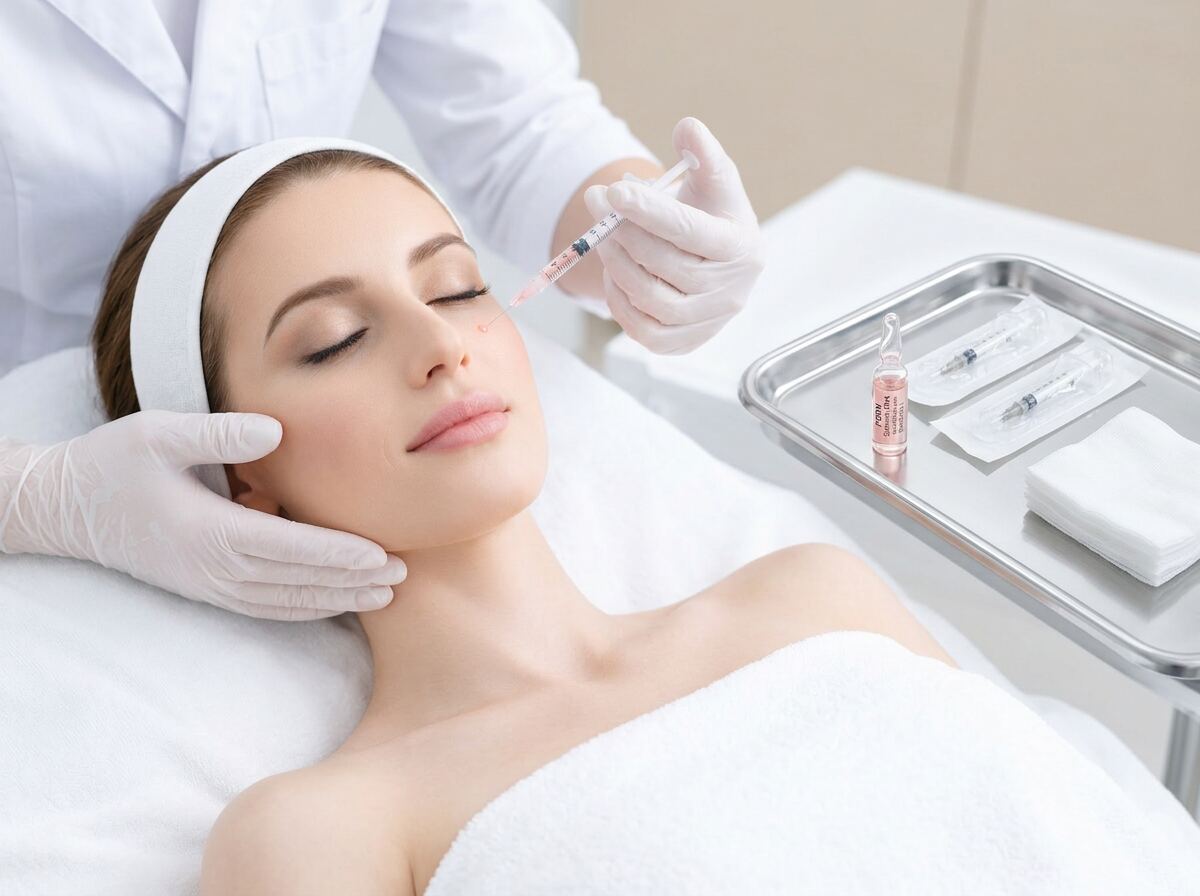
A customised multi-step programme that may include medical-grade barrier skincare, prescription therapy where indicated, gentle vascular laser, and regenerative agents such as peptides, PDRN and exosomes. The sequence is staged so the skin is calmed and its barrier restored before any stimulating step is introduced.
Programmes commonly draw on salmon DNA PDRN in Dubai, exosome therapy, skin boosters and vascular laser for visible vessels — see all regenerative treatments in Dubai.
Benefits
- Reduces persistent facial redness
- Calms reactive, easily irritated skin
- Strengthens and repairs the skin barrier
- Reduces flare frequency and intensity
- Improves tolerance of active skincare over time
- Minimal to no downtime throughout the programme
Concerns we treat
Ideal candidates
Patients in Dubai whose skin reacts to most products, flushes easily, or has been over-treated with aggressive facials, acids or lasers elsewhere.
The treatment process
- 1Doctor consultation to identify triggers, subtype and barrier status
- 2Elimination phase — strip back irritants and rebuild the barrier
- 3Introduction of calming regenerative agents such as PDRN, peptides or exosomes
- 4Gentle vascular laser for fixed redness and visible vessels once stable
- 5Long-term maintenance plan with structured reviews
Minimal — occasional short-lived redness after in-clinic steps.
A doctor-led clinic in Dubai Healthcare City
At Silk Clinics in Dubai Healthcare City, every treatment is doctor-led, clinically supervised and tailored to your skin, anatomy and goals. We combine advanced technology, premium products and a refined patient experience — guided by our promise: Safety First. Beauty Always.
Meet our teamWhy reactive skin is so common in Dubai
Dubai creates a specific stress pattern for the skin barrier: intense UV, extreme outdoor heat alternating with cold dry air conditioning, hard water, and frequent long-haul flights. Each of these independently dehydrates the barrier; together they leave many residents in a state of low-grade chronic irritation.
The second driver we see constantly is over-treatment. Skin that stings, flushes and peels is often skin that has been given too many acids, scrubs and aggressive facials in pursuit of glow. In those cases the correct first step is subtraction, not another procedure.
Our approach is therefore staged. We repair the barrier first, then introduce regenerative support, and only address fixed vessels with vascular laser once the skin is calm. Treating vessels while the barrier is compromised produces poor and short-lived results.
Rosacea in particular is a chronic inflammatory condition, not a cosmetic blemish. It is managed rather than cured, and honest expectations about maintenance are part of the consultation.
The role of regenerative agents in calming skin
PDRN (polydeoxyribonucleotide) has a well-described anti-inflammatory and tissue-repair profile, supporting fibroblast activity and reducing inflammatory signalling — which makes it particularly useful in reactive skin where stronger stimulation is not tolerated.
Exosomes carry regulatory signals that modulate the inflammatory response and support barrier recovery. They are often chosen for patients who cannot tolerate conventional actives or who need faster recovery after any procedure.
Peptide protocols add barrier and collagen support without the irritation that retinoids and acids cause in this patient group, and are frequently the bridge that eventually allows stronger actives to be reintroduced.
Identifying and controlling your triggers
In-clinic treatment addresses the current state of the skin; trigger control determines whether it stays that way. Common triggers in our Dubai patients are heat and sun exposure, hot showers and saunas, spicy food, alcohol, stress and abrupt temperature transitions between outdoors and air conditioning.
We ask patients to track flares for the first month. Patterns almost always emerge, and they are usually more actionable than any product change.
Home care is deliberately minimal at first: a gentle non-foaming cleanser, a ceramide-based moisturiser and mineral SPF 50. Actives are reintroduced one at a time, slowly, only once tolerance returns.
Which devices are safe for reactive skin
Reactive skin is not a contraindication to devices — it is a contraindication to the wrong devices and settings. Aggressive ablative resurfacing, harsh mechanical exfoliation and high-energy treatments will worsen redness in this group.
Gentle vascular laser, by contrast, is one of the most effective tools available for fixed redness and telangiectasia in rosacea, because it targets vessels selectively rather than injuring the surface.
Where hydration is the priority, calming, non-abrasive options such as HydraFacial or skin boosters are used, with parameters and serums adjusted for sensitivity.
Expected results
Reduced stinging and reactivity within 2–4 weeks, visibly calmer skin and fewer flares at 4–8 weeks, and durable improvement in redness and tolerance by 3–6 months.
Recovery timeline
- Week 1–2Barrier repair phase; irritants withdrawn, stinging and tightness begin to settle.
- Week 3–4Reactivity reduces; regenerative agents introduced.
- Week 5–8Visible reduction in background redness and flare frequency.
- Month 3Vascular laser addresses fixed vessels once the skin is stable.
- Month 6Maintenance phase; a wider range of actives is usually tolerated.
Review every 3–4 months, with maintenance sessions as needed for chronic conditions.
Protocols generally involve an initial series of sessions followed by review and maintenance.
Suitable candidate
- Rosacea-prone or chronically flushed skin
- Skin that stings or reacts to most products
- Barrier damage after over-exfoliation or aggressive treatments
- Patients wanting long-term control rather than a one-off procedure
Not suitable for
- Active skin infection or untreated dermatological disease requiring specialist care
- Patients seeking a single-session fix for a chronic condition
- Unwillingness to modify triggers or maintain daily home care
- Pregnancy, for specific components — protocols are adjusted accordingly
Risks & side effects
Every medical procedure carries some risk. We discuss these fully at consultation so you can decide with confidence.
- Transient redness or warmth after in-clinic steps
- Temporary flare during the adjustment phase in highly reactive skin
- Mild swelling after injectable regenerative steps
- Rare sensitivity to a specific product, managed by substitution
- Rosacea is a chronic condition — relapse without maintenance is expected, not a complication
Combination treatments
Targeted Anti-Inflammatory Support works well alongside the following treatments. Your doctor will recommend the right combination at consultation.
What Silk Clinics doctors commonly recommend
For newly presenting reactive skin, our doctors typically start with a 4-week barrier repair phase and trigger diary before any in-clinic procedure is performed.
For established rosacea with visible vessels, the usual plan is a calming regenerative course with PDRN or exosomes, followed by vascular laser once the skin is stable.
Maintenance is planned from the outset, because relapse after stopping is the norm in chronic inflammatory skin conditions rather than a sign the programme failed.