Quick answer: Pigmentation in Dubai is rarely one condition. Sun-induced lentigines, hormone-driven melasma and post-inflammatory hyperpigmentation (PIH) look similar to the naked eye but respond to completely different treatments. The safe sequence for almost every patient is the same: diagnose the type, control the trigger (UV, heat, hormones, inflammation), prepare the skin medically, then use the gentlest effective device — escalating only if the response plateaus. In richer Fitzpatrick tones (IV–VI), aggressive first-line lasering is the single most common cause of pigmentation getting worse, not better.
[!TIP] This article is part of the Silk Clinics Skin Type & Skin Tone Treatment Guide — the cornerstone hub that maps every treatment on this page to your skin type and Fitzpatrick tone (I–VI).
Why pigmentation is harder to treat in Dubai
Three environmental factors stack against pigment-prone skin here. First, year-round high UV index — even on hazy days, and even through car windscreens on a commute. Second, ambient heat: melanocytes are stimulated by infrared and heat alone, which is why melasma often flares in July and August in patients who have not had a minute of direct sun. Third, the air-conditioning cycle, which dehydrates the barrier and makes skin more reactive to actives and devices, increasing the risk of post-inflammatory marks after treatment.
This is why a protocol copied from a European clinic frequently underperforms in the Gulf. The device settings matter far less than the trigger control around them.
The three pigmentation patterns we see most
| Pattern | Typical appearance | Main driver | First-line approach |
|---|---|---|---|
| Sun spots / lentigines | Discrete, sharply defined brown spots on cheeks, hands, décolleté | Cumulative UV | Topical medical care, chemical peels, targeted laser |
| Melasma | Symmetrical, blurred-edge patches on cheeks, forehead, upper lip | Hormonal + heat/UV | Trigger control, topical regimen, low-energy resurfacing only |
| Post-inflammatory hyperpigmentation | Brown or grey marks where a spot, cut or treatment healed | Inflammation | Treat the inflammation first, then gentle brightening |
Melasma is the one that punishes impatience. It is a chronic, relapsing condition — not a stain to be burned away. Anyone promising permanent removal in a single session is describing a marketing claim, not a clinical outcome. What is realistic is substantial, visible lightening that is maintained with an ongoing regimen and disciplined photoprotection.
The treatment ladder we actually use
Step 1 — Medical preparation (weeks 0–6)
Every pigmentation plan starts with topical therapy and sun discipline, not a machine. A prescription-strength brightening regimen, daily broad-spectrum SPF 50 with iron oxides (which block visible light — critical in melasma), and antioxidant support form the base. Where oral support is appropriate, we may add antioxidant infusions such as glutathione and vitamin C IV therapy, always as an adjunct rather than a standalone answer.
Step 2 — Barrier-safe resurfacing
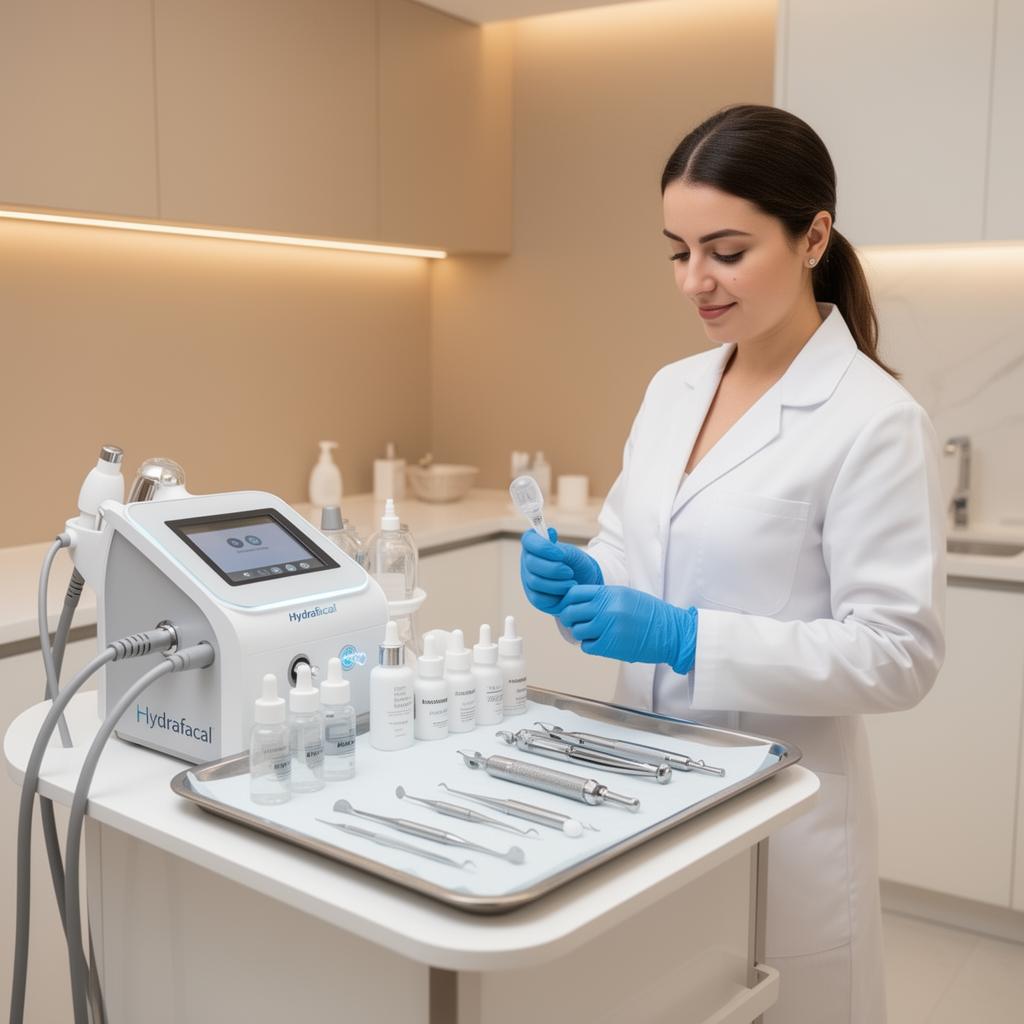
Once the skin is prepared and calm, superficial chemical peels deliver reliable, tone-safe lightening across all Fitzpatrick types when the acid, strength and interval are matched to the tone. Peels remain our workhorse in melasma precisely because they can be titrated downward. A Hydrafacial with a brightening booster is a useful maintenance layer between peels, especially in patients who cannot take downtime.
Step 3 — Device escalation, only if needed
For stubborn epidermal pigment and photodamage, laser skin rejuvenation and, where texture is also involved, fractional CO₂ laser resurfacing give the strongest results. In Fitzpatrick IV–VI we lower energies, lengthen intervals and extend the pre- and post-treatment topical regimen; in some melasma patients we deliberately do not use ablative devices at all. That decision is made in consultation, not from a price list.
Step 4 — Barrier and hydration support
Pigmentation-prone skin that is chronically dehydrated relapses faster. Skin boosters and Profhilo do not lighten pigment directly, but by improving barrier quality and hydration they measurably reduce reactivity and post-treatment marking.
Realistic timelines
- Sun spots: visible improvement in 2–4 weeks after a peel or targeted laser session; a typical course is 3–6 sessions.
- Melasma: meaningful change at 8–12 weeks of consistent topical plus in-clinic care; maintenance is lifelong but light.
- PIH: 3–6 months, and faster only if the underlying inflammation (usually active acne or rosacea) is properly controlled.
How to prevent relapse
Photoprotection is the whole game. SPF 50 reapplied every two to three hours outdoors, a wide-brim hat, tinted sunscreen containing iron oxides for visible-light protection, and avoiding heat exposure (steam rooms, long hot commutes without window film) during active treatment. Maintenance treatment may help preserve improvements; results vary with pigment depth, sun exposure, skincare adherence and individual response. Patients who do not photoprotect typically relapse within one Dubai summer.
How we measure progress objectively
Pigment is notoriously difficult to judge by memory, and bathroom-mirror assessment in warm domestic lighting flatters almost every result. At each review we re-photograph under the same standardised clinical lighting, at the same angle and distance, and where relevant use cross-polarised imaging, which suppresses surface glare and shows the melanin layer far more clearly than a phone camera. Patients are frequently surprised in both directions: some are improving faster than they feel, and some have plateaued despite reporting that the pigment "looks lighter in the morning" — which is usually vascular flushing settling overnight rather than pigment change.
We also track the depth of the pigment. Epidermal pigment lightens relatively quickly and predictably. Dermal and mixed pigment — where melanin has dropped into the deeper layer, common in long-standing melasma and in post-inflammatory marks in Fitzpatrick IV–VI — moves slowly and rarely clears completely. Setting that expectation at the first appointment is the difference between a satisfied patient and a disappointed one, and it is why we grade depth before quoting a timeline.
Pigmentation in pregnancy and on hormonal contraception
Melasma driven by pregnancy (chloasma) or by combined oral contraception behaves differently from photoageing pigment. During pregnancy and breastfeeding, most prescription brightening agents and all energy-based devices are avoided; the plan is deliberately conservative — rigorous photoprotection with an iron-oxide tinted mineral SPF, a pregnancy-safe topical routine, and heat avoidance. A meaningful proportion of pregnancy-related melasma fades on its own within six to twelve months of delivery, so treating aggressively too early often means treating pigment that was about to resolve.
Where hormonal contraception is the driver and the melasma is significant, a conversation with the prescribing doctor about alternatives is part of the plan. No topical or laser protocol competes with an ongoing hormonal trigger, and clinics that omit this discussion are treating downstream of the cause.
Common mistakes we correct most often
- Starting with laser. By far the most common error, and the main cause of pigment that is worse after treatment than before it — particularly in Fitzpatrick IV–VI.
- Hydroquinone without an endpoint. Prescription brightening agents are used in defined cycles with breaks, not indefinitely.
- Skipping visible-light protection. A standard SPF 50 blocks UV but not visible light; melasma needs a tinted formulation containing iron oxides.
- Stopping the moment it looks better. Melasma relapses within one Dubai summer without maintenance.
- Treating post-inflammatory marks as if they were melasma. They are inflammation-driven and clear with a much gentler plan once the underlying acne or rosacea is controlled.
- Buying an unlabelled "whitening" injection. We do not offer skin-whitening infusions, and unregulated products bought outside a licensed clinic carry real risk.
What pigmentation treatment costs in Dubai — and how to think about it
Pricing varies with the modality and the number of sessions, and any clinic quoting a single flat price before seeing your skin is quoting a package, not a plan. The more useful way to think about cost is total cost to a stable result: a course of superficial peels with a medical topical regimen is usually the lowest-cost route to visible change in melasma, while device-led plans cost more per session but achieve more in photodamage and lentigines. We give a written, itemised estimate at consultation covering the full expected course and the maintenance interval afterwards, so the ongoing cost of holding the result is clear from the start rather than discovered later.
References
- American Academy of Dermatology Association — Melasma: diagnosis and treatment.
- British Association of Dermatologists — Patient information leaflet: melasma.
- Passeron T, Picardo M. Melasma, a photoaging disorder. Pigment Cell Melanoma Res (PubMed).
- Kaufman BP et al. Post-inflammatory hyperpigmentation: epidemiology, clinical presentation and treatment. Am J Clin Dermatol (PubMed).
- American Society for Dermatologic Surgery — Laser treatment considerations in skin of colour.
Related reading and next step
Compare device options across skin tones inside the Skin Type & Skin Tone Treatment Guide, or read our dedicated clinical page on pigmentation. If you would like a personalised assessment, book a consultation at Silk Clinics, Dubai Healthcare City and we will map your pigment type under clinical lighting before recommending anything.
Medically reviewed by Dr Suzanne Haddad, Aesthetic Doctor, and Dr Ahmad Sadeqyar, Medical Director, Silk Clinics Dubai Healthcare City. Last reviewed 26 July 2026. This article is general medical information and does not replace an individual consultation.
Personalized Skin Plan
Not sure if pigmentation treatment Dubai is right for you?
Answer 9 quick questions and get a doctor-designed pathway — with realistic timelines, downtime and session counts for your skin.
Browse the category
Explore all Laser Treatments in DubaiPremium laser treatments in Dubai using advanced FDA-cleared platforms for hair removal, pigmentation, skin rejuvenation, vascular concerns and resurfacing.
Treatments mentioned in this guide
Book a consultation
Considering pigmentation treatment in Dubai?
Our DHA-licensed doctors at Dubai Healthcare City will assess your concern and build a personalised, transparent plan — no obligation, no pressure.
Frequently asked questions
Can melasma be permanently cured?
Is laser safe for pigmentation in darker skin tones?
How long before I see results?
View more frequently asked questions (3)
Does IV glutathione whiten skin?
Will pigmentation come back after treatment?
Which treatment is best for post-acne dark marks?
About the author
Aesthetic Doctor — Injectables & Skin
Specialising in natural-result injectables and advanced skin treatments, Dr Suzanne Haddad is known for her refined eye for facial harmony.
- MD
- Advanced Certification in Facial Injectables
- Member, AMWC
Medically reviewed by Dr Ahmad Sadeqyar — Medical Director, Aesthetic & Regenerative Medicine.