There is a very specific kind of tiredness that Dubai summer produces. You wake up thirsty, your skin looks slightly deflated even though you slept, your hair feels like straw after a weekend at the beach, and by Wednesday of a busy travel month you cannot remember whether the puffiness under your eyes is from the flight, the pool, the humidity or all three. This is the summer we treat at our clinic in Dubai Healthcare City every year — and this pillar guide is the honest, doctor-reviewed playbook we now give to every patient, family and traveller who asks how to actually enjoy summer in Dubai without paying for it later.
This is not a promotional brochure. It is a working reference. It covers what heat, UV, humidity, salt water, chlorine, air-conditioning and long-haul flights do to your body, and the evidence-based skin, hair, hydration and nutrition strategies that genuinely work — for individuals, couples, families with young children, professionals and visitors. Where treatments are relevant, they are named. Where they are not, they are left out. Every claim has been reviewed by our medical team.
Quick Answer: How to Survive Dubai Summer Well
The most protective summer routine in Dubai combines daily broad-spectrum SPF 50 and hydration, seasonal in-clinic support (a monthly HydraFacial, quarterly Profhilo or skin boosters and a hydration or glutathione IV drip before or after long-haul travel), and disciplined scalp care with regenerative options such as PRP or hair exosomes if shedding increases. Families should focus on shade, mineral SPF, hydration and heat awareness. Save ablative laser resurfacing for cooler months.
Table of Contents
- Why summer in Dubai is genuinely hard on your body
- Your 6-week summer timeline
- Summer skin care — morning, evening, beach, pool, flights, hotels, home
- Summer hair care — sun, salt, chlorine, sweat, shedding
- IV hydration and wellness — before flights, after heat, jet lag
- Summer skin treatment guide (with comparison table)
- Summer nutrition and hydration
- Summer care for babies and children
- Summer care for you and your partner
- 17 frequently asked questions
- Doctor's summary and next steps
Section 1 — Why Summer Is Tough on Your Body
Dubai summer is not a temperate summer. From June through September, daytime temperatures regularly sit above 40°C, humidity along the coast climbs above 60%, UV index readings routinely exceed 11 (rated extreme by the World Health Organization), and most residents move between three radically different micro-climates in a single day: a heavily air-conditioned home or office, a brief transit through direct sun, and either a beach, pool, gym or long flight. Every one of these transitions is a physiological stressor.
Heat and humidity drive sweating, which cools the body but also depletes water, sodium, potassium and magnesium. On the skin, occlusion by sweat, sunscreen and airborne dust encourages breakouts, folliculitis and post-inflammatory pigmentation, particularly on the back, chest and shoulders. On the scalp, humidity plus sweat plus product build-up creates the conditions for seborrhoeic dermatitis flares and increased seasonal shedding.
UV radiation is the single most important accelerant of visible ageing. Chronic UVA exposure breaks down dermal collagen and elastin, thickens the stratum corneum, deepens fine lines, and — most relevantly for our patient population — activates melanocytes to produce pigmentation in Fitzpatrick III–VI skin. UVB damage is the driver of sunburn and long-term skin cancer risk. Neither wavelength cares about cloud cover, tinted windows, or how many minutes you "only" spent outside.
Dehydration develops silently. By the time a patient tells us they feel thirsty, they are already 1–2% depleted, which is enough to reduce cognitive performance, produce headaches and dull the skin. In Dubai, the combination of dry air-conditioning, salty sweat, coffee, long meetings and outdoor commuting means most adults are chronically under-hydrated by mid-August without realising it.
Air-conditioning protects you from heat but strips ambient humidity. Sustained exposure — bedroom, car, office, mall, restaurant — accelerates trans-epidermal water loss and leaves the skin barrier compromised. This is why residents often report drier, more sensitive skin in summer, which sounds counter-intuitive but is entirely explained by indoor climate.
Flying is a compressed version of the same problem. Cabin humidity typically sits around 10–20%, which is drier than most deserts. Add cabin pressure, immobility, disturbed sleep and time-zone shift, and the average long-haul flight produces measurable dehydration, lower-limb swelling, disturbed circadian rhythm and duller, flatter-looking skin on arrival.
Salt water and pools are physiologically opposites but cosmetically similar. Sea water is hypertonic and pulls water out of the outer skin and hair shaft; chlorine strips lipids and binds to hair proteins. Both leave skin tight and hair straw-like unless rinsed, moisturised and treated with care.
Travel fatigue is the least discussed but most consequential factor. Two or three back-to-back trips through Europe, Asia or the US in July and August, layered on Dubai's baseline heat load, produces a cumulative stress that shows up as tiredness, breakouts, hair shedding, disturbed sleep and reduced training capacity. Building recovery into your calendar is not a luxury — it is prevention.
Section 2 — Your Six-Week Summer Timeline
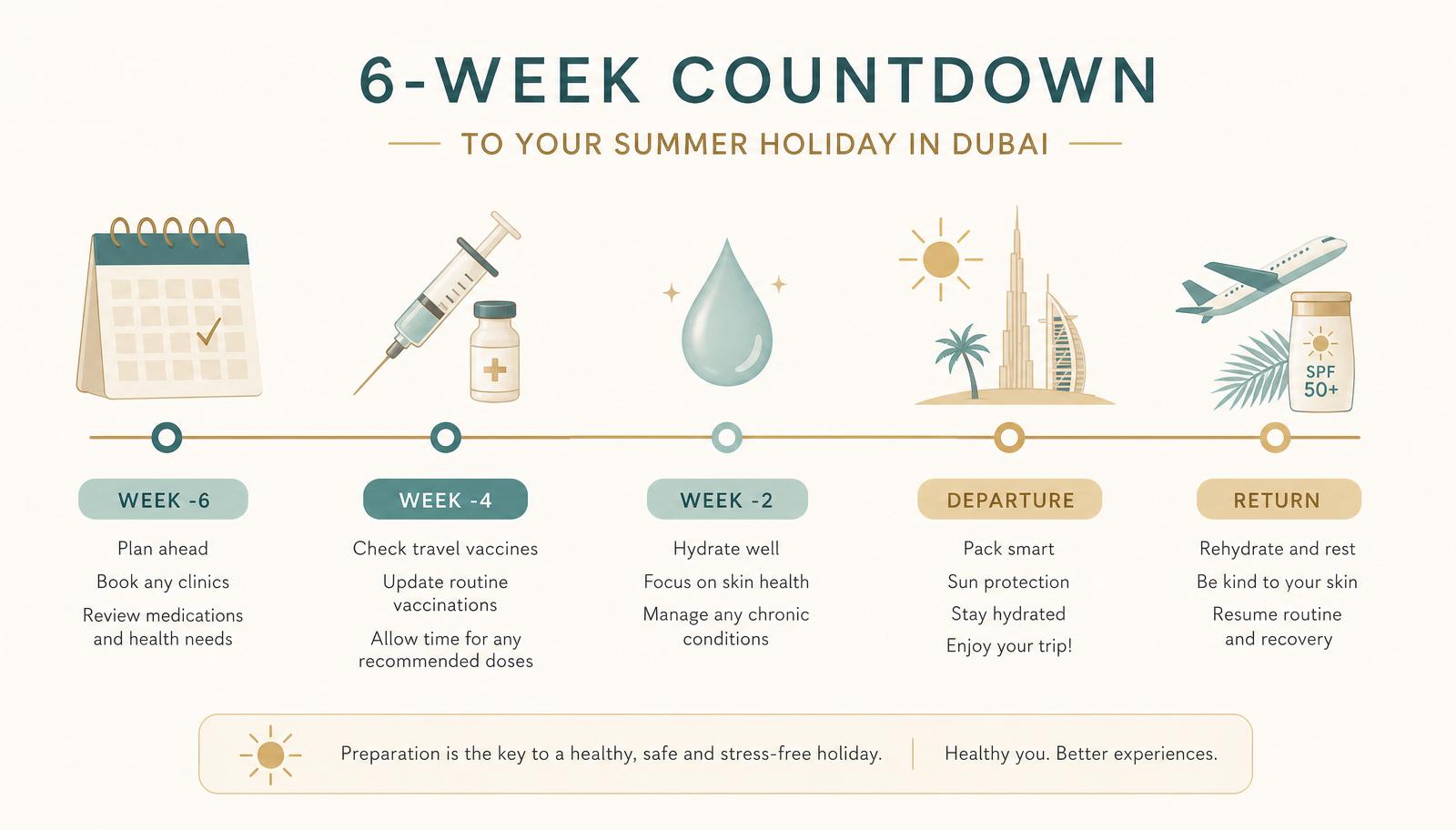
The most common mistake we see is booking a HydraFacial the day before flying. Good summer preparation is spread across several weeks so results peak when you actually need them. This is the timeline we recommend to patients heading into a busy travel or beach period.
Three to four weeks before travel or a major beach period. This is when foundational treatments belong. A course-based option — a Profhilo session, an initial skin booster or Jalupro appointment, a first PRP session or Scarlet S RF microneedling — should be scheduled here so residual redness settles and the collagen or hydration response peaks by the time you leave. On the scalp, patients starting a PRP hair or exosome course begin at this point.
One to two weeks before travel. Focus shifts to surface finish and recovery. A signature HydraFacial, a mild booster or brightening peel, biotin mesotherapy for the scalp, and a hydration or immunity IV drip are all appropriate. This is also the window to review your travel skincare kit and refill SPF, cleanser and serum in travel sizes.
The 48 hours before you fly. Sleep more than you think you need. Reduce alcohol. Increase water. Consider a light lymphatic massage. If you are prone to travel puffiness or jet lag, a glutathione or hydration IV the day before or the morning of departure often makes a visible difference on arrival.
During travel. Cabin dryness is the enemy. Cleanse before boarding, apply a rich moisturiser and lip balm, drink water on the hour, avoid excess alcohol and caffeine, wear compression socks on flights longer than five hours, and use a hydrating mask mid-flight if you are heading straight to an event on arrival.
Beach and pool days. Rinse hair and skin before entering the water, reapply SPF every two hours (and every session after swimming or towelling), stay in shade during peak UV, add electrolytes to at least one bottle of water per beach hour, and shower with lukewarm water and a gentle cleanser afterwards. Never sleep in salt or chlorine.
Returning home. Book a post-travel recovery within 3–5 days: a HydraFacial to decongest, an IV drip to rehydrate, and — if pigmentation has worsened — a consultation to plan targeted pigmentation treatment. If your hair has felt worse, a scalp assessment is worth booking rather than waiting for autumn.
Section 3 — Summer Skin Care in Dubai
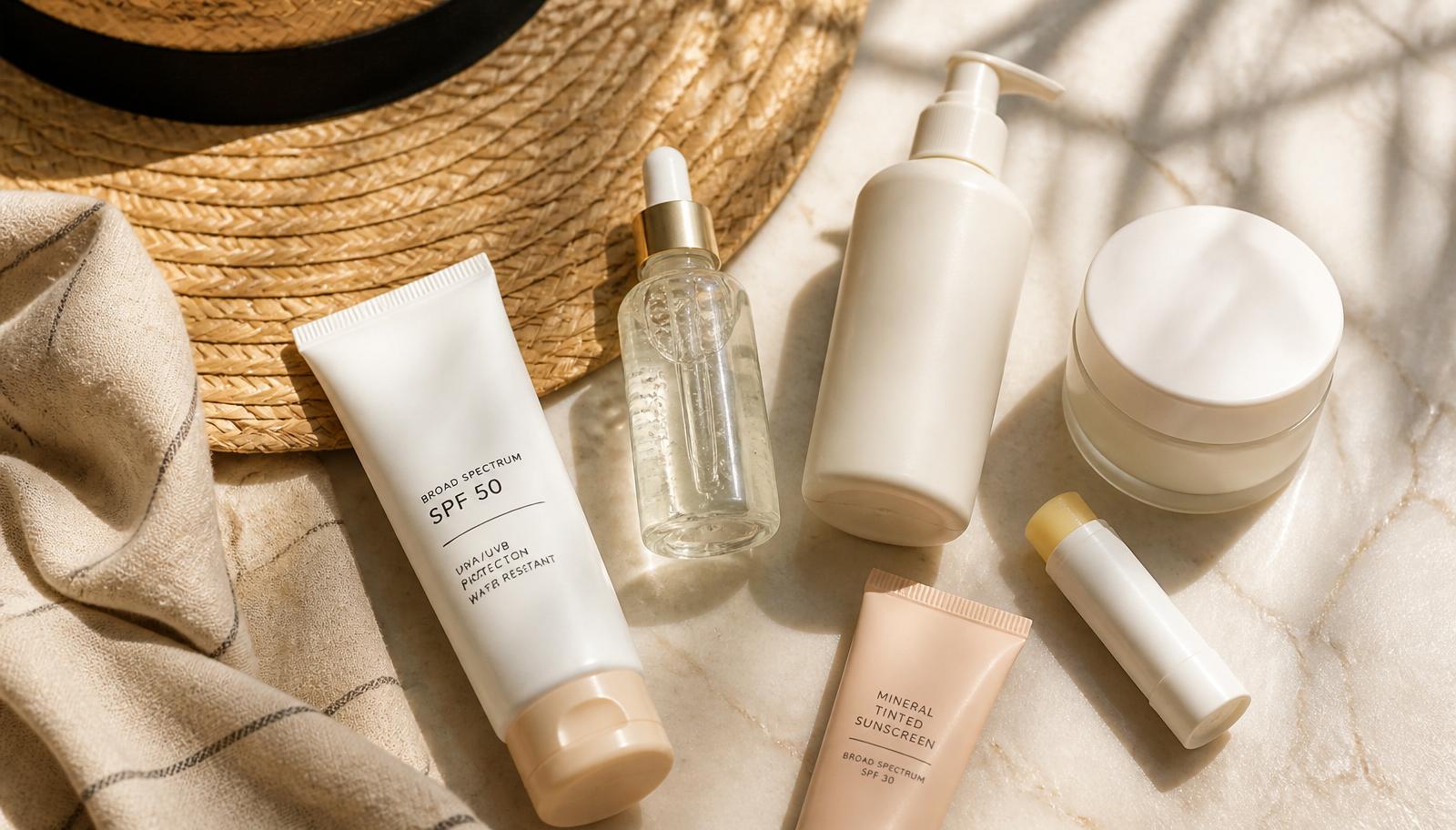
Your Dubai summer skincare should be lighter than your winter routine, focused on hydration and photoprotection rather than aggressive actives, and adapted to where you actually are — office, flight, hotel, beach or home.
Morning. A cream or gel cleanser (not foaming stripping cleansers), a vitamin C or antioxidant serum, a lightweight moisturiser containing hyaluronic acid, niacinamide or ceramides, and a broad-spectrum SPF 50 as the final step every single morning without exception. Reapply SPF every two hours if you are outdoors, and after swimming or sweating. Tinted mineral sunscreens are excellent for melanin-rich skin because they also block visible light, which contributes to summer pigmentation.
Evening. A thorough double cleanse if you have worn SPF, makeup or been outdoors, followed by a repair-focused serum (peptides, growth factors, or a well-tolerated retinoid used two to three nights per week), a barrier-supporting moisturiser, and an eye cream. If your skin is behaving well, a low-strength retinoid is one of the highest-return additions in your thirties and forties. If your skin is reactive, prioritise barrier repair and skip retinoids until the season shifts.
Beach days. Waterproof SPF 50 applied 20 minutes before exposure and reapplied every two hours (and after every swim). A wide-brim hat, UV-blocking sunglasses, a rash guard for children and long swims, and shade discipline between 11am and 4pm. A soothing after-sun gel, a hydrating mask that evening and extra water and electrolytes.
Pool days. Rinse before entering the pool, shower and cleanse immediately afterwards, and use a barrier moisturiser on any areas of dry chlorine irritation. Chlorine dries the lip skin fast — a good lip balm with SPF is not optional.
Flights. Board with a clean, moisturised face — no heavy makeup. Reapply a hyaluronic serum and a rich moisturiser mid-flight. Drink water hourly. Use a lip balm and a small facial mist. On arrival, cleanse and moisturise before doing anything else.
Hotels. Bring your own cleanser and moisturiser. Hotel bathrooms are surprisingly drying, and the pillowcases are not the ones you have chosen for your skin at home. Use the in-room humidifier if one is available; otherwise, keep a hydrating mask in your kit for the third or fourth night when your skin will typically dip.
Home. Consistency and simplicity beat complexity. A stable morning and evening routine, a monthly professional treatment, and one or two seasonal in-clinic sessions of Profhilo or skin boosters produce visibly better summer skin than an aggressive rotation of trending products.
Do not forget the neck, chest, hands and lips. Every study of visible ageing shows that the neck, chest and hands age faster than the face precisely because they receive daily UV and rarely receive daily skincare. Extend SPF and moisturiser to these areas every morning.
Section 4 — Summer Hair Care
Hair is the most under-protected part of most Dubai summer routines. UV oxidises hair proteins and fades colour. Salt water is hypertonic and dehydrates the shaft. Chlorine binds to proteins and can turn colour-treated hair brassy or green. Humidity and sweat combine with product build-up to inflame the scalp. And by the time patients notice increased shedding in September, the biology has been in motion since June.
Daily care. Rinse your hair with fresh water before swimming so the shaft absorbs less salt or chlorine. Wear a hat outdoors. Cleanse the scalp with a gentle, sulphate-free shampoo two to three times a week — daily washing over-cleanses in this climate. Use a leave-in conditioner or lightweight oil on mid-lengths and ends, avoiding the scalp. Deep-condition weekly.
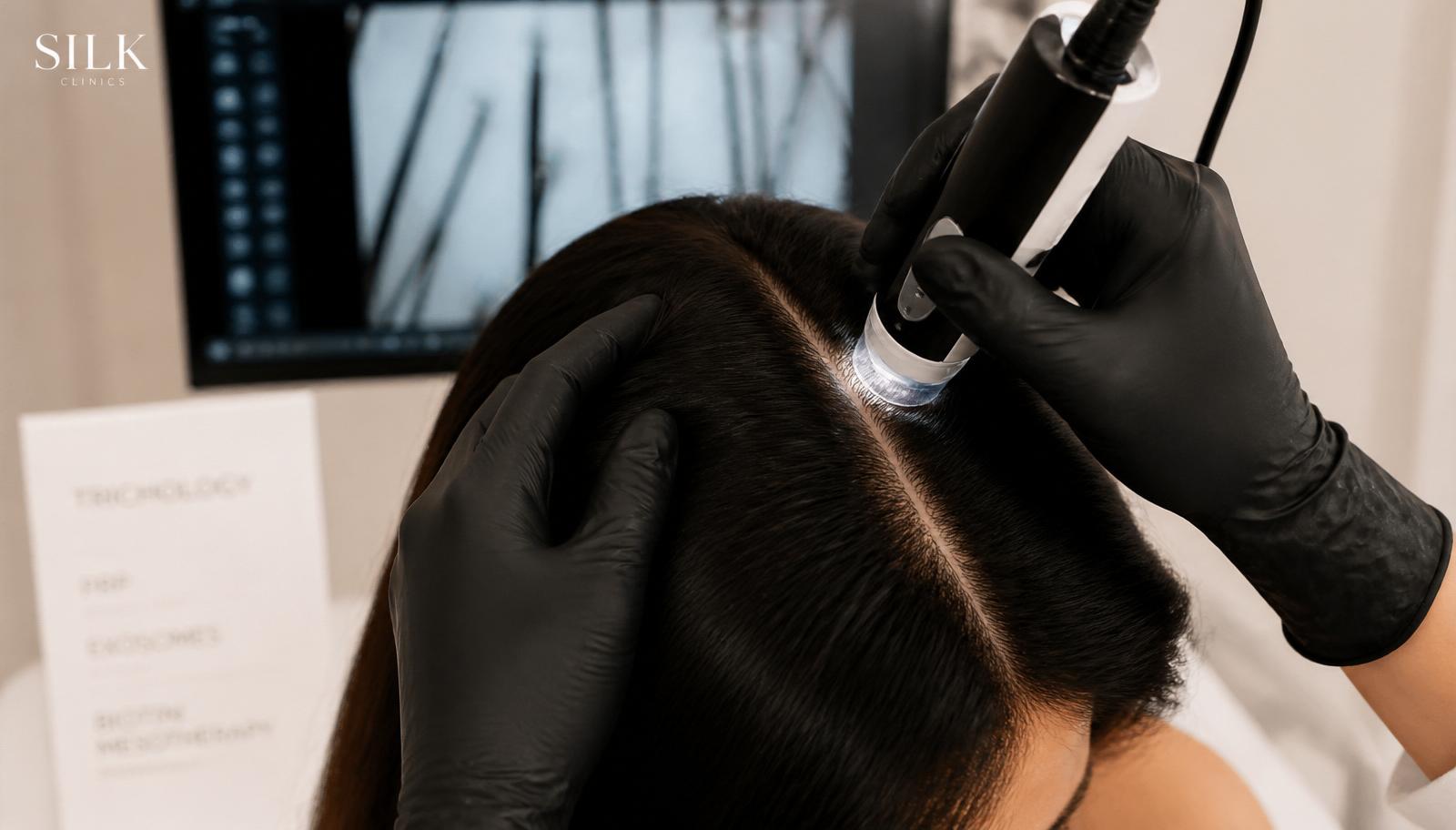
Scalp health. A healthy scalp is the foundation of every hair treatment. If you have flaking, itching, oiliness or tenderness, a medical scalp assessment is more useful than another shampoo. In-clinic biotin and vitamin mesotherapy delivers nutrients directly into the scalp and pairs well with topical care.
Regenerative options. For patients with early or moderate thinning, seasonal shedding, post-partum shedding or diffuse thinning, three treatments dominate our summer scalp practice: PRP for hair, hair exosomes and growth-factor hair treatments. Each is delivered as a course of three to four sessions spaced four weeks apart, often layered — for example, PRP alternated with exosomes — depending on scalp findings and cost preference. None of them regrow hair from follicles that have died, but all of them thicken and protect existing hair and reactivate dormant follicles when the biology still permits.
Nutrition matters. Iron, ferritin, vitamin D, zinc, B12 and thyroid function are the most common laboratory drivers of hair shedding. If shedding is unusual for you, ask for a proper blood panel rather than starting supplements blindly. Biotin alone rarely fixes hair loss and can distort thyroid lab results.
When to escalate. Any patch of scalp that goes visibly bare, any single event of sudden diffuse shedding, or any hair loss accompanied by scalp pain deserves a consultation, not another over-the-counter product.
Section 5 — IV Hydration and Wellness in Summer
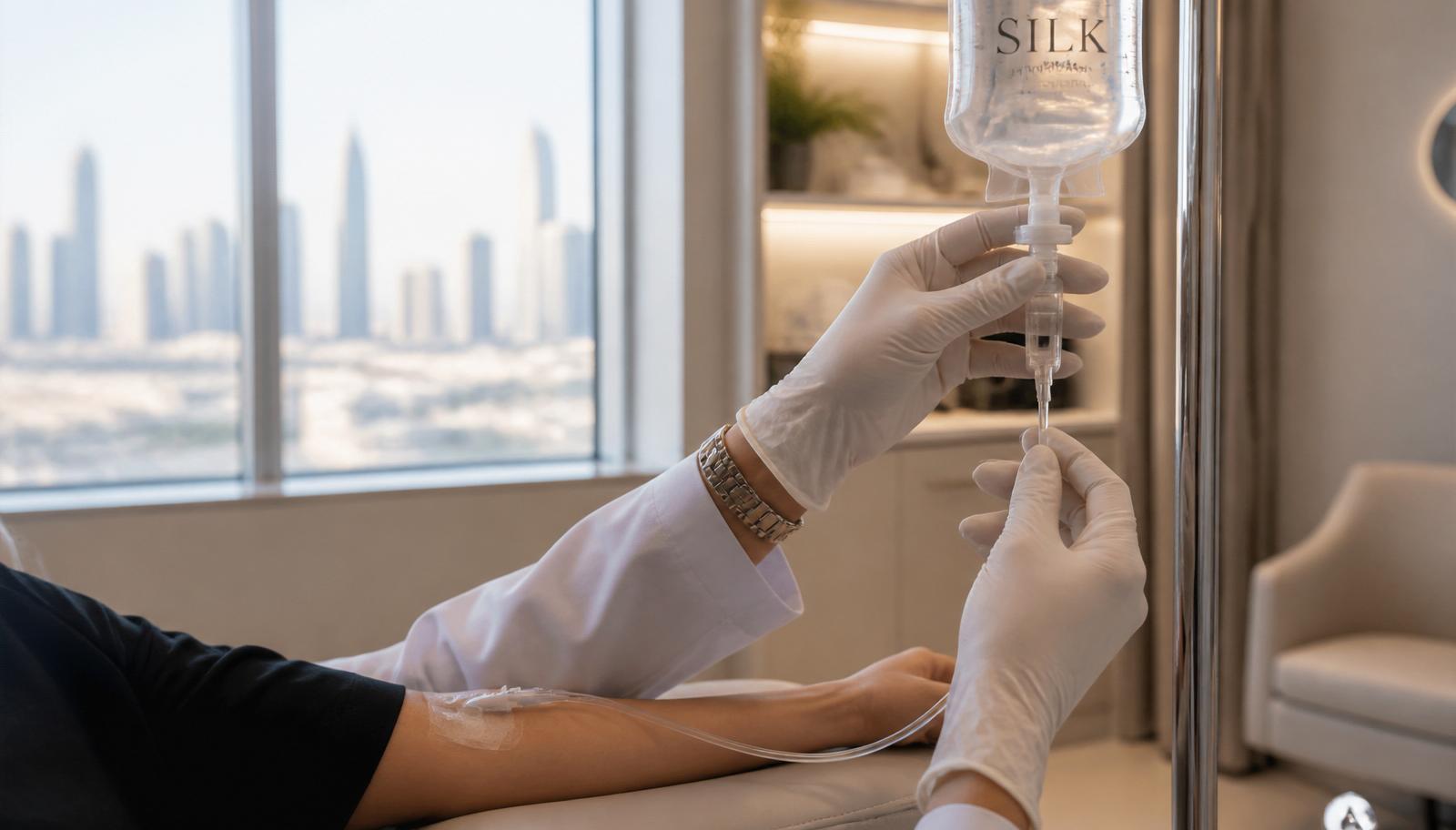
IV hydration is one of the most misunderstood parts of modern medicine. It is not a miracle drip. Used well, however, it is one of the most efficient ways to correct dehydration, replace lost electrolytes and deliver micronutrients that are poorly absorbed orally, especially in the context of heat, travel and heavy schedules.
Hydration and electrolyte IV drips are the workhorse of Dubai summer — a balanced saline base with electrolytes and B-complex, useful after long outdoor days, before or after flights, or when you have simply been running on coffee and meetings for a week.
Vitamin C IV may contribute to antioxidant status during periods of significant physical stress. It is not a treatment for infection, does not prevent illness, and is not a substitute for oral vitamin C or a balanced diet.
B-complex and Myers-style cocktails are used to help correct B-vitamin and micronutrient deficits that can contribute to fatigue during high-stress periods. They are not stimulants and do not guarantee an energy boost; individual response varies and any persistent fatigue should be investigated medically.
Glutathione and vitamin C IV is offered as part of an antioxidant support protocol. It is not a skin-lightening treatment, not a detoxification therapy, and does not replace sun protection or medical care for skin concerns.
NAD+ IV is used within research and clinical protocols exploring cellular energy metabolism and healthy-aging biology. Evidence is still emerging; NAD+ IV is not a treatment for a specific disease and is not marketed for jet-lag or performance guarantees. Sessions are longer (2–4 hours) and are used as part of a structured protocol.
Timing and expectations. IV therapy at Silk Clinics is used to help correct measured or clinically likely deficits — fluid, electrolytes, specific micronutrients — around events such as long-haul travel, heavy heat exposure or intense training. It is not a treatment for jet lag, does not prevent dehydration and does not guarantee energy, immunity or detoxification. Every drip is reviewed by a doctor and individual response varies.
Section 6 — The Summer Skin Treatment Guide
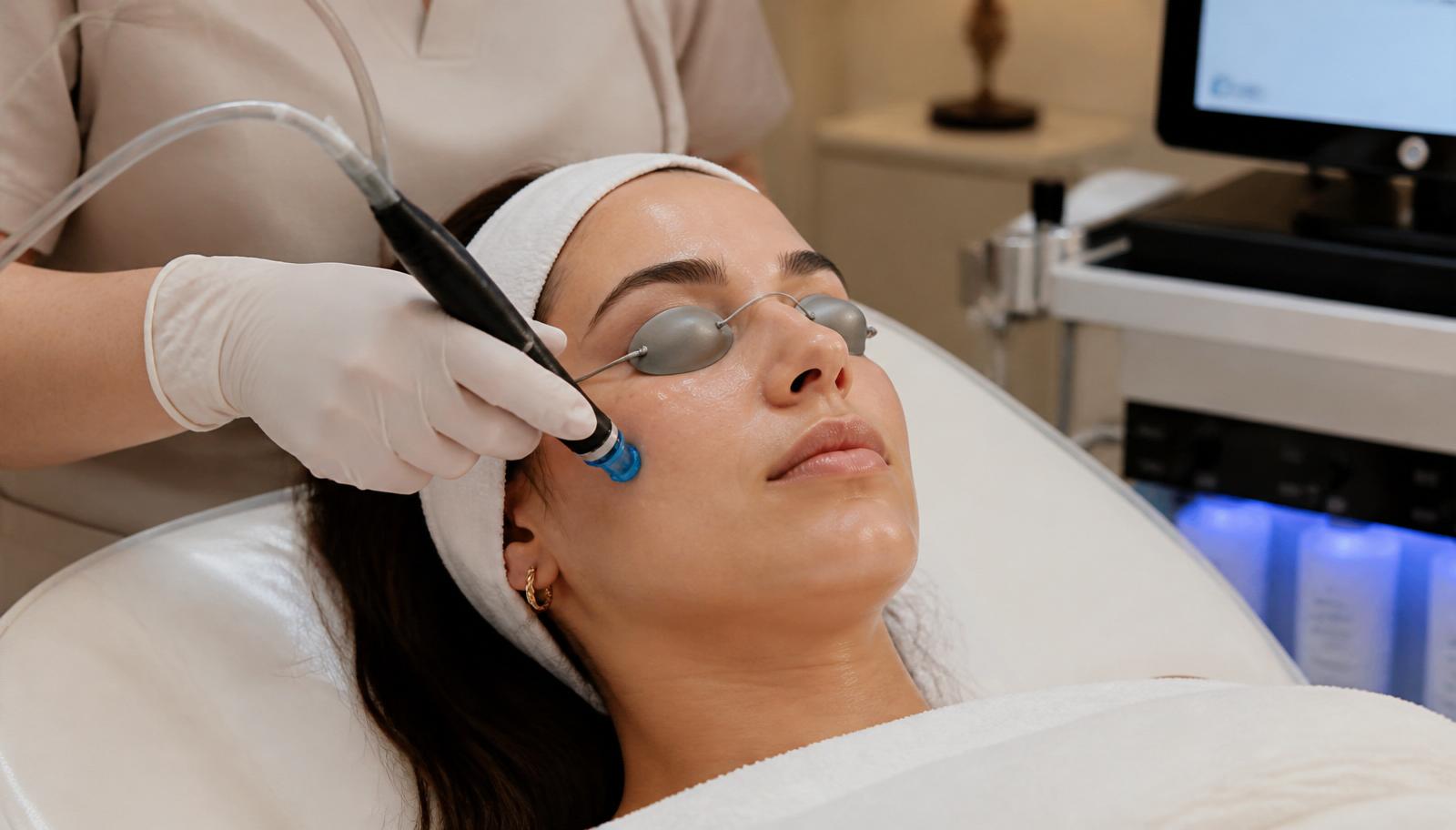
This is the doctor-reviewed treatment selector we walk through with new patients. Every treatment is evidence-based, every recommendation is individualised at consultation, and every combination is planned by a doctor rather than assembled from a menu.
HydraFacial — the summer workhorse. Cleanses, exfoliates, extracts and hydrates in one appointment with no downtime. Ideal monthly through summer. Safe before beach and pool. Excellent after travel.
PRP for the face — regenerative treatment using your own platelets to stimulate collagen and improve skin quality. Best scheduled two to three weeks before a major event so residual redness settles. A course of three sessions delivers the strongest result.
Exosome therapy — an advanced regenerative option using signalling vesicles from cultured stem cells to accelerate skin repair. Frequently layered onto microneedling or PRP for texture, tone and post-inflammatory pigmentation.
Profhilo — an injectable bio-remodelling treatment based on ultrapure hyaluronic acid. Two sessions four weeks apart every three to four months. One of the most effective summer treatments for skin quality and hydration.
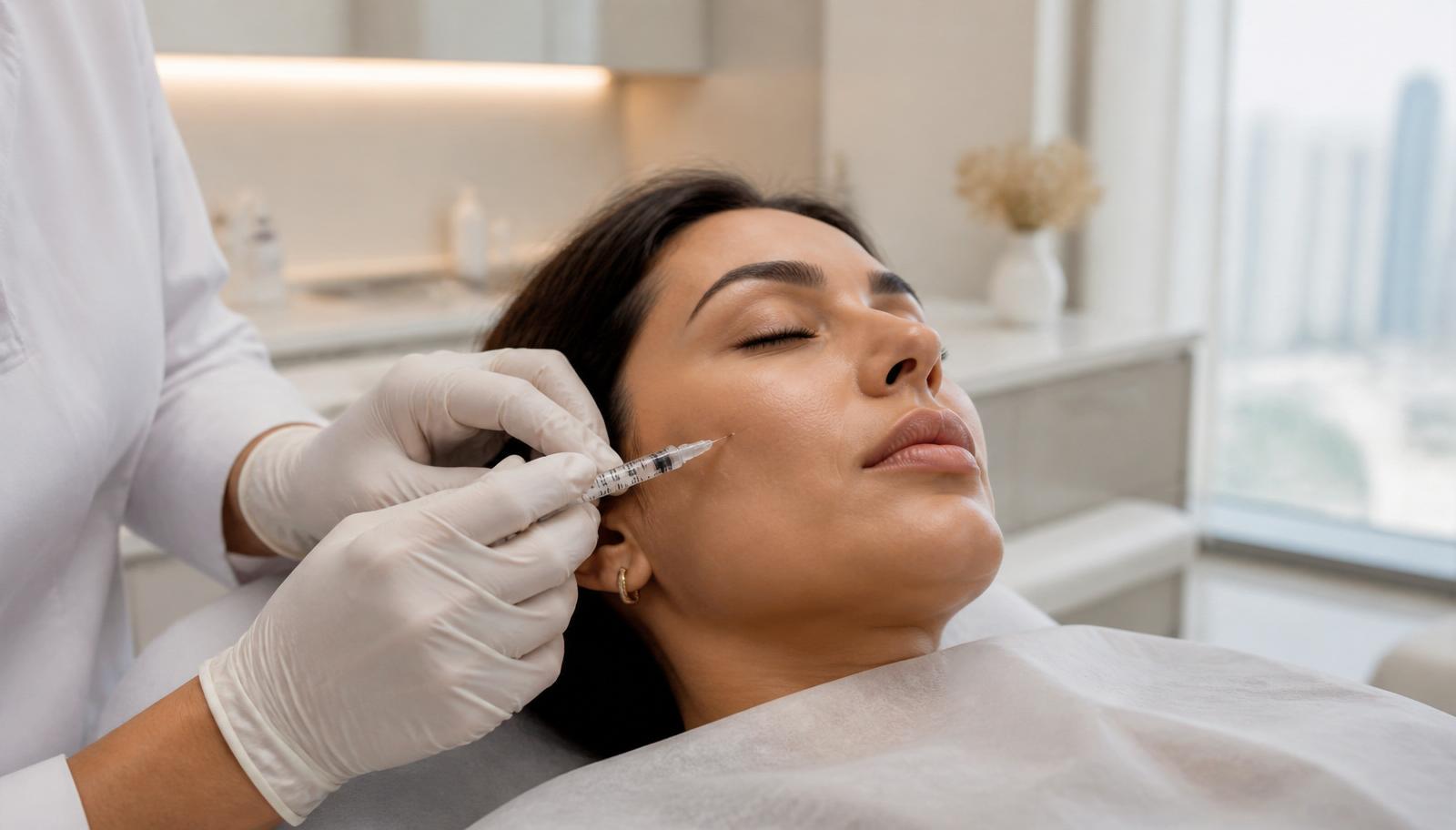
Jalupro and skin boosters — micro-injected hydration and amino-acid support that improves skin texture, glow and elasticity. Excellent 10–14 days before a beach period.
Scarlet S RF microneedling — radiofrequency microneedling for texture, tightening and pigmentation. May be suitable for a wide range of skin tones when settings are selected following an individual assessment. A series of sessions may be recommended, typically spaced four to six weeks apart.
Microneedling with PRP — collagen induction plus regenerative payload. Suitable in summer with strict SPF.
Chemical peels — light-to-medium peels are appropriate in summer for oil control, congestion and mild pigmentation, provided SPF discipline is strict. Deeper peels are usually reserved for cooler months.
Pigmentation treatment — a layered protocol combining topical prescription care, in-clinic peels or laser toning, and adjustments to sun exposure and hormonal drivers. Melasma in particular flares in summer and needs careful timing.
Fractional CO2 laser — the strongest resurfacing tool for texture, scarring and photodamage. Usually scheduled between October and March in Dubai to reduce the risk of post-inflammatory pigmentation.
Mesotherapy — micro-injections of vitamins, amino acids and hyaluronic acid into the skin or scalp. Appropriate in summer for skin glow and scalp health.
Growth-factor hair treatments — used alone or layered with PRP for early-to-moderate hair thinning.
Spider vein removal — often booked in summer specifically because patients want to wear shorter dresses and swim without visible leg veins. Discreet, in-office, no downtime.
Best summer treatments in Dubai — at a glance
| Treatment | Downtime | Ideal timing before travel | Skin-tone safety |
|---|---|---|---|
| HydraFacial | None | 1–7 days before | All tones (I–VI) |
| Profhilo | Minimal (small bumps ~24h) | 2–4 weeks before | All tones |
| Skin boosters / Jalupro | Minimal (1–3 days) | 10–14 days before | All tones |
| PRP (face) | 24–48h redness | 2–3 weeks before | All tones |
| Exosome therapy | 24–72h | 2–3 weeks before | All tones |
| Scarlet S RF microneedling | 2–4 days | 3–4 weeks before | All tones (safe on IV–VI with correct settings) |
| Light–medium chemical peels | 3–7 days flaking | 3–4 weeks before | Most tones; medium peels require careful selection on IV–VI |
| Pigmentation protocol (topical + laser toning) | Variable | Start 4–6 weeks before | Individualised; melasma flares in summer |
| Fractional CO₂ laser | 7–14 days | Off-season only (Oct–Mar) | Higher pigmentation risk on IV–VI; conservative settings |
| PRP / exosomes / growth factors for hair | None | 3–4 weeks before | All tones |
All timing windows are typical starting points; every plan is individualised at consultation.
Section 7 — Summer Nutrition and Hydration
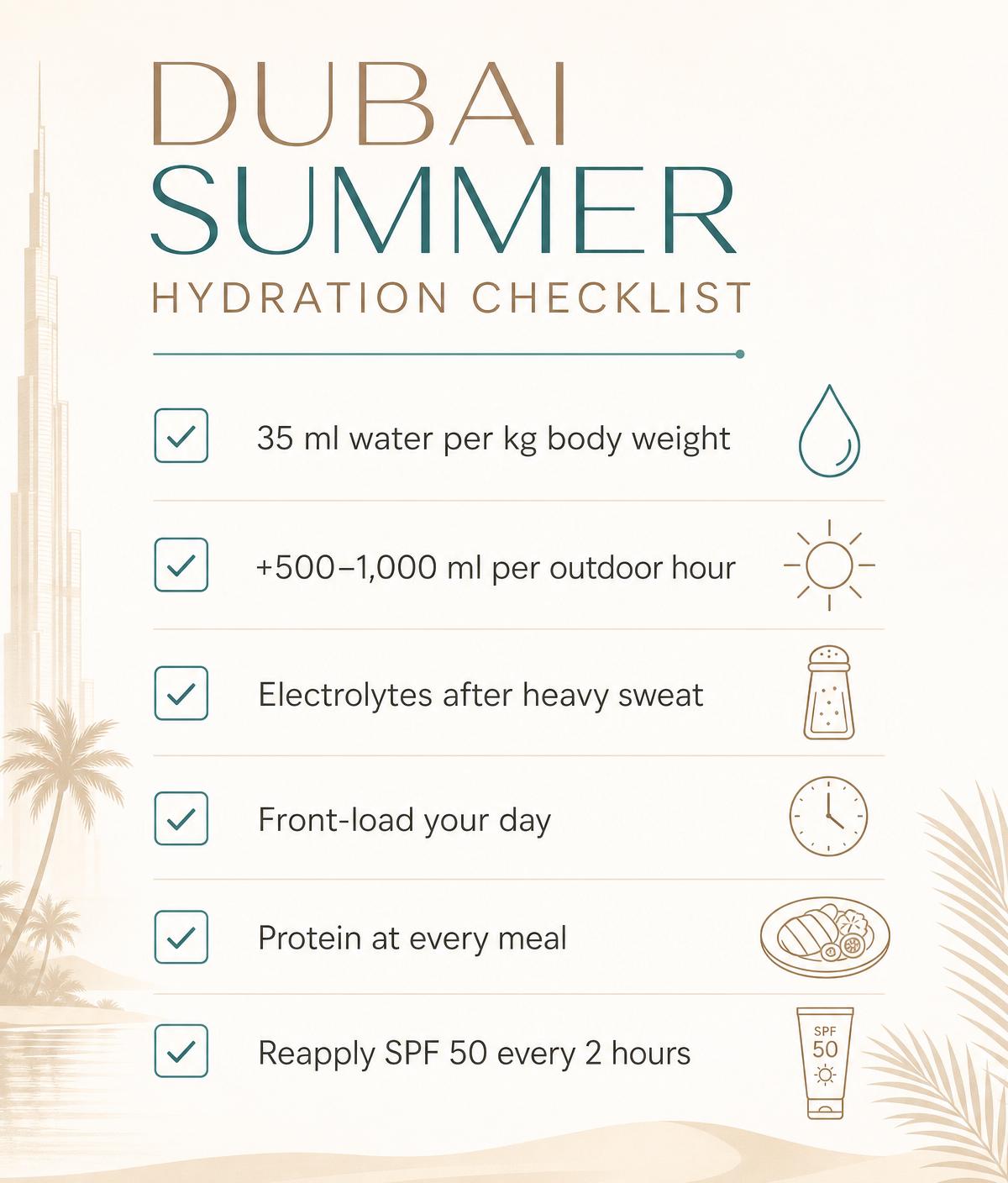
Nutrition in summer should be lighter, cooler and higher in water content — without sacrificing protein or healthy fats. The goal is to support hydration, cognition, exercise recovery and skin barrier function without feeling heavy in the heat.
Protein at every main meal — eggs, yogurt, chicken, fish, tofu, lentils. Protein preserves muscle, supports collagen synthesis and stabilises energy through long summer afternoons. Aim for at least 1.2 g/kg body weight daily and closer to 1.6 g/kg if you are training.
Water and electrolytes. Aim for around 35 ml per kilogram of body weight as a starting point, then add 500–1,000 ml per outdoor hour. Add a pinch of sea salt or an electrolyte tablet if you have been sweating heavily. Coffee and tea count partially — alcohol does not.
Water-rich foods are one of the easiest summer wins. Watermelon, cucumber, tomatoes, strawberries, oranges, celery, lettuce and yogurt all contribute meaningful hydration alongside vitamins and minerals.
Omega-3 fats from oily fish, walnuts and flaxseed support skin barrier function and reduce systemic inflammation, which shows up as calmer skin.
Antioxidant-dense foods — berries, leafy greens, tomatoes cooked with olive oil, green tea, dark chocolate — support the body against the daily oxidative load of UV and heat.
Meal timing. Front-load your day. A protein-forward breakfast, a moderate lunch and a lighter early dinner works better in Dubai summer than a late heavy dinner, both for sleep and for the skin.
Snacks. Yogurt with berries, cucumber with hummus, watermelon with feta, a handful of nuts, chilled cherry tomatoes. Simple, cool, water-rich, protein-anchored.
Section 8 — Summer Care for Babies and Children
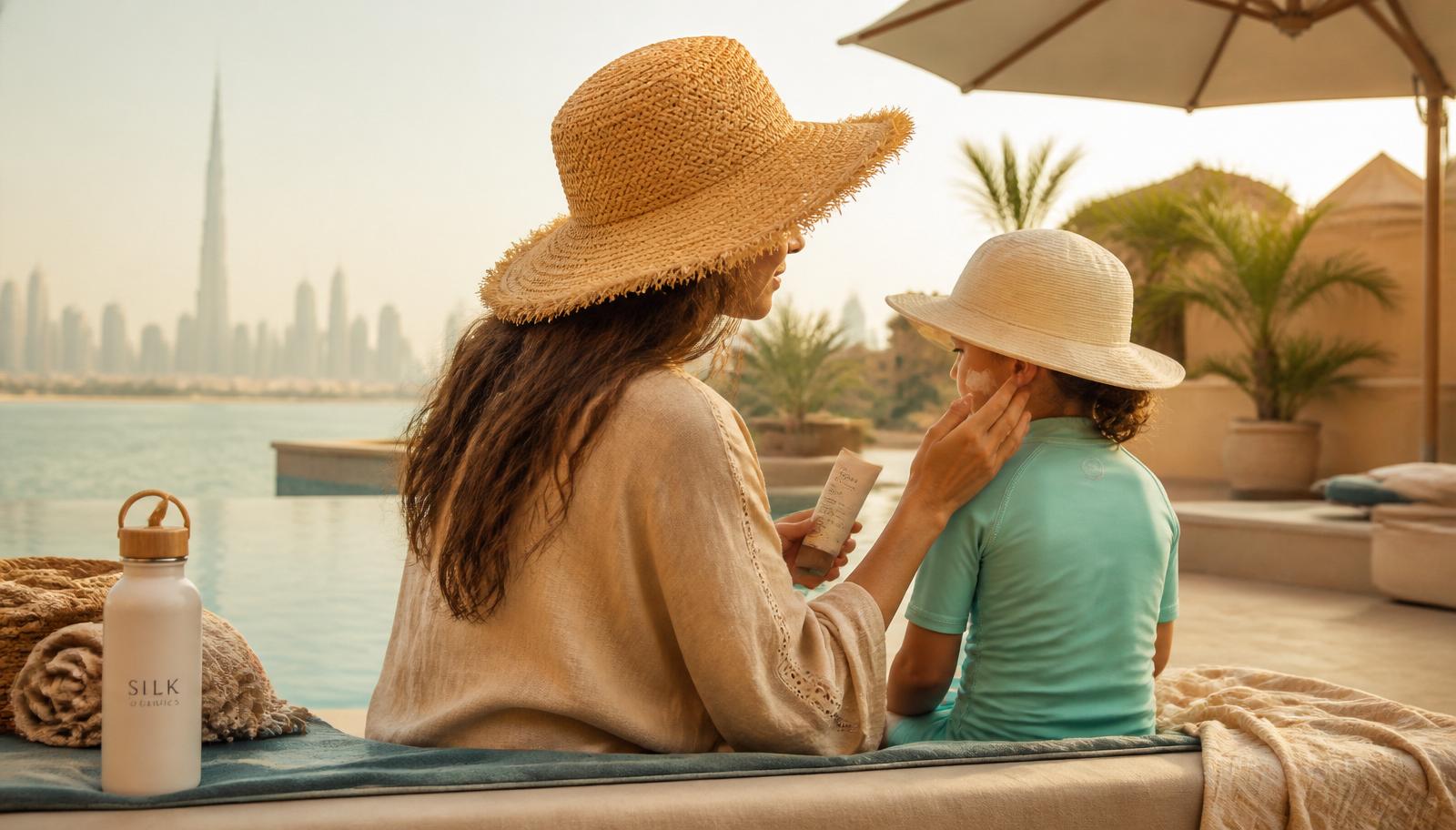
Children are not small adults. They dehydrate faster, they overheat faster, their skin absorbs sunscreen and topical products differently, and they cannot always tell you when they are unwell. Dubai summer needs a paediatric-appropriate plan that prioritises prevention.
Under six months. Direct sun exposure should be avoided entirely. Shade, UV-blocking pram covers, wide-brim hats, long lightweight clothing and cool indoor time between 11am and 4pm are the primary defence. Sunscreen use in infants should be minimised and discussed with your paediatrician; small mineral-only amounts on exposed skin may be recommended for older infants approaching six months.
Six months and older. A broad-spectrum mineral (zinc oxide or titanium dioxide) SPF 50 applied every two hours and after every swim. Avoid spray sunscreens on or near the face. UV-protective rash guards, sun hats and pool shoes. Frequent water breaks. Never leave a child in a parked car — interior temperatures rise to dangerous levels within minutes even with the windows cracked.
Hydration. Encourage water throughout the day rather than large amounts at once. For children who dislike plain water, add slices of cucumber, watermelon or strawberry. Watch for early signs of dehydration: reduced urination, dark urine, dry lips, irritability or lethargy.
Pool safety. Constant adult supervision within arm's reach for children under five. Age-appropriate swimming lessons. Never rely on floatation devices as a substitute for supervision. Shower and cleanse children after every pool session to remove chlorine.
Heat exhaustion warning signs in children include unusual tiredness, headache, nausea, muscle cramps, dizziness, cool clammy or unusually dry skin, and confusion. Move to air-conditioning, offer small sips of water with electrolytes, cool with damp cloths, and seek urgent medical care if symptoms progress or the child becomes drowsy or vomits.
Nutrition. Regular small meals with protein, water-rich fruit and vegetables, and yogurt work well through hot months. Ice lollies made from puréed fruit are an easy hydration trick.
Travel. For children flying long-haul in summer, extra water, familiar comfort items, moisturiser and lip balm, and a slow re-entry to Dubai heat on arrival help enormously.
Section 9 — Summer Care for You and Your Partner
Summer is one of the best times for couples to build small shared health rituals — not because relationships need optimising, but because it is genuinely easier to stay well when you are doing it with someone. The couples we treat at Silk Clinics who take summer seriously together consistently look and feel better by September than couples who leave everything to the last week.
Book together. A shared HydraFacial appointment, back-to-back IV drips before a joint trip, or a joint consultation before a milestone birthday works well. Most couples find that shared appointments are easier to keep than solo ones.
Travel prep as a team. Agreeing on packing checklists, hydration goals, alcohol pacing and shared workout sessions on holiday makes an extraordinary difference to how a two-week trip actually feels — and how the skin looks in the photos.
Sleep. Prioritise seven to eight hours through summer. Consistent sleep is the single most under-rated skin, hair and mood treatment we can recommend, and it costs nothing.
Movement. Early morning or late evening walks, indoor gym sessions during peak heat, weekend swimming and family hikes in the cooler months. Consistent movement supports metabolic health, hair growth and skin quality more than any drip.
Recovery. After a heavy travel or work stretch, a shared post-recovery day — IV drip, HydraFacial, a walk, an early dinner and an early night — resets more than a weekend away.
Consultation. A joint consultation is a great way to build a coherent plan across two calendars. Our team frequently designs paired protocols for couples through July and August.
Section 10 — The Most Common Summer Mistakes We See
Almost every summer problem that walks into the clinic in September traces back to a short list of avoidable errors. None of them are exotic; all of them are habits.
- Applying sunscreen once in the morning. SPF is a two-hourly commitment outdoors, and more often after swimming or heavy sweating. A single 8am application is functionally unprotected by lunchtime.
- Booking deep resurfacing in July. Fractional CO₂ and medium-to-deep peels belong to the October–March window in this climate; running them through peak UV is the most reliable way to convert a good result into post-inflammatory pigmentation.
- Treating heat as harmless because you are indoors. Melasma is stimulated by heat and visible light, not UV alone — which is why patients who have not sat in the sun still flare in August.
- Rinsing chlorine and salt off "later". Both strip the hair cuticle and the skin barrier; the rinse needs to happen at the pool, not at home two hours later.
- Hydrating only with water after heavy sweating. Large volumes of plain water without electrolytes can leave you no better hydrated and, occasionally, worse off.
- Scheduling an injectable treatment two days before a flight or a wedding. Swelling and bruising need a runway; the timing table above exists for exactly this reason.
- Dropping the routine entirely on holiday and then judging the treatment plan as ineffective in September.
- Ignoring hair shedding until it is visible in photographs. Summer telogen shedding responds far better when addressed in the first weeks than after three months.
Section 11 — References
- American Academy of Dermatology Association — Sunscreen FAQs and How to prevent and treat heat rash.
- World Health Organization — Global solar UV index: a practical guide.
- Sachdeva S. Fitzpatrick skin typing: applications in dermatology. Indian J Dermatol Venereol Leprol (PubMed).
- Passeron T et al. Photoprotection according to skin phototype and dermatoses. J Eur Acad Dermatol Venereol (PubMed).
- Grandner MA et al. Sleep, health and travel: circadian disruption in long-haul flight. Sleep Med Clin (PubMed).
- British Nutrition Foundation — Hydration and health; UK NHS — Heat exhaustion and heatstroke.
- American Academy of Pediatrics — Sun and water safety tips for children.
Section 12 — Frequently Asked Questions
See the FAQ section below for our 17 most common summer questions covering skin treatments, IV drips, hair, family health, travel and pigmentation. Each answer is doctor-reviewed and reflects what we actually tell patients in the clinic.
Doctor's Summary and Next Steps
Summer in Dubai is not a season to endure. It is a season to plan for. The patients who look and feel the best by September are not the ones who spent the most money — they are the ones who protected their skin daily, drank more water than they thought they needed, respected the sun, protected their hair from salt and chlorine, timed their in-clinic treatments intelligently, and built recovery into their calendar rather than trying to fix everything in a single appointment.
If you would like a personalised summer plan — for yourself, your partner or your family — book a consultation with our doctors at our Dubai Healthcare City clinic. We will map your skin, scalp, hydration and travel calendar, and design a realistic plan that fits your life rather than the other way round.
Medically reviewed by Dr Ahmad Sadeqyar, Medical Director, and Dr Suzanne Haddad, Aesthetic Doctor. Last reviewed 15 July 2026. This article is for general information and does not replace an individual medical consultation.
Personalized Skin Plan
Not sure if summer skincare Dubai is right for you?
Answer 9 quick questions and get a doctor-designed pathway — with realistic timelines, downtime and session counts for your skin.
Related reading
- For treatment-planning trends rather than seasonal care, see USA-inspired facial aesthetics trends in Dubai.
- Prefer to browse everything at once? Use our full treatment index.
Browse the category
Explore all Skin Treatments in DubaiAdvanced skin treatments in Dubai engineered to renew, brighten and resurface — from Hydrafacial and chemical peels to PRP, exosomes and Scarlet S microneedling RF.
Treatments mentioned in this guide
Book a consultation
Considering summer skincare in Dubai?
Our DHA-licensed doctors at Dubai Healthcare City will assess your concern and build a personalised, transparent plan — no obligation, no pressure.
Frequently asked questions
Is it safe to have skin treatments during summer in Dubai?
What is the best skincare routine for Dubai summers?
How much water should I drink during a Dubai summer day?
View more frequently asked questions (14)
Should I get an IV drip before or after a long flight?
Which treatments help sun-damaged skin after a summer holiday?
How do I protect my hair from Dubai sun, salt water and pools?
Is PRP for hair effective for summer shedding?
Can children have IV drips or skin treatments in Dubai?
What is the safest sunscreen for babies and young children?
How can I prevent heat exhaustion in Dubai summer?
Are HydraFacials worth it during summer?
Can I still have injectables like Botox and fillers in summer?
What are the best regenerative treatments before a beach holiday?
How does air-conditioning affect my skin in Dubai?
Can I have laser treatments during summer in Dubai?
What should I pack in my summer travel skincare kit?
When should I book my first summer consultation at Silk Clinics?
About the author

Aesthetic Doctor — Injectables & Skin
Specialising in natural-result injectables and advanced skin treatments, Dr Suzanne Haddad is known for her refined eye for facial harmony.
- MD
- Advanced Certification in Facial Injectables
- Member, AMWC
Medically reviewed by Dr Ahmad Sadeqyar — Medical Director, Aesthetic & Regenerative Medicine.