Quick answer: Dryness is a skin type — a lack of oil. Dehydration is a condition — a lack of water — and it affects oily skin just as often as dry skin. In Dubai, chronic air-conditioning, low indoor humidity, coffee-heavy work routines and inadequate water intake make dehydration the single most common driver of dull, tired-looking skin. The fix is layered: repair the barrier, remove dead-cell build-up, restore dermal hydration, then support from the inside.
[!TIP] This article is part of the Silk Clinics Skin Type & Skin Tone Treatment Guide — the cornerstone hub that maps every treatment on this page to your skin type and Fitzpatrick tone (I–VI).
Dryness or dehydration?
| Dry skin | Dehydrated skin | |
|---|---|---|
| Nature | Skin type, usually lifelong | Temporary condition |
| Missing | Lipids (oil) | Water |
| Feels | Rough, flaky, tight all over | Tight but can still be oily; makeup sits poorly |
| Looks | Dull, sometimes scaly | Dull, fine crepey lines, shadowed under-eyes |
| Fix | Richer lipids, ceramides | Humectants, dermal hydration, internal water balance |
The clinical tell is the pinch test: gently pinch the cheek. If fine lines appear that were not visible before and the skin is slow to settle back, the dermis is dehydrated regardless of how oily the surface feels.
The four-layer glow plan
Layer 1 — Repair the barrier
A compromised barrier loses water continuously. We simplify to a gentle cleanser, a ceramide-based moisturiser and SPF 50, and remove any over-exfoliation from the routine for two to four weeks. This step alone restores a noticeable amount of light reflectance.
Layer 2 — Remove dead-cell build-up
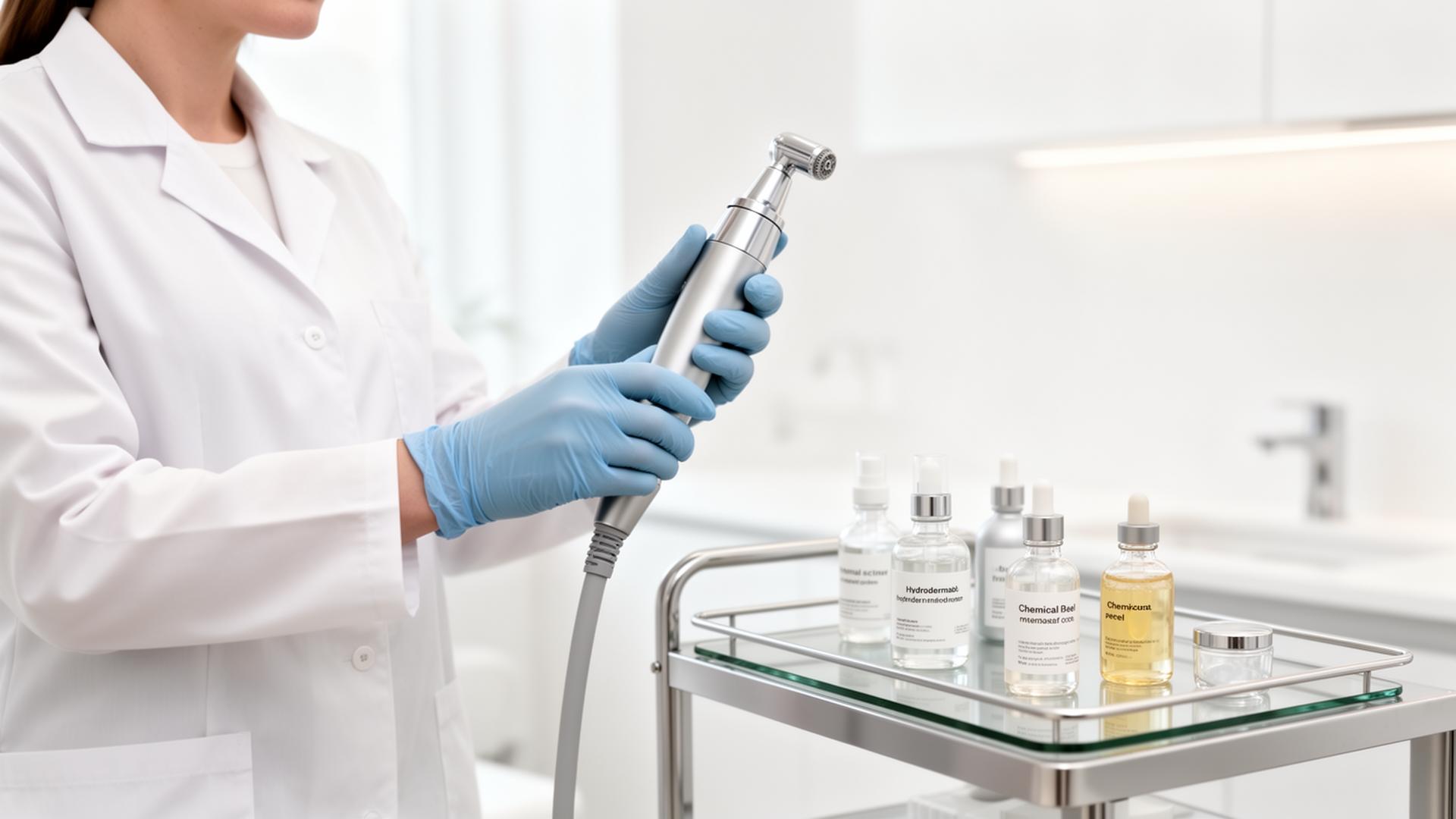
Dullness is often just accumulated corneocytes scattering light. A Hydrafacial combines gentle exfoliation, extraction and hydration in one session with zero downtime — which is why it remains the most requested pre-event treatment in the clinic. For more stubborn dullness and uneven tone, a superficial chemical peel course delivers a deeper reset.
Layer 3 — Restore dermal hydration
Topicals cannot reach the dermis. Profhilo delivers ultrapure hyaluronic acid that spreads through the tissue and stimulates the skin's own hydration and collagen response over two sessions, four weeks apart. Skin boosters do similar work in more targeted areas. Where the skin also looks tired and thin, PRP/PRF adds a regenerative element using the patient's own growth factors.
Layer 4 — Support from the inside
Sleep debt, dehydration, iron and vitamin D deficiency and high alcohol intake all show on the face before anywhere else. Where indicated by blood work, we correct deficiencies medically, and IV hydration and micronutrient therapy can be used as a supportive adjunct — particularly around long-haul travel, which is a common pattern in Dubai. Antioxidant support such as glutathione and vitamin C is an adjunct, not a substitute for the topical and in-clinic plan.
Dubai lifestyle adjustments that matter
- Run a humidifier in bedrooms and offices; indoor humidity in a heavily air-conditioned building can drop very low.
- Aim for consistent water intake through the day rather than large volumes at night.
- Use a hydrating mist over sunscreen mid-afternoon rather than reapplying powder.
- Rehydrate deliberately during and after long-haul flights and gym sessions.
- Do not exfoliate more than twice weekly while the barrier is recovering.
Timeline to visible glow
Immediate after a Hydrafacial (24–72 hours of peak glow). Two to four weeks after a peel course begins. Four to eight weeks after the second Profhilo session, which is where the change becomes structural rather than surface-level and lasts six to nine months with maintenance.
What "glow" actually is, physiologically
Glow is not a marketing abstraction — it is measurable light behaviour. Skin looks radiant when the corneocyte layer is smooth and evenly hydrated, so light reflects in a coherent direction rather than scattering; when the dermal microcirculation is healthy, adding warmth beneath the surface; and when melanin is evenly distributed rather than patchy. Dullness is a failure of one or more of those three. That is why a hydrating serum alone rarely fixes it: if the surface is rough with retained corneocytes, or the tone is uneven, the water content of the dermis is not the limiting factor.
Understanding which of the three is dominant changes the plan. Rough surface with good colour needs exfoliation. Even surface with grey, flat tone usually needs circulation, sleep and iron status addressed as much as anything topical. Uneven colour needs the pigment pathway rather than the hydration one — see our pigmentation guide for that route.
Travel, shift work and the jet-lagged face
Dubai is a hub city and a large share of our patients fly frequently. Cabin humidity typically sits far below comfortable indoor levels for hours at a stretch, and long-haul travel combines that with sleep disruption, alcohol and salt-heavy meals. The visible result is a face that looks flat and puffy at once — dehydrated in the dermis, fluid-retaining in the tissue. A practical pre- and post-flight protocol makes a measurable difference: hydrate deliberately in the twenty-four hours before departure rather than only in the air, skip alcohol on the flight, use an occlusive balm rather than a light serum in the cabin, and schedule any pre-event treatment either before travel or with at least two clear days after landing.
Night-shift and long-hours workers show a similar picture without the flight. Where blood work identifies a correctable deficiency — iron, ferritin, vitamin D, B12 — treating it usually improves skin appearance more than any facial, which is why our assessment includes those questions rather than starting from the treatment menu.
Common mistakes we correct most often
- Exfoliating dull skin harder. Over-exfoliation is a leading cause of dullness, not its cure; the barrier damage flattens light reflectance further.
- Confusing dryness with dehydration and reaching for heavy oils when the dermis needs water and humectants.
- Booking a peel three days before an event. Timing is everything — a Hydrafacial suits the 24–72 hour window; a peel needs one to two weeks.
- Relying on IV drips as a skin treatment. They are a supportive adjunct where deficiency or dehydration is a genuine factor, not a substitute for topical and in-clinic care.
- Ignoring sleep and alcohol while investing in treatments, then judging the treatments as ineffective.
- Skipping SPF because the skin is not pigmenting. UV degrades dermal collagen and hyaluronic acid, which is what supports glow in the first place.
What glow and hydration treatment costs in Dubai
This is a tiered spend. Maintenance exfoliation and hydration treatments sit at the accessible end and, for many patients, a regular cadence plus a corrected home routine is enough. Injectable dermal hydration is the mid-tier investment and is quoted as a two-session protocol with a six-to-nine-month maintenance interval rather than a one-off price. Internal support is only recommended where blood work justifies it, because paying for an infusion you do not clinically need is the least efficient part of any glow plan. Everything is itemised in writing at consultation, including how often you will realistically need to return.
References
- American Academy of Dermatology Association — Dry skin: diagnosis and treatment.
- Verdier-Sévrain S, Bonté F. Skin hydration: a review on its molecular mechanisms. J Cosmet Dermatol (PubMed).
- Cassiano DP et al. Stabilised hyaluronic acid injectables for skin quality: a systematic review. Dermatol Surg (PubMed).
- British Nutrition Foundation — Hydration and health.
- British Association of Dermatologists — Moisturisers and emollients patient information leaflet.
Related reading and next step
See which hydration and glow protocols match your skin type in the Skin Type & Skin Tone Treatment Guide, or read our clinical page on dull skin. Book a consultation at Silk Clinics, Dubai Healthcare City for a hydration and barrier assessment.
Medically reviewed by Dr Suzanne Haddad, Aesthetic Doctor, and Dr Ahmad Sadeqyar, Medical Director, Silk Clinics Dubai Healthcare City. Last reviewed 26 July 2026. This article is general medical information and does not replace an individual consultation.
Personalized Skin Plan
Not sure if dull skin treatment Dubai is right for you?
Answer 9 quick questions and get a doctor-designed pathway — with realistic timelines, downtime and session counts for your skin.
Browse the category
Explore all Skin Treatments in DubaiAdvanced skin treatments in Dubai engineered to renew, brighten and resurface — from Hydrafacial and chemical peels to PRP, exosomes and Scarlet S microneedling RF.
Treatments mentioned in this guide
Book a consultation
Considering dull skin treatment in Dubai?
Our DHA-licensed doctors at Dubai Healthcare City will assess your concern and build a personalised, transparent plan — no obligation, no pressure.
Frequently asked questions
What is the difference between dry and dehydrated skin?
What is the fastest treatment for dull skin before an event?
How long does Profhilo last?
View more frequently asked questions (3)
Do IV drips improve skin?
Why does my skin look dull in air-conditioning?
Can oily skin be dehydrated?
About the author

Aesthetic Doctor — Injectables & Skin
Specialising in natural-result injectables and advanced skin treatments, Dr Suzanne Haddad is known for her refined eye for facial harmony.
- MD
- Advanced Certification in Facial Injectables
- Member, AMWC
Medically reviewed by Dr Ahmad Sadeqyar — Medical Director, Aesthetic & Regenerative Medicine.