Quick answer: Sagging is rarely one problem. Three things change with age — skin quality (collagen and elastin), volume (fat pads and bone), and support (ligaments and muscle). Treating only one produces a distorted result. Mild to moderate laxity responds well to energy-based collagen stimulation such as RF microneedling combined with biostimulators; advanced laxity with significant skin excess is a surgical problem, and a good clinic will say so.
[!TIP] This article is part of the Silk Clinics Skin Type & Skin Tone Treatment Guide — the cornerstone hub that maps every treatment on this page to your skin type and Fitzpatrick tone (I–VI).
Laxity or volume loss? The mirror test
Stand in front of a mirror and lift the skin at the temple and upper cheek with two fingers. If the jawline sharpens and the nasolabial fold softens, you have descent and volume loss — biostimulators, structural filler and lifting techniques will help. If lifting the skin makes little difference and the tissue simply looks crepey and thin, the problem is skin quality and needs resurfacing and collagen induction instead.
Most patients over 40 have a mixture. Sequencing matters more than device choice: restore structure first, then tighten, then refine surface quality.
The non-surgical tightening ladder
| Stage | Presentation | Approach | Result timeline |
|---|---|---|---|
| Prevention (late 20s–30s) | Early crepiness, loss of glow | Profhilo, skin boosters, medical skincare | 4–8 weeks |
| Mild laxity | Soft jawline, early jowling | RF microneedling course | 8–12 weeks |
| Moderate laxity | Defined jowls, mid-face descent | Collagen stimulators + RF, ± thread lifting | 3–6 months |
| Advanced laxity | Significant skin excess, neck banding | Surgical referral, with non-surgical adjuncts | — |
How each modality actually works
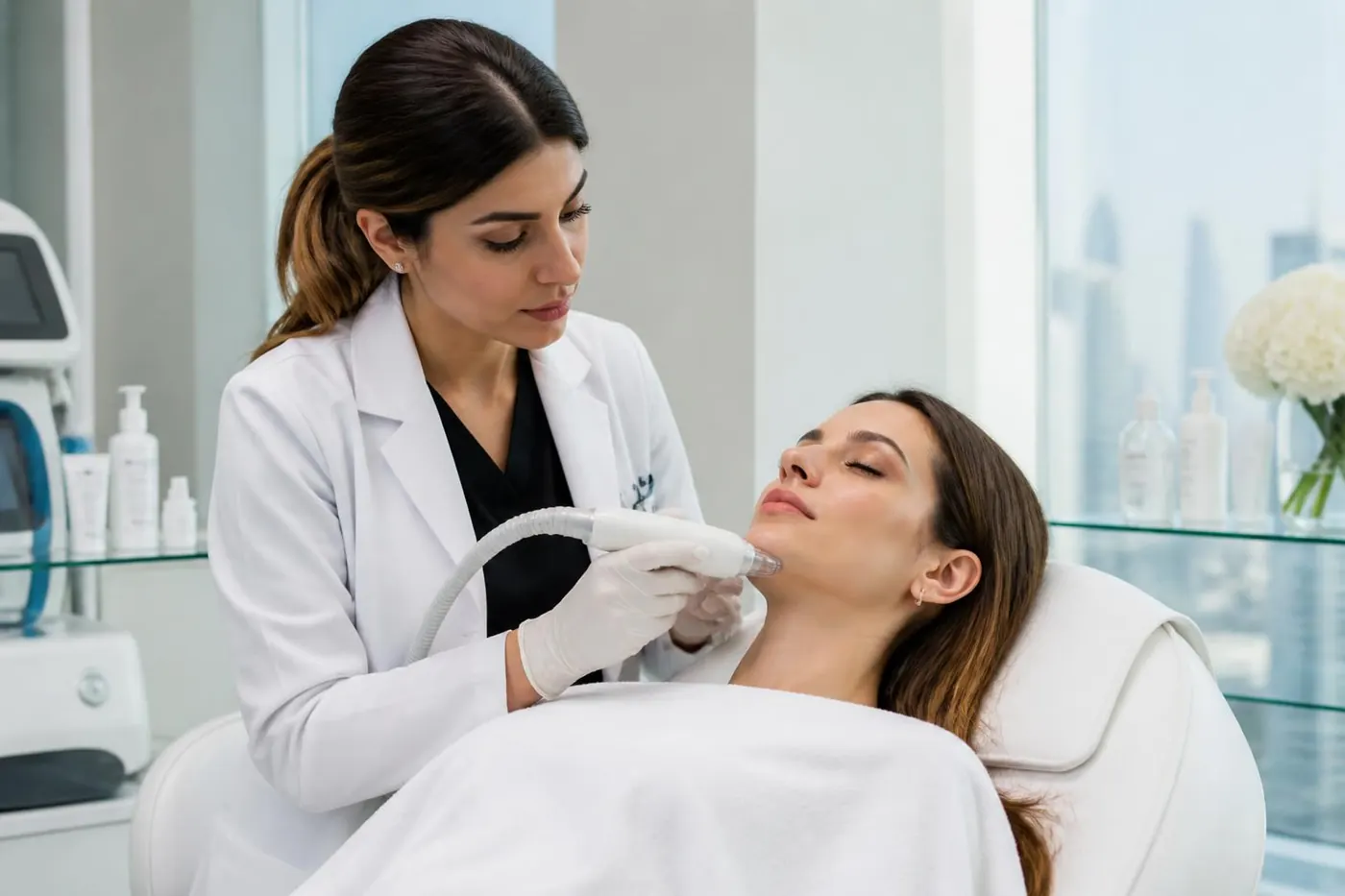
RF microneedling delivers radiofrequency energy into the dermis through insulated needles, producing controlled thermal injury that triggers neocollagenesis. Because the epidermis is largely spared, it is one of the safest tightening options across Fitzpatrick IV–VI. Expect a course of 3–4 sessions, 4–6 weeks apart, with results building over three months.
Collagen stimulators (poly-L-lactic acid and calcium hydroxylapatite) work biologically rather than by immediate filling. They rebuild dermal scaffolding over 8–12 weeks and are particularly effective for diffuse thinning across cheeks, temples and the décolletage. See collagen stimulators for the full protocol.
Thread lifting provides mechanical repositioning plus a collagen response along the thread track. It is best in patients with moderate laxity and good skin thickness — not as a substitute for a facelift in advanced cases. Read more on collagen thread lifting.
Resurfacing with fractional CO₂ laser addresses the surface component — fine lines, crepe texture and photodamage — and adds a genuine tightening effect through dermal contraction.
Regenerative support through peptide-based protocols and PRF improves the quality of the collagen response, especially in patients over 50 or with a history of significant sun exposure.
What non-surgical tightening cannot do
It cannot remove skin. If there is true excess — a hanging neck, deep platysmal bands, heavy jowls — no device shrinks that away, and courses of treatment sold on that promise waste both money and time. Our position is straightforward: we will tell you when a surgical consultation is the honest recommendation, and we will still support the skin quality around it.
Longevity of results
- RF microneedling course: 12–18 months, with annual maintenance.
- Collagen stimulators: 18–24 months depending on product and dose.
- Thread lifting: 12–18 months for the mechanical effect.
- Profhilo and skin boosters: 6–9 months.
Longevity depends heavily on smoking status, UV exposure, weight fluctuation, sleep and metabolic health — which is why our longevity and cellular wellness pathways often run alongside aesthetic plans.
The four tissue layers that age — and why sequence beats device choice
Facial ageing happens simultaneously in bone, deep fat, superficial fat and skin. The facial skeleton resorbs, most visibly at the orbital rim, the pyriform aperture around the nose and along the jaw, which removes the scaffolding the soft tissue sits on. The deep fat compartments deflate and the superficial ones descend and coalesce, which is why a smooth transition between the cheek and the lid becomes a defined hollow, and why a continuous jawline develops a step. Skin thins and loses elastic recoil last.
This is why sequence beats device choice. Tightening skin over an unsupported deep structure produces a taut but flat, slightly hollow face — the look most patients are trying to avoid. Restoring structure first with biostimulators or structural filler, then tightening, then refining surface quality, produces a result that reads as "well" rather than "treated". A clinic that opens with a device recommendation before assessing which layer is driving your concern is selling capacity, not a plan.
The neck, décolletage and hands
Faces are treated in isolation far too often. The neck has thinner skin, fewer adnexal structures and slower healing, so device settings that suit a cheek are inappropriate below the jawline — energies are lowered and intervals lengthened. The décolletage carries the heaviest cumulative UV load in this climate and typically shows crepe texture and pigment together, which needs a combined approach rather than tightening alone. Hands lose volume and show tendon and vein detail early; collagen stimulators and resurfacing both have a role. Including these areas in the plan is what keeps a good facial result from looking incongruous.
Common mistakes we correct most often
- Filling laxity instead of lifting it. Repeatedly adding volume to a descending face produces heaviness, not definition, and is the most common cause of an over-treated appearance.
- Expecting a device to replace surgery. With genuine skin excess, no energy-based treatment shrinks it away.
- A single session of anything. Collagen-based approaches are courses; one session of RF microneedling is a sample, not a treatment.
- Judging at two weeks. Neocollagenesis peaks at around twelve weeks; the early result understates the outcome.
- Ignoring the neck. A tightened face above an untreated neck draws attention to the contrast.
- Rapid weight loss during a treatment course — including on GLP-1 medication — which unloads the fat compartments faster than the skin can retract and changes the plan entirely.
What skin tightening costs in Dubai
Non-surgical tightening is priced per session, but it should be budgeted per course and per year. A realistic plan is an initial course of three to four RF microneedling sessions with or without a biostimulator, then annual maintenance to hold the collagen response. Compared like-for-like over three years, a maintained non-surgical plan and a single surgical procedure often land in a similar range — which is exactly why we discuss both honestly, including the cases where surgery is better value as well as a better result. Every plan is quoted in writing at consultation, itemised by session and by expected maintenance interval.
References
- American Society for Dermatologic Surgery — Consensus recommendations on the use of poly-L-lactic acid.
- American Academy of Dermatology Association — Skin tightening: what to expect from non-surgical devices.
- Sadick N et al. Fractional radiofrequency microneedling for skin laxity: a review. J Cosmet Dermatol (PubMed).
- Fitzgerald R, Vleggaar D. Facial volume restoration with collagen stimulators. Aesthet Surg J (PubMed).
- International Society of Aesthetic Plastic Surgery — When non-surgical lifting is not enough.
Related reading and next step
Use the interactive finder in the Skin Type & Skin Tone Treatment Guide to see which tightening options suit your tone and downtime tolerance, or read our clinical page on skin laxity. Book a consultation at Silk Clinics, Dubai Healthcare City for a structured facial assessment.
Medically reviewed by Dr Suzanne Haddad, Aesthetic Doctor, and Dr Ahmad Sadeqyar, Medical Director, Silk Clinics Dubai Healthcare City. Last reviewed 26 July 2026. This article is general medical information and does not replace an individual consultation.
Personalized Skin Plan
Not sure if skin tightening Dubai is right for you?
Answer 9 quick questions and get a doctor-designed pathway — with realistic timelines, downtime and session counts for your skin.
Browse the category
Explore all Skin Treatments in DubaiAdvanced skin treatments in Dubai engineered to renew, brighten and resurface — from Hydrafacial and chemical peels to PRP, exosomes and Scarlet S microneedling RF.
Treatments mentioned in this guide
Book a consultation
Considering skin tightening in Dubai?
Our DHA-licensed doctors at Dubai Healthcare City will assess your concern and build a personalised, transparent plan — no obligation, no pressure.
Frequently asked questions
What is the best non-surgical treatment for sagging skin?
How long do skin tightening results last?
Is thread lifting the same as a facelift?
View more frequently asked questions (3)
At what age should I start tightening treatments?
Does RF microneedling hurt?
Can tightening treatments replace surgery?
About the author
Aesthetic Doctor — Injectables & Skin
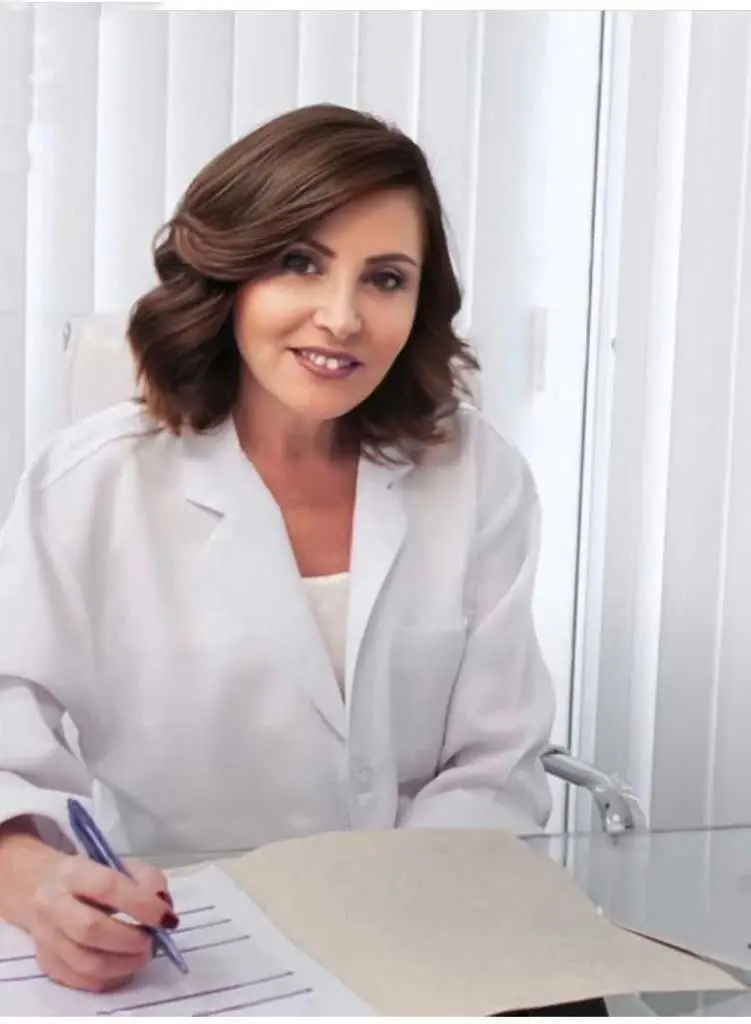
Specialising in natural-result injectables and advanced skin treatments, Dr Suzanne Haddad is known for her refined eye for facial harmony.
- MD
- Advanced Certification in Facial Injectables
- Member, AMWC
Medically reviewed by Dr Ahmad Sadeqyar — Medical Director, Aesthetic & Regenerative Medicine.