Quick answer
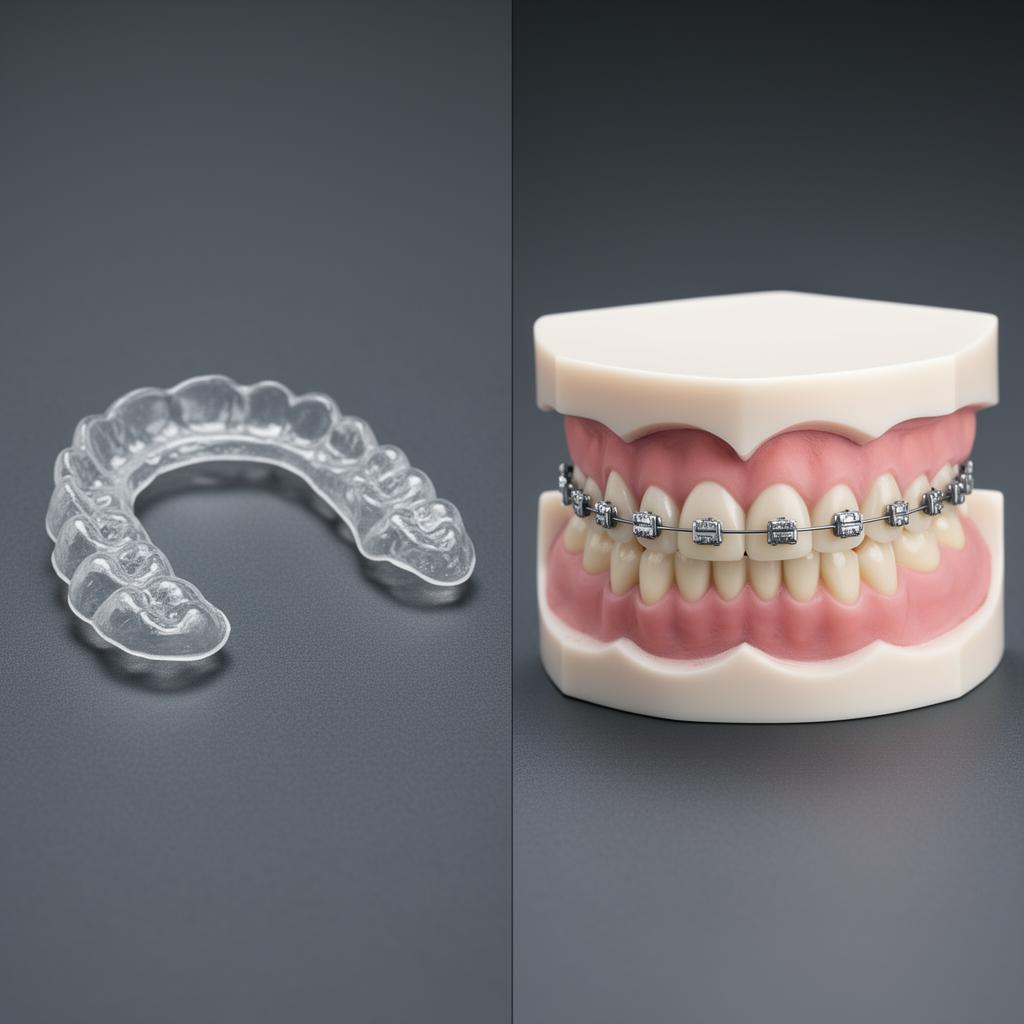
Clear aligners (Invisalign-style) are removable, virtually invisible trays — best for mild-to-moderate cases and adult patients who want a discreet appliance, provided they will wear them 20–22 hours per day. Traditional braces are fixed brackets and wires — better for severe crowding, large bite corrections, significant rotations and cases that need detailed final tooth positioning. Treatment time is similar (9–24 months). Compliance is the biggest practical difference.
Last reviewed on byDr Karishma Mayer&Dr Ahmad Sadeqyar
Invisalign / Clear Aligners vs Traditional Braces — side-by-side
| Feature | Invisalign / Clear Aligners | Traditional Braces |
|---|---|---|
| Appearance | Virtually invisible | Visible (ceramic less so than metal) |
| Removable | Yes — for eating, drinking, brushing | No — fixed 24/7 |
| Required wear time | 20–22 hours per day | 24/7 — no compliance question |
| Best for | Mild-to-moderate crowding, spacing, mild bite issues | Severe crowding, large bite corrections, significant rotations |
| Comfort | Generally more comfortable day-to-day | Bracket irritation possible; lighter modern forces |
| Eating | No restrictions — aligners removed | Avoid hard, sticky and very crunchy foods |
| Oral hygiene | Normal brushing and flossing | Extra effort with interdental brushes and floss threaders |
| Treatment time | 9–24 months | 9–24 months (longer for very complex cases) |
| Adjustment frequency | New trays every 1–2 weeks; check-ins every 6–8 weeks | Adjustment visits every 4–8 weeks |
| Retention afterwards | Required — fixed + removable retainers | Required — fixed + removable retainers |
Invisalign (clear aligners) and traditional braces are the two main orthodontic options for straightening teeth in Dubai. The choice between them is one of the most common questions we receive at Silk Clinics — and the honest answer is that it depends on the case. This is a doctor-led comparison so patients researching orthodontics in Dubai can make an informed decision.
We explain how each works, where each is the right tool, how they compare on the variables that actually matter to patients, and how orthodontists at Silk Clinics in Dubai Healthcare City decide between them.
How Invisalign / clear aligners work
Invisalign and clear aligners use a series of custom-made transparent trays. Each tray is worn for 1–2 weeks and moves the teeth slightly toward their planned final position before being replaced by the next tray. The whole sequence is planned in 3D before treatment begins, with a digital simulation showing the expected final result.
Aligners are removable. You take them out to eat, drink anything other than water, and brush your teeth. To work properly they must be worn 20–22 hours per day — compliance is the most important variable in clear aligner success. Patients who do not wear their aligners as instructed will not get the planned result.
How traditional braces work
Braces use fixed brackets bonded to each tooth, connected by an archwire that applies gentle continuous force. Adjustments are made every 4–8 weeks. Modern brackets are smaller and more comfortable than older systems, and ceramic (tooth-coloured) brackets offer a more discreet appearance for adult patients.
Because braces are fixed, there is no compliance question — they are working 24/7 from the moment they are fitted. This is one of their major advantages in complex cases or for patients who would not wear aligners reliably.
How they compare on the variables that matter
Appearance: aligners are virtually invisible; braces are visible (ceramic braces are less visible than metal). For adult patients with social and professional considerations, this is often the deciding factor.
Comfort: aligners are generally more comfortable day-to-day because there are no brackets to irritate the cheeks and no archwires to poke. Both produce some tooth-movement soreness, especially in the first 2–3 days of a new tray or after a braces adjustment.
Eating: aligners are removed for meals, so there are no dietary restrictions. With braces, hard, sticky and very crunchy foods need to be avoided to protect the brackets.
Oral hygiene: aligners are easier to keep clean — brushing and flossing are normal. Braces require extra effort with interdental brushes and floss threaders to keep brackets and wires plaque-free.
Case suitability: aligners suit most mild-to-moderate cases. Braces are usually better for severe crowding, large bite corrections, significant rotations and cases that need very detailed final tooth positioning.
Treatment time: similar overall for similar case complexity — typically 9–24 months. Aligner treatment that is not worn for the prescribed hours per day will take longer or fail to deliver the planned result.
Cost: aligners are typically priced similarly to or slightly higher than ceramic braces, though pricing depends on case complexity and the system used. Both are quoted as complete packages including consultations, adjustments, refinements and retainers.
Compliance: aligners depend entirely on the patient wearing them 20–22 hours a day. Braces work regardless of patient discipline — they are fixed. This is the single biggest practical difference.
How Silk Clinics orthodontists decide
Every orthodontic consultation at Silk Clinics Dubai begins with a comprehensive digital workup: photographs, intra-oral scans, panoramic and cephalometric imaging where appropriate, and a 3D treatment simulation. This is the basis for an honest conversation about whether aligners, braces, or a combination of the two is the right tool for your specific case.
Our general approach: aligners for most mild-to-moderate cases, particularly adult patients who want a discreet appliance and are reliable about wear time. Braces for severe crowding, large bite corrections, significant rotations and cases that need very detailed final tooth positioning. Combination treatment (a short phase of braces followed by aligners, or vice versa) is used when the case has both complex and refinement phases.
Retention is the most important and most often neglected part of orthodontic care. After active treatment with either system, we fit a fixed bonded retainer behind the front teeth and provide removable retainers for long-term nightly wear. Teeth will shift back without retention — this is true after both aligners and braces.
Related reading — smile design at Silk Clinics
Many patients researching Invisalign vs braces also weigh cosmetic options. If your goal is primarily colour or shape correction rather than movement, review teeth whitening in Dubai and the composite bonding vs veneers comparison. For alignment plus a full aesthetic finish, our veneers vs crowns guide explains where each option fits after orthodontic treatment. For the treatment pages themselves, see clear aligners and dental veneers.
Can these treatments be combined?
Yes — combination orthodontic treatment is common. A short phase of braces can be used at the start of treatment to handle complex movements, followed by aligners for refinement; or aligners can be used first with a short phase of braces at the end for detailed finishing. The decision is personalised to the case at consultation.
Clinician perspective
What do Silk Clinics clinicians commonly recommend?
At Silk Clinics Dubai, our general approach is aligners for most mild-to-moderate cases — particularly adult patients who want a discreet appliance and are reliable about wear time — and braces for severe crowding, large bite corrections, significant rotations and cases needing detailed final tooth positioning. Combination treatment is used when the case has both complex and refinement phases. The right answer is case-specific and decided after a full digital workup. Retention is permanent after either treatment.
Who may not be suitable?
- Patients who will not reliably wear aligners 20–22 hours per day — braces are usually a better choice.
- Very complex bite corrections that exceed the predictable envelope of aligners alone.
- Active gum disease or untreated decay — must be treated first.
- Severe bruxism without management — both systems can be compromised.
- Unrealistic expectations of dramatic tooth movement in unrealistic timeframes.
Suitability is always confirmed at consultation — this list is general guidance, not medical advice.
In-depth: how each treatment works
Why compliance is the biggest practical difference
Cases where braces still win
Cases where aligners shine
What happens after — retention is everything
Key takeaways
- Aligners are removable and virtually invisible; braces are fixed and visible.
- Aligners suit most mild-to-moderate cases; braces handle complex ones better.
- Treatment time is similar (9–24 months) for similar complexity.
- Aligners depend on patient compliance with wear time; braces work 24/7 regardless.
- Cost is broadly similar; both are quoted as complete packages.
- Retention is permanent after either treatment — the most important phase.
Personalized Skin Plan
Not sure if Invisalign vs braces Dubai is right for you?
Answer 9 quick questions and get a doctor-designed pathway — with realistic timelines, downtime and session counts for your skin.
Browse the category
Explore all Dental Treatments in DubaiCosmetic and general dentistry in Dubai Healthcare City — veneers, Hollywood Smile, whitening, clear aligners and full-mouth dental care delivered by experienced specialists.
Treatments mentioned in this guide
Book a consultation
Considering Invisalign vs braces in Dubai?
Our DHA-licensed doctors at Dubai Healthcare City will assess your concern and build a personalised, transparent plan — no obligation, no pressure.
Frequently asked questions
Is Invisalign better than braces in Dubai?
How long does Invisalign treatment take vs braces?
Are clear aligners as effective as braces?
View more frequently asked questions (6)
Which is more comfortable — Invisalign or braces?
Can adults get braces in Dubai?
What if I don't wear my aligners enough?
How much do Invisalign and braces cost in Dubai?
Can I switch from aligners to braces mid-treatment?
Do I need retainers after Invisalign or braces?
About the author
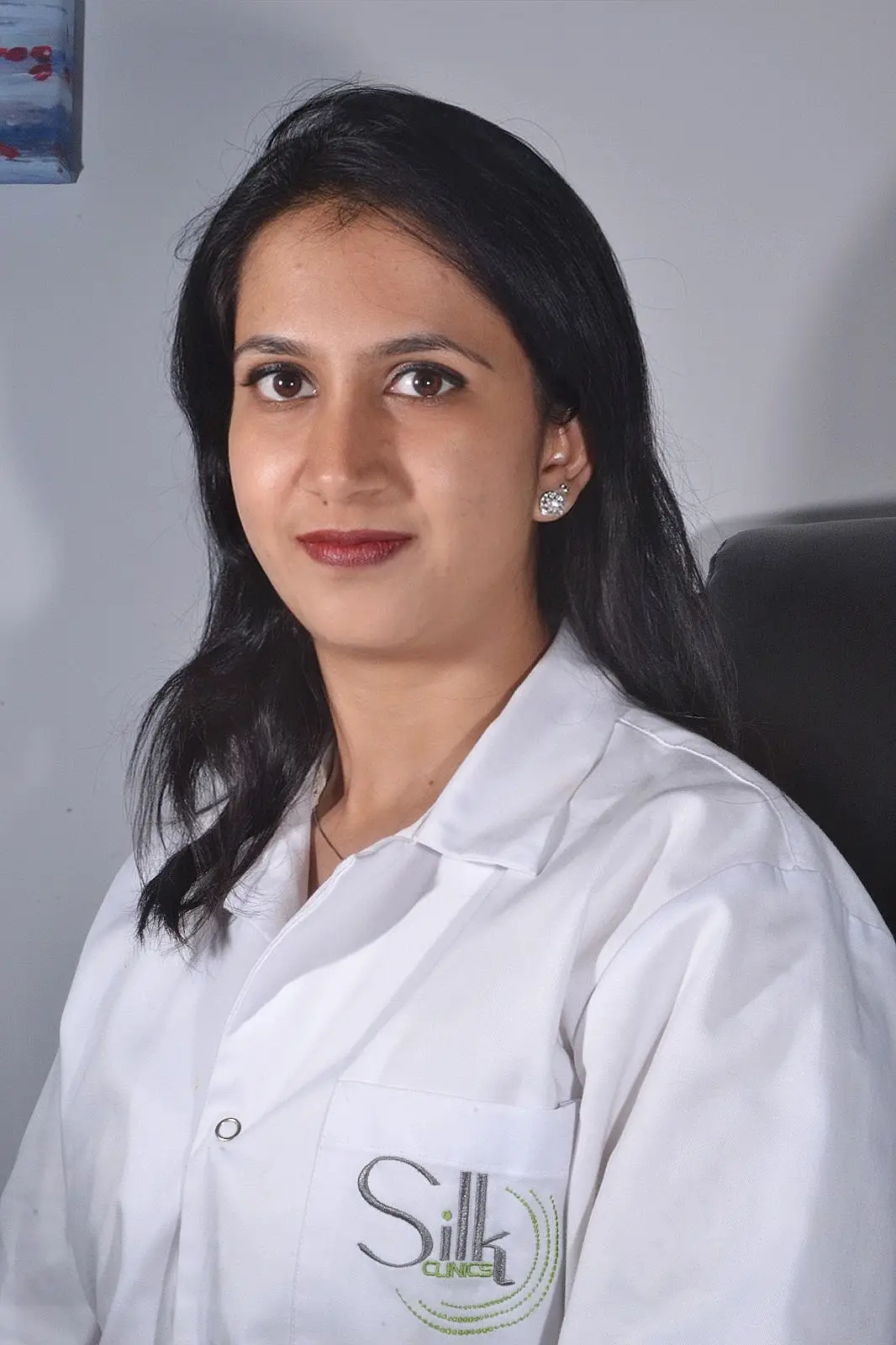
Prosthodontist — Veneers, Crowns & Smile Design
A specialist in prosthodontics, Dr Karishma Mayer leads complex smile design, veneers and full-mouth rehabilitations.
- BDS
- MDS — Prosthodontics
- Smile Design Certified
Medically reviewed by Dr Ahmad Sadeqyar — Medical Director, Aesthetic & Regenerative Medicine.