For most of the last decade, the visual language of celebrity beauty was addition. More volume in the lips and cheeks, sharper jawlines, higher brows, flatter foreheads. It photographed well, it travelled fast on social platforms, and it created a recognisable template that patients around the world began requesting by name.
In 2026, the direction of travel has changed. Across aesthetic conferences, dermatology journals and clinic waiting rooms, the same themes keep surfacing: skin quality over volume, collagen stimulation over instant filling, facial harmony over feature-by-feature correction, and prevention over repair. The industry shorthand for this is the new face of Hollywood — a preference for looking rested and healthy rather than visibly treated.
This article is a trend report, not a celebrity report. It does not speculate about what any individual has or has not had done, and it makes no claim about any named person's medical history. What it does describe is a documented shift in what patients ask for, how experienced injectors are choosing to work, and where aesthetic medicine is converging with the wider conversation about healthy ageing.
[!NOTE] Medical review disclaimer. This is general educational content prepared and reviewed by the medical team at Silk Clinics, Dubai Healthcare City. It is not a diagnosis, not a treatment plan and not a substitute for an in-person consultation with a DHA-licensed doctor. Suitability, risks and expected outcomes vary between patients.
The shift
1. The New Face of Hollywood
Ask an experienced aesthetic clinician what has changed most in their consultation room over the past three years and the answer is rarely a device. It is the brief. Patients increasingly arrive asking to look well rather than to look different — and they are far more likely to say what they do not want: overfilled cheeks, a heavy upper lip, a frozen brow, a face that reads as treated in daylight.
The emerging aesthetic ideal can be summarised in a few lines. Refreshed rather than altered. Healthy rather than artificially perfect. Structurally balanced rather than overfilled. Focused on how skin behaves — its texture, tone and elasticity — rather than only on wrinkles. Preventative rather than corrective. And, above all, subtle enough that people notice the person rather than the procedure.
Why this is a bigger change than it looks
This is not simply a change of fashion. It reflects a change in how aesthetic medicine understands the ageing face. Facial ageing is not only volume loss: it involves skin thinning, collagen and elastin decline, changes in fat pad position, bone remodelling and cumulative sun exposure. A philosophy built purely on replacing volume addresses one variable while leaving the others untouched — and, if repeated over years, can gradually distort proportion.
The 2026 approach treats the face as a system with several dials: movement, volume, structural support, skin quality, hydration and regeneration. The skill lies in deciding which dials to touch, by how little, and in what order.
[!IMPORTANT] Trends are not treatment recommendations. Whether any approach described here is suitable for you — and what results are realistic — can only be established through a consultation and medical assessment with a licensed clinician.
Injectables
2. The “De-Kardashian” Shift: Less Filler, More Structure
The cultural correction away from exaggerated lips, cheeks and jaw proportions is well documented in the aesthetics press and visible in clinic demand. It has been labelled many things — filler fatigue, the de-influencing of injectables, the return of the natural face. What it is not is the end of dermal fillers.
Dermal fillers have not disappeared. The philosophy around their use has become more refined. The techniques that define good injecting in 2026 are largely about restraint and planning:
- Conservative placement — smaller volumes, staged across appointments rather than delivered in one sitting
- Facial balancing — assessing the whole face, including chin projection, jaw definition and mid-face support, before treating a single feature
- Preserving natural movement — a face that still expresses is now considered a marker of good work, not a compromise
- Strategic volume restoration — replacing support where it has genuinely been lost, rather than adding where it never existed
- Avoiding stacking — recognising previous product, allowing time between treatments, and being willing to recommend no treatment at all
At Silk Clinics, dermal fillers and Botox are planned within this framework: assessment first, minimal effective dosing, and a written plan that considers what the face will need over years rather than weeks. For patients whose concern is skin firmness rather than volume, collagen thread lifting or biostimulation may be discussed instead.
The most common request of 2026
Clinicians increasingly report a specific brief: undo the obvious, keep the freshness. That may mean pausing filler entirely for a period, allowing existing product to settle, and shifting attention to skin quality and collagen while the face recalibrates. It is a slower, less dramatic pathway — and it requires a clinician willing to say that the right treatment today might be none.
[!IMPORTANT] Trends are not treatment recommendations. Whether any approach described here is suitable for you — and what results are realistic — can only be established through a consultation and medical assessment with a licensed clinician.
The goal patients describe most often in 2026 is simple: “You look well.” Not “you look different.”
Biostimulation
3. Collagen Is Becoming the New Volume
If one theme defines 2026 aesthetics, it is the move from adding material to stimulating the skin's own structural proteins. Collagen and elastin are what give young skin its thickness, bounce and light reflection. Both decline gradually with age, and that decline is accelerated by ultraviolet exposure — a relevant consideration in Dubai's climate.
Adding volume versus rebuilding structure
The distinction matters clinically. A hyaluronic acid filler works immediately: it occupies space, provides lift and can be reversed. A collagen biostimulator works differently. It is placed into the tissue where it prompts a controlled biological response, encouraging fibroblasts to lay down new collagen over subsequent weeks and months. There is little to see on the day; the change develops gradually and is generally described by patients as firmer, better-quality skin rather than added fullness.
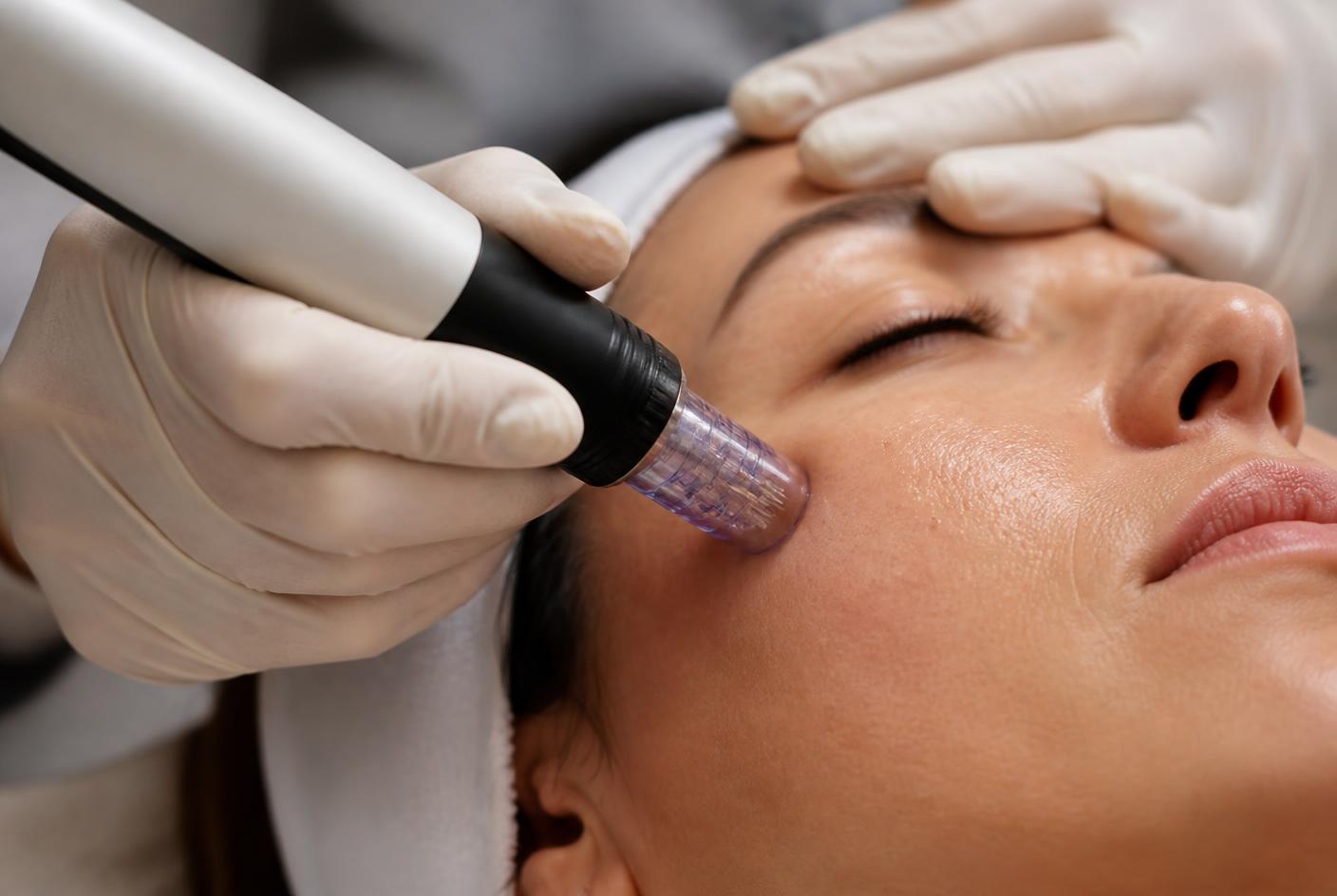
Energy-based and needling treatments follow a similar logic. Controlled micro-injury — from radiofrequency microneedling, fractional resurfacing or medical microneedling — triggers a wound-healing cascade that includes new collagen deposition. The trade-off is time and repetition: biostimulation is a course, not an appointment.
The main collagen-focused options
- Injectable collagen stimulators such as poly-L-lactic acid and calcium hydroxylapatite based products — see collagen stimulators
- RF microneedling, combining needling depth with radiofrequency energy in the dermis — see Scarlet S RF microneedling
- Medical microneedling, often combined with platelet-rich preparations
- PRP and PRF, using the patient's own platelet concentrate to support the healing response
- Fractional CO₂ laser, for deeper resurfacing and remodelling where texture and scarring are the priority
- Bio-remodelling injectables and skin boosters, which target hydration and elasticity rather than shape
None of these is universally appropriate. Depth settings, energy levels and product choice must be adjusted for skin type and skin tone — particularly for Fitzpatrick IV–VI skin, where inappropriate settings carry a higher risk of post-inflammatory pigmentation. This is precisely why device-led treatments belong in a medical setting after assessment.
[!IMPORTANT] Trends are not treatment recommendations. Whether any approach described here is suitable for you — and what results are realistic — can only be established through a consultation and medical assessment with a licensed clinician.
The 2026 Aesthetic Shift
What changed, at a glance
The 2010s aesthetic
- More volume, more product
- Obvious, visible enhancement
- Feature-by-feature treatment
- Quick transformation
- Correction after change appears
The 2026 aesthetic
- Skin quality first
- Collagen stimulation over filling
- Whole-face harmony
- Subtle, staged intervention
- Long-term maintenance and prevention
Skin quality
Texture, tone, hydration and elasticity — now the first thing assessed, not the last.
Collagen stimulation
Biostimulators, RF microneedling and resurfacing that work over months, not minutes.
Conservative dosing
Smaller volumes, staged sessions, preserved facial movement and expression.
Prevention
Sun protection, medical skincare and early maintenance rather than late correction.
Skin health
4. Skin Quality Is the New Status Symbol
Wrinkle reduction alone no longer reads as expensive. What reads as expensive in 2026 is skin that looks well cared for: even in tone, smooth in texture, hydrated, and reflecting light consistently across the face.
The concerns patients now raise, in roughly the order clinics hear them, are texture, visible pores, pigmentation and uneven tone, acne scarring, dehydration, loss of elasticity, fine lines and overall dullness. These are skin-health issues rather than shape issues, and they respond to a different toolkit.
Treatments that target skin quality
- HydraFacial — cleansing, exfoliation and hydration in a single session, often used as maintenance between clinical treatments
- Chemical peels — depth and formulation selected according to skin type, tone and concern
- Medical microneedling, with or without PRP/PRF
- Fractional CO₂ laser for texture and scarring, where suitable
- Pigmentation treatment protocols combining in-clinic and topical care
- Skin boosters and polynucleotide (PDRN) protocols for hydration and elasticity
Two caveats belong here. First, no treatment produces flawless or poreless skin, and any clinic promising that is describing photography rather than dermatology. Second, in-clinic treatment is only part of the picture: daily sun protection, an appropriate medical skincare routine and consistency over months do more for skin quality than any single session.
[!IMPORTANT] Trends are not treatment recommendations. Whether any approach described here is suitable for you — and what results are realistic — can only be established through a consultation and medical assessment with a licensed clinician.
Volume can be added in an afternoon. Skin quality is built over seasons.
Regeneration
5. Regenerative Aesthetics, Explained Honestly
Regenerative aesthetics is the umbrella term for treatments that aim to support the skin's own repair and remodelling processes rather than to cover or fill visible ageing. In practice, that means encouraging fibroblast activity, collagen turnover and improved tissue quality using controlled stimulation.
What is established, and what is still emerging
Well-established within this family are autologous platelet preparations — PRP and PRF — where a small blood sample is processed to concentrate platelets and growth factors before reinjection; controlled skin resurfacing with fractional CO₂ or laser skin rejuvenation; medical microneedling; and injectable collagen biostimulators. These have been used clinically for years and have a reasonable body of published evidence, although outcomes still vary between individuals.
Newer or still-evolving areas include exosome-based protocols and other cell-signalling adjuncts. These are areas of genuine scientific interest, but the evidence base is younger and less consistent than for established treatments. They should be presented as adjuncts under discussion, not as proven replacements — and any clinic describing them as a way to reverse ageing is overstating what is known.
Regenerative treatments also work on biological timelines. Collagen remodelling continues for weeks to months after a session, which is why courses are staged and why the honest answer to “when will I see it?” is usually “gradually”.
[!IMPORTANT] Trends are not treatment recommendations. Whether any approach described here is suitable for you — and what results are realistic — can only be established through a consultation and medical assessment with a licensed clinician.
Combination planning
6. The Rise of High-Tech “Tweakments”
A tweakment is a small, targeted, usually non-surgical intervention chosen to refine rather than transform. The 2026 version of this idea is combination planning: several modest interventions, sequenced across months, each addressing a different mechanism of facial ageing.
A clinician planning that way is typically thinking in categories rather than products:
| Concern | Approach commonly considered |
|---|---|
| Movement-related lines | Botox, where clinically appropriate |
| Lost structural support | Conservative dermal filler placement |
| Collagen and firmness | Biostimulators or RF microneedling |
| Texture and scarring | Fractional resurfacing, peels |
| Hydration and glow | Skin boosters, HydraFacial |
| Regeneration support | PRP/PRF, where appropriate |
The value is in the sequencing, not the shopping list. Treatments interact: resurfacing changes how injectables settle, biostimulation changes how much filler a face needs later, and skin preparation influences how well a laser is tolerated. Combining approaches without a plan is how faces end up overtreated.
For a structured starting point, our in-clinic skin protocols and the free Personalized Skin Plan tool can help frame the conversation — but the plan itself should always be confirmed in consultation.
[!IMPORTANT] Trends are not treatment recommendations. Whether any approach described here is suitable for you — and what results are realistic — can only be established through a consultation and medical assessment with a licensed clinician.
Book a consultation
Considering Natural Facial Rejuvenation in Dubai?
Our DHA-licensed doctors at Dubai Healthcare City will assess your concern and build a personalised, transparent plan — no obligation, no pressure.
Healthy ageing
7. Longevity Enters the Beauty Conversation
The second half of the 2026 trend story sits outside the treatment room. Patients interested in how they age are increasingly interested in how they feel — energy, sleep quality, metabolic health, body composition and long-term wellbeing — and they no longer treat these as separate from how their skin looks.
There is reasonable biological logic to the overlap. Skin is affected by sleep, nutrition, glycaemic control, smoking, alcohol, stress and, most powerfully in this region, cumulative sun exposure. Any serious conversation about facial ageing that ignores those factors is incomplete.
Where the evidence is strong, and where it is not
The strongest evidence sits with the least glamorous interventions: daily broad-spectrum sun protection, not smoking, adequate sleep, regular physical activity, a nutrient-adequate diet and management of underlying medical conditions. These are consistently supported and cost very little.
Wellness infusions such as IV drips and NAD+ IV therapy are widely discussed in the longevity space. Evidence varies considerably depending on the intervention and the outcome being measured, and much of the research is early. They should not be described as treatments that reverse ageing, extend lifespan, detoxify the body or prevent disease, and they are not a substitute for medical care or for the fundamentals above. Suitability depends on medical history, medications and prior assessment.
For readers who want to go deeper into this area, our longevity and healthy ageing clinic guide and the skin longevity section set out how we approach it clinically.
[!IMPORTANT] Trends are not treatment recommendations. Whether any approach described here is suitable for you — and what results are realistic — can only be established through a consultation and medical assessment with a licensed clinician.
Editorial
8. Why Looking “Done” Is Going Out of Style
The compliment aesthetic patients now describe wanting is oddly specific: you look amazing — but I can't tell what you had done. It is a useful clinical brief, because it rules out an entire category of outcomes.
A template face — the same lip shape, the same cheek projection, the same brow position applied across very different bone structures — reads as a style, and styles date. Individual features, by contrast, do not. The freckle pattern, the slightly asymmetric smile, the eye shape that runs in a family: these are the things that make a face recognisable, and modern aesthetic practice increasingly treats them as assets to protect rather than irregularities to correct.
Practically, that means clinicians spending longer on assessment and planning, treating in smaller increments, reviewing between sessions, and being explicit about what a treatment will not change. It also means patients being wary of any plan that looks identical to the plan on the clinic's social feed.
The same shift is visible in dentistry, where ultra-white identical teeth are giving way to more individual smiles — see our article on the new Hollywood smile trend for 2026.
Dubai context
9. What This Means for Aesthetic Patients in Dubai
Dubai is unusually well placed for this shift. The city has early access to advanced devices and injectables, a highly international patient population spanning the full range of skin tones, and clinicians trained across American, British, European and Asian systems. Patients here are informed: they arrive having read, watched and compared.
The main risk in a market like this is trend-chasing — booking the treatment that is currently visible online rather than the treatment that suits the face in the mirror. A long-term strategy consistently produces more natural results than a sequence of trending procedures.
What a proper consultation should consider
- Facial anatomy, proportion and asymmetry
- Skin quality, skin type and Fitzpatrick skin tone
- Age and the pattern of change over time
- Full medical history, medications and allergies
- Previous treatments, including how much filler has been placed and when
- Lifestyle, sun exposure, sleep and skincare routine
- The specific concern in the patient's own words
- Realistic goals, timelines, risks, downtime and cost
The output should be an individualised plan with a sequence and a review point — not a replica of somebody else's face. At Silk Clinics in Dubai Healthcare City, that plan is built and reviewed by our medical team, and it can and should include the option of doing nothing for now.
[!IMPORTANT] Trends are not treatment recommendations. Whether any approach described here is suitable for you — and what results are realistic — can only be established through a consultation and medical assessment with a licensed clinician.
Conclusion
10. The Future of Aesthetics: Preservation Over Transformation
The biggest aesthetic trend of 2026 may not be an injectable, a laser or a device at all. It is a change of philosophy, and it fits on four words: preserve, stimulate, refine, maintain.
Preserve what is already there — facial proportion, movement, individual features. Stimulate the skin's own collagen rather than defaulting to added volume. Refine in small increments, with time between them. Maintain with sun protection, medical skincare and periodic review rather than sporadic intervention.
It is a slower, quieter form of aesthetic medicine, and it asks more of both clinician and patient: more assessment, more patience, more willingness to leave things alone. The reward is the outcome most people were actually looking for in the first place — looking like themselves, well rested, for longer.
Treatments mentioned in this report
Availability and suitability are confirmed at consultation. Not every treatment is appropriate for every patient.
Related reading
Frequently asked questions
What aesthetic treatments are trending in 2026?
Are people getting less facial filler?
What is regenerative aesthetics?
View more frequently asked questions (7)
What are aesthetic tweakments?
What treatments stimulate collagen in the face?
Is Sculptra different from dermal filler?
What treatments improve skin quality without changing facial features?
What is preventative aesthetics?
How can I achieve natural-looking aesthetic results?
How do I know which aesthetic treatment is right for me?
This article is general medical information reviewed by the Silk Clinics medical team in Dubai Healthcare City. It describes industry trends, not treatment recommendations, and makes no claim about the medical history of any individual. Suitability, risks and expected outcomes vary between patients and require assessment by an appropriately licensed healthcare professional. Next scheduled review: February 2027.
- DHA Licensed Clinic
- Experienced Medical Team
- Personalized Treatment Plans
- Consultation Before Every Treatment
- Medically Reviewed Content
- Modern Medical Equipment
Book a consultation
Considering Aesthetic & Skin Rejuvenation Plan in Dubai?
Our DHA-licensed doctors at Dubai Healthcare City will assess your concern and build a personalised, transparent plan — no obligation, no pressure.