
Working out of d3 means working to a shoot schedule. The patients we see from Dubai Design District are designers, agency creatives, founders and production crew whose treatment brief almost never changes: zero downtime, no visible bruising on Monday, photograph-ready skin within 24 hours and absolutely no obvious change to the lower face. This 2026 guide is written specifically for that constraint, and explains how our Hydrafacial, LED, polynucleotide and skin-booster protocols at Silk Clinics in Dubai Healthcare City are sequenced around shoot weeks rather than against them.
Dubai Design District (d3) at a glance
d3 spans the buildings around the central courtyard, the d3 lawn and the design-led restaurants on its perimeter. Patients here often book between meetings or before a creative showcase, and we keep treatment timelines tight to fit creative-industry schedules.
Local landmarks we routinely give patients as orientation points include d3 Buildings 1–11, Dubai Institute of Design and Innovation (DIDI), d3 Lawn, d3 Boutiques, Marasi Drive, Al Jaddaf. Most d3 patients arrive within 7 minutes door-to-door, which makes Silk Clinics one of the few central-Dubai aesthetic clinics genuinely usable on a lunch break.
What d3 patients actually ask for
d3 patients are creative-industry professionals on shoot schedules. The brief is almost always: zero downtime, photograph-ready skin within 24 hours, no obvious change to the lower face. Hydrafacial, LED, polynucleotides and skin boosters dominate.
Why Dubai Design District (d3) patients choose Silk Clinics
Creative work is unforgiving of obvious aesthetic interventions, so our injectors specialise in subtle, anatomical work — never the inflated, over-treated look that ruins the camera. We're also one of the few clinics with combined doctor-led aesthetics, regenerative therapy and dental cosmetic specialisms under one roof, useful when you need a full pre-launch refresh in one trip.
Three things consistently come up at our d3 consultations. First, patients want their work to look like nothing has been done — no shiny foreheads, no inflated lips, no over-snatched jawlines. Second, they want continuity — to see the same doctor over years rather than rotate through injectors at a high-volume chain. Third, they want one clinic that handles skin, injectables, dental and wellness, so they aren't running between three different waiting rooms. The full local detail lives on our Dubai Design District (d3) area page.
The treatments d3 patients book most
Across hundreds of consultations from Dubai Design District (d3), the same short list of treatments comes up again and again. Most-booked are Botox, lip-fillers-dubai, Hydrafacial, Profhilo, Skin Boosters and Laser Hair Removal. Each is performed by a DHA-licensed physician — see the full doctor team — with consistent dosing and protocol across visits so your results compound rather than start over each time.
1. Botox
Botox is the single most-booked treatment for Dubai Design District (d3) patients. We focus on micro-dosing, anatomical placement and natural movement — the opposite of the obvious "frozen" look. Most appointments are completed within 30–45 minutes from check-in, making lunchtime slots realistic for working d3 residents. Bring screenshots of results you like (or specifically dislike) — that single piece of homework saves a 20-minute conversation.
2. lip-fillers-dubai
lip-fillers-dubai is our second most-requested treatment from the Dubai Design District (d3) catchment. Our injectors specialise in proportion-led work that respects each patient's anatomy — the goal is balance, not volume for the sake of it. We will turn down a request that won't serve you and offer a more sensible alternative on the spot — sometimes a smaller dose, sometimes a different product, sometimes a skin-quality treatment such as Profhilo or skin boosters, or a regenerative option such as PRP.
3. Hydrafacial
Hydrafacial rounds out the top three. Skin treatments are deliberately layered with injectables and regenerative work so each modality has the recovery window it needs. We won't stack deep resurfacing on top of fresh filler, and we won't pretend a single device is "the answer" to laxity, pigmentation and texture at once. The full plan — sequencing, intervals, homecare — is documented in writing before you book a second visit.
Beyond the top three, popular ongoing programs for d3 patients include laser hair removal courses, Hydrafacial monthly memberships, NAD+ IV therapy for energy and recovery, and cosmetic dental work — veneers, whitening and clear aligners. Explore the full injectables menu, skin treatments, laser, dental and IV wellness pages for everything we offer.
Who you'll see — the doctors behind your plan
Every appointment at Silk Clinics is performed by a DHA-licensed physician. Your aesthetic and regenerative consultation is most likely to be with Dr Ahmad Sadeqyar, our Medical Director, or Dr Suzanne Haddad, who leads injectables and skin. Cosmetic dental planning — veneers, whitening and bonding — is handled by Dr Karishma Mayer, prosthodontist. Day-to-day clinical operations and aftercare are coordinated by Noemi, our Head Nurse. Browse the full team before booking and request a specific doctor at the time of booking.
Continuity matters. Our team has remarkably low turnover by Dubai standards — several of our injectors have been with the clinic since opening — which means your treatment plan builds over years rather than restarting with each new face. For Dubai Design District (d3) patients who value the same doctor across decades of preventative aesthetics and skin maintenance, this is one of the most underrated advantages we offer.
Getting to the clinic from Dubai Design District (d3)
From d3 the fastest route is Al Khail Road northbound, exiting at Oud Metha — about 7 minutes outside peak. The nearest metro is Business Bay (Red Line); transfer at BurJuman to Dubai Healthcare City (Green Line). Free covered parking is available beneath the clinic.
Most d3 patients arrive by car or Careem. Free covered parking beneath Building 24. If you prefer the metro, Business Bay (Red Line) → transfer at BurJuman. For a full breakdown — including travel times from nearby neighbourhoods such as d3 Buildings 1–11, Dubai Institute of Design and Innovation (DIDI), d3 Lawn — see the Dubai Design District (d3) area hub. We'll send a turn-by-turn pin and parking instructions to your phone before every appointment.
Pricing and how a first visit is planned
Pricing in aesthetic medicine should never be ambushed at the end of a treatment. We share clear pricing on WhatsApp before you arrive, again in writing at the consultation, and a final itemised quote is presented before any treatment — including add-ons such as PRP, numbing or take-home medical skincare. As a budgeting guide for d3 patients: Hydrafacial starts at AED 750, Botox is dosed per area, dermal fillers are quoted per syringe of the chosen brand, and laser hair removal is sold as a course rather than per-session. For a precise quote tailored to your face and goals, the right next step is a paid 30-minute consultation — the fee is credited toward any treatment you book within 30 days.
Patients on multi-treatment plans — for example, a Profhilo course combined with Scarlet S RF Microneedling and a CO2 laser session — are given a single written plan covering the full sequence, intervals, downtime windows and expected total. For larger dental cases (veneers, full-mouth rehab, clear aligner programs above a defined threshold) staged payment plans are available — ask reception at your first consultation.
Building a treatment calendar around a shoot schedule
The single most useful thing a d3 patient can bring to a first consultation is their production calendar. Almost every disappointing aesthetic outcome we see in creative-industry patients is a timing failure, not a technique failure: filler placed four days before a campaign shoot, a peel booked the week of a brand launch, a first-time neuromodulator appointment two days before an on-camera panel at Dubai Design Week. None of those treatments were wrong — they were simply scheduled inside their own recovery window.
We therefore plan backwards from your fixed dates. Injectable work that can bruise — dermal fillers, polynucleotides, skin boosters, mesotherapy — is placed a minimum of 14 days before any shoot or filmed appearance, because that is the outer edge of typical bruise resolution rather than the average. Neuromodulators are placed at least 14 days out too, but for a different reason: onset. A frown-line treatment reaches its final expression at day 10 to 14, and a review appointment is only meaningful after that point, so a rushed appointment robs you of the adjustment visit that makes the result look considered rather than blunt. Surface treatments with predictable, short recovery — Hydrafacial, LED, light enzymatic work — sit comfortably in the 48-to-72-hour window and are what we use for genuine last-minute preparation.
Deep resurfacing sits in an entirely different bucket. Fractional CO2 laser and aggressive peel work are scheduled into the quieter production months or around an off-camera stretch, never squeezed between deliverables. If your calendar genuinely has no gap, we will say so and propose Scarlet S RF microneedling or a layered Profhilo and skin booster plan instead — slower on paper, but compatible with a working year.
What studio and screen light actually does to skin
Creative professionals are photographed and filmed far more than most patients, and the lighting they work under is unforgiving in specific, predictable ways. Hard key lighting exaggerates texture and pore visibility across the mid-face. Flat ring lighting flattens contour and makes any asymmetry in the lower face obvious. Long editing sessions under screens, in heavily air-conditioned d3 offices, dehydrate the skin surface and dull light reflection — which is why so many patients describe their skin as "fine in the mirror, terrible on camera".
That is a skin-quality problem rather than a volume problem, and it is treated as one. The protocols that photograph best are the ones that improve hydration, light reflection and barrier function: bio-remodelling with Profhilo, injectable skin boosters, polynucleotide (PDRN) courses for skin quality and under-eye texture, and a maintenance Hydrafacial rhythm. Where pore visibility and texture dominate, we add a conservative course of RF microneedling across quieter weeks. Where dullness is pigment-driven — very common after a summer of Dubai UV — the plan starts with medical pigmentation treatment and daily SPF rather than with an injectable.
The under-eye question, honestly answered
Tired-looking eyes are the most common complaint we hear from d3 patients, and the most commonly over-treated area in Dubai generally. Filler in the tear trough is only appropriate for a narrow group of patients — those with a genuine hollow, good skin thickness and no fluid-retention tendency. Placed in the wrong candidate it creates puffiness and a bluish shadow that photographs worse than the original concern and can persist for a long time. We decline this treatment often, and we would rather explain why than take the booking.
The alternatives are less dramatic and more reliable: polynucleotides to improve under-eye skin quality, conservative neuromodulator dosing where crow's feet dominate, treating the pigmentation component directly, and — frequently — a frank conversation about sleep, screen hours and hydration, which do more for on-camera eye appearance than any syringe. Where volume loss is genuinely structural, we treat it slowly across two visits rather than in one session.
Men, founders and the "nothing obvious" brief
A meaningful share of our d3 patient list is male, and the brief is consistently the same: reduce the tired look, do nothing that a colleague could name. Male facial anatomy needs different dosing patterns — heavier muscle mass in the frontalis and glabella, a wider brow, a stronger jaw that should generally be left alone. Under-dosing a male patient produces asymmetry rather than subtlety, so we plan a proper first dose and then refine at the two-week review instead of scattering small amounts and hoping.
For most male d3 patients the highest-value plan is unglamorous: a neuromodulator on a three- to four-month rhythm, a monthly or six-weekly Hydrafacial, disciplined SPF, and — where hair thinning is the real concern — a regenerative scalp plan using PRP or PRF or hair exosomes rather than anything facial at all.
Working in a creative industry means working with deadlines and stress
Production cycles are physiologically expensive. Sleep debt, irregular meals, long-haul travel for shoots and sustained cortisol all show up in the skin before they show up anywhere else — barrier disruption, breakouts along the jaw, dullness and slower healing after any procedure. Treating that with more aggressive aesthetics is usually the wrong instinct, because compromised skin heals less predictably and bruises more.
Where the underlying load is the problem, we address it directly. IV hydration and vitamin protocols, NAD+ IV therapy after heavy travel or shoot blocks, and glutathione and vitamin C for antioxidant support are all doctor-assessed rather than sold from a menu, and they are timed to your recovery weeks. They are not a substitute for sleep, and we say so at every consultation.
Common mistakes we see from d3 patients
First, booking treatment inside a recovery window and then judging the result during recovery. Second, chasing a look from a heavily edited reference image — we will always ask for unedited references instead. Third, treating one area repeatedly because it is the one you notice on camera, while the actual cause sits elsewhere in the face. Fourth, stopping a skin-quality course halfway because the visible change is gradual; bio-remodelling and polynucleotide protocols are cumulative by design. Fifth, skipping SPF between shoots — the fastest way to undo a pigmentation course in Dubai's climate.
Pricing, planning and how we quote creative-industry patients
Freelancers and agency staff often work to project-based income, so we quote whole plans rather than single sessions and mark clearly which parts are essential, which are optional and which can be deferred without compromising the outcome. A typical camera-focused first year for a d3 patient looks like a skin-quality course front-loaded across three to four months, a maintenance facial rhythm, one or two neuromodulator cycles, and a single deeper resurfacing session slotted into the quietest month. You receive that sequence in writing, with intervals and downtime windows marked against your own calendar, before you commit to anything beyond the first visit.
Patients near d3 also read
If you're comparing clinic options across central Dubai, our area-specific guides for Business Bay, Dubai Canal and Downtown Dubai cover travel-time, parking and locally-popular treatments from each neighbourhood. You can also browse the full Areas We Serve index for every district we cover.
Book from Dubai Design District (d3) — four ways
1. WhatsApp. Tap the floating WhatsApp button on this page to message the clinic. Most d3 enquiries are answered within 30 minutes during clinic hours, with a written quote and the next available appointment slots.
2. Call us. Reception is on +971 4 579 2200 during clinic hours.
3. Book a consultation online. Use our consultation form to share goals, photos and preferred times — we'll come back with options and a written quote.
4. Get directions. We'll send a Google Maps pin and parking instructions before your visit. The clinic is at Building 24, Dubai Healthcare City — roughly 7 minutes from Dubai Design District (d3).
Silk Clinics is doctor-led, DHA-licensed and intentionally small enough to stay personal. For patients in Dubai Design District (d3) planning their 2026 aesthetic care, that combination — clinical depth, continuity, discretion — is the reason most of our patients become long-term ones. We'd be glad to be your clinic too.
Personalized Skin Plan
Not sure if best aesthetic clinic near d3 is right for you?
Answer 9 quick questions and get a doctor-designed pathway — with realistic timelines, downtime and session counts for your skin.
Browse the category
Explore all Injectable Treatments in DubaiDoctor-administered injectables in Dubai for natural-looking rejuvenation — from Botox and fillers to skin boosters and collagen stimulators, performed at Silk Clinics in Dubai Healthcare City.
Treatments mentioned in this guide
Book a consultation
Considering best aesthetic clinic near d3 in Dubai?
Our DHA-licensed doctors at Dubai Healthcare City will assess your concern and build a personalised, transparent plan — no obligation, no pressure.
Frequently asked questions
How far is Silk Clinics from Dubai Design District (d3)?
Is Silk Clinics convenient for patients living or working in d3?
Which treatments are most popular for patients near d3?
View more frequently asked questions (6)
Is parking available when I visit from d3?
Can I book a same-day consultation from d3?
Are the doctors DHA-licensed?
How far is Silk Clinics from d3?
What treatments work before a creative shoot?
Can I book a lunchtime Botox slot?
About the author
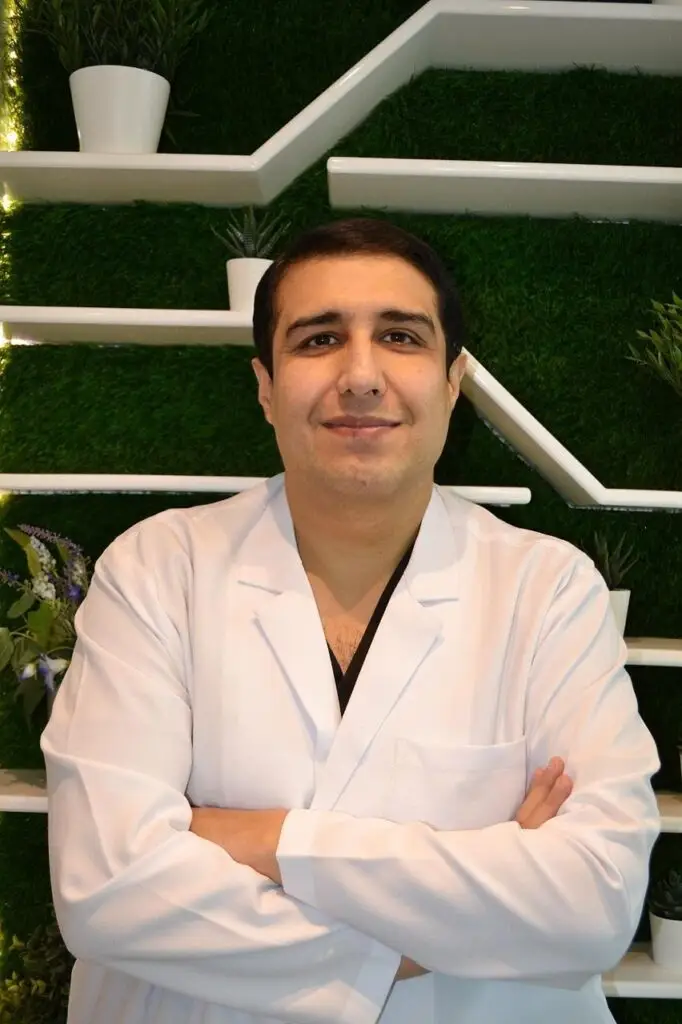
Medical Director — Aesthetic & Regenerative Medicine
Leading Silk Clinics with years of experience in aesthetic medicine, Dr Ahmad Sadeqyar oversees clinical excellence across all departments and personally treats complex aesthetic cases.
- MD — Aesthetic Medicine
- Advanced Diploma in Regenerative Therapy
- Member, IMCAS
Medically reviewed by Noemi — Head Nurse, Laser Treatments & Aesthetics.